Jenny Kane: Coffee, cupcakes, chocolate and contemporary fiction / Jennifer Ash: Medieval crime with hints of Ellis Peters and Robin Hood

Tag: secrets

Opening Lines with Jan Baynham: The Stolen Sister

I’m welcoming the super lovely, and ultra-talented, Jan Baynham to my place today to share the #openinglines from her brand new novel: THE STOLEN SISTER

Thank you for inviting be back to your lovely blog, Jenny.

Introduction

The Stolen Sister is my sixth novel. It has all the features which readers are coming to expect of my books – a dual timeline, contrasting locations, family secrets and two love stories. In this novel, there is also the theme of grief, resilience, sibling relationships, romantic love, a search for identity and reconciliation. It’s set in beautiful Crete in 1963 and again twenty years later, as well as rural mid-Wales. The Stolen Sister is the story of Greta, a young Welsh painter who arrives in the fictional town of Fáros Limáni to join an art commune. In 1984, her daughter Zoë travels to Crete to carry out her mother’s dying wish to have her ashes scattered into the sea there even though she knows nothing of her mother’s connection with the island. Through my words, I hope I’ve been able to take the reader on a virtual trip to this stunning island, as seen through Zoë’s eyes as she returns to the place of her birth for the first time.
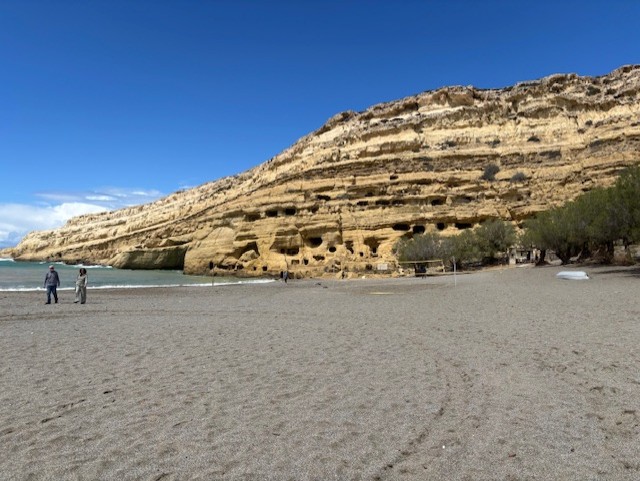
Matala caves

Blurb

Lost letters. A secret Greek love affair. A daughter’s search for the truth.

Crete, 1963. Young artist Greta Ellis arrives at the sun-soaked port of Fáros Limáni, ready to paint and explore the beautiful Greek island.

There she meets passionate local, Andreas Papadakis, and Greta is swept up in a world of colour, freedom and forbidden love. But when tragedy strikes, Greta is forced to make an impossible choice that will change the course of her life — and her heart — forever.

Wales, 1984. After the death of her beloved mother Greta, silversmith Zoë Carter receives a sealed letter that upends everything she thought she knew. Greta’s dying wish is for her ashes to be scattered in Crete, a place precious to her . . . but somewhere she had never spoken of.

Searching through her mother’s belongings, Zoë uncovers a series of letters. Written in Greek and dated the year before she was born, they reveal a passionate love affair. And a tragedy that tore it apart.

Determined to know the truth, Zoë travels to Crete to follow the trail left behind in her mother’s letters. Through the olive groves and whitewashed villages of Crete, she begins to piece together a story of love, betrayal and loss — and discovers that her family was never what it seemed.

Perfect for fans of Lucinda Riley, Kate Morton, Dinah Jefferies, Santa Montefiore, Fiona Valpy, Barbara Davis, Angela Petch, Karen Swan or Anita Chapman.
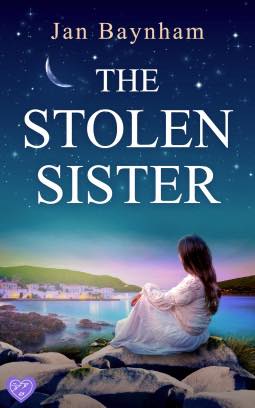
First 500 Words

Prologue

North West Crete, 1967

Greta forced herself to smile as she watched her handsome new husband join in with the traditional Greek dancers, his blue eyes sparkling as he swayed his hips and dipped in time with the others as they circled the dance floor. The haunting sound of the bouzouki music filled the busy taverna above the noise of the fun and laughter of the diners. Since arriving in Crete four years before as a naive art student, she’d heard the instrument played many times but tonight there was something unnerving about the music. It seemed dissonant to her. Something wasn’t right.

She quickly dismissed the feeling when her three-year-old daughter wriggled down from her lap.

‘Me dance, too.’ Even though she could hardly keep her eyes open, the little girl ran towards the dancers who stopped and clapped, welcoming a laughing Greta and her daughter to join John in the circle. They all sidestepped and dipped, then kicked each leg in time to the music.

The meal at the taverna, situated a few miles out of Fáros Limáni, was to celebrate John joining his wife and daughter to make a new life together and to thank their American friends, Bill and Nancy, who’d helped them settle. John had left his temporary teaching job in Heraklion for a permanent post close to where they were going to live.

Returning to sit down at the table, Greta pulled the little girl onto her lap, loving how she snuggled into her and fell asleep, safe in her mother’s arms. She always looks so like her father as she sleeps. The same long dark lashes, the same beautiful face.

She looked at a smiling John, sitting next to her. How she loved her new husband! She couldn’t believe how lucky she was that life was good again . . . so why did she have a niggle of foreboding?

‘Someone’s exhausted. Shall we go?’ John stood and held out his arms to take the little one from Greta. Bill and Nancy stood to go with them.

They took the coastal road back to the port. Relieved John was driving slowly round such sharp bends and that the road was deserted, Greta relaxed into the seat behind him.

‘Not far now, sweetheart.’ John glanced in the rear mirror at the little girl fast asleep between Greta and Nancy.

A wall of rock loomed in the headlights.

Greta screamed. ‘John!’

John yanked the steering wheel in order to try to take the hairpin bend he’d been distracted from. ‘Holy shit! Hold on!’ Searing pain shot through the whole of Greta’s body as the car crashed into the cliff. She heard the thud of John’s head slamming down onto the centre of the steering wheel. Unable to move, deafening noise engulfing her — screams, the horn blaring continuously, her daughter wailing, panic in voices.

‘Oh, God.’ Bill shook his friend. John didn’t respond even as Bill shook him harder. Choked, he said, ‘I’ll get Greta out first. You lift the…
Here are some of the amazing reviews for Jan’s incredible work.

⭐⭐⭐⭐⭐ ‘The most compelling, evocative, heart-wrenching book I have ever read.’

⭐⭐⭐⭐⭐ ‘Captivating and emotional . . . A top, top, must-read.’

⭐⭐⭐⭐⭐ ‘One of the best sagas I’ve read in a very long time.’

⭐⭐⭐⭐⭐ ‘A novel that will transport you to Greece, with its sensory delights of sights, sounds and flavours.’

⭐⭐⭐⭐⭐ ‘The vivid imagery used to paint Greece is stunning and made me feel as if I was there. If you enjoy a multi-layered novel brimming with secrets, you’ll adore this story.’

⭐⭐⭐⭐⭐ ‘Historical fiction at its best.’

You can buy The Stolen Sister from all good retailers, including:

Amazon UK – https://www.amazon.co.uk/Stolen-Sister-powerful-emotional-historical-ebook/dp/B0GN9Z34YH/ref

Amazon US – https://www.amazon.com/Stolen-Sister-powerful-emotional-historical-ebook/dp/B0GN9Z34YH/ref 

BIO

Originally from mid-Wales, Jan lives in Radyr, on the outskirts of Cardiff. After retiring from a career in teaching and advisory education, she now writes historical fiction and sagas. Fascinated by family secrets and ‘skeletons lurking in cupboards’, Jan writes dual narrative, dual timeline historical novels that explore how decisions and actions made by family members from one generation impact on the lives of the next. Setting and a sense of place play an important part in all of Jan’s stories and as well as her native mid-Wales, there is always a contrasting location in sunnier climes. She is published by Joffe Books/Choc Lit. She enjoys meeting up with other writers, especially members of her local Cariad RNA Chapter as well as when attending talks and workshops.

X- @JanBaynham https://twitter.com/JanBaynham

Facebook – Jan Baynham Writer https://www.facebook.com/JanBayLit/?locale=en_GB

Instagram – janbaynham https://www.instagram.com/janbaynham/?hl=en-gb

Threads – https://www.threads.com/@janbaynham

Blog – Jan’s Journey into Writing https://janbaynham.blogspot.com

Amazon Page – Jan Baynham https://www.amazon.co.uk/stores/Jan-Baynham/author/B085DC6BKR?ref 

Many thanks for sharing your work with us today, Jan,

Happy reading,

Jenny xx

Interview with Carryl Church: Secrets at the Ambrose Café

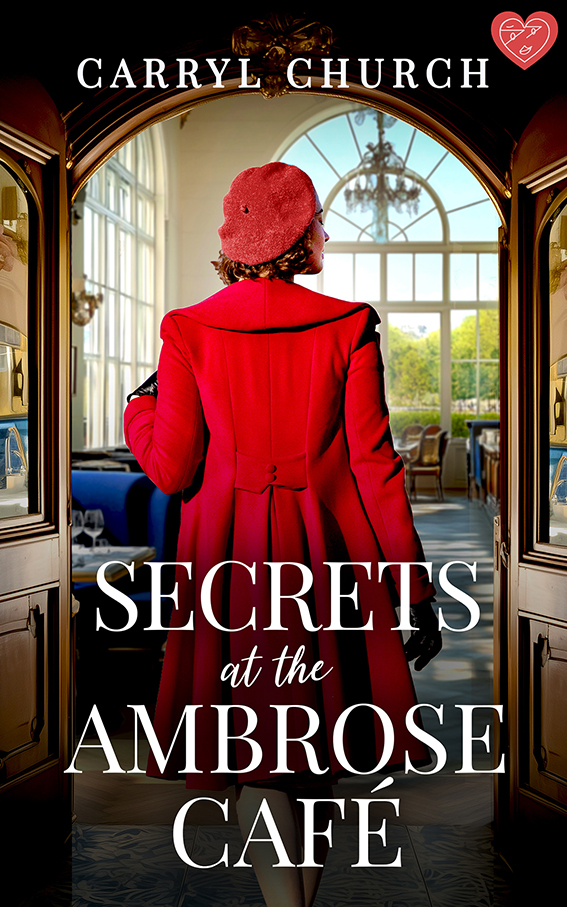
Today  I’m delighted to be interviewing author, Carryl Church, about her second historical novel, Secrets at the Ambrose Café.

Grab a cuppa and put your feet up for five minutes, and come and say hello.

What inspired you to write Secrets at the Ambrose Café?

The 1920s has held a fascination for me since my teenage years when two of my favourite television series were The House of Eliott and Jeeves and Wooster – I read the novels too! I relished the idea of setting a story in that period.

Inspiration for me often starts with a location. In the case of this book, it was Deller’s Café – a chain of beautiful catering establishments with branches in Exeter, Paignton and Taunton. The main Exeter branch in particular really captured my imagination. Built in the baroque style and with a decadent interior encompassing many architectural features – it was said to be one of the finest buildings in Exeter. In Agatha Christie’s novel The Sittaford Mystery, her characters visit Deller’s Café in a chapter bearing the cafe’s name. Sadly, Deller’s was damaged by an incendiary bomb in the Exeter Blitz of 1942 and demolished in the subsequent rehabilitation of the High Street – a loss still keenly felt.

I wanted the artistic freedom to make the location my own, so The Ambrose Café was born, but I named my character Della in a nod to the wonderful institution that inspired the story. As soon as I saw my book cover, I was delighted that it captured the sumptuous café of my imagination so well.

What type of research did you have to do for your book?

I started with the Exeter Memories website which is a great resource if you’re interested in the history of the city. I then found a website dedicated to Deller’s Café which included wonderful photographs of the interiors, staff, details of the menus and numerous banquets the café hosted.

For a more detailed look at the 1920s, my background as a Film and Photography Archivist was a great help. I searched the National Archives database and discovered a series they’d produced called ‘the roaring twenties’ which offered fantastic insight into the period gleaned from the 1921 census. For building an authentic picture of post WW1 society and the political and psychological impact of the war, I searched the Imperial War Museum database and listened to oral histories. I worked for the Imperial War Museum as an Archivist many years ago and had seen footage from the period to draw upon too. I also read widely around the subject and although Deller’s Café is no longer there, I visited the locations in Exeter.

Do you model any of your characters after people you know? If so, do these people see themselves in your characters?

I can honestly say I never consciously model my characters on people I know. I think if I did, I’d find it too restrictive. I figure out who my characters are by writing them. I always knew this book would be about two women. I could see Della in her apron working away in the kitchen and the rest grew from there.

Which Point of View do you prefer to write in and why?

Close third person comes naturally. I’ve written short stories in first person, but I prefer to stick with what works for me. However, I enjoy reading in a variety of POV.

Do you prefer to plot your story or just go with the flow?

A little of both. When I first started writing, I’d just see where the story took me which meant I often disappeared down a few blind alleys. Now I appreciate the benefit of having a framework and an idea of where the story is going but I like to leave room for my characters to surprise me. It makes them feel more alive on the page.

What is your writing regime?

I tend to write seven days a week and I’m not very good at taking breaks. I’m up early to get my son to school. I have a writing room in our attic, and I’m usually at my laptop by 7am where I’ll eat breakfast. If I’m in the midst of the story and its flowing or I’m editing, I’ll often get thirty to forty minutes done and find it quite a productive time before getting organised for the school run. Once I’m back, I’ll go for a walk then I’m at my desk for the rest of the morning. I have a back and neck injury, so I have to take regular breaks but sometimes I forget and pay for it later. In the afternoons I tend to focus on other things like admin or research. I usually have a second burst of writing in the evening followed by some yoga to try and undo the damage I’ve done sitting at my desk for too long! At weekends this is broken up by family time, but I still take the opportunity to slip away and write when I can. As soon as one book is finished, I’ll start on the next.

What excites you most about your book?

The characters. One in particular – Mr Gillespie. I won’t give any spoilers, but he almost wrote himself and at times I had to stop him stealing every scene! He brought me a lot of joy.

Blurb:

Two women. Two different worlds. One secret that could ruin them both.

Exeter, 1925. Della Wilde has set aside her dream of moving to Paris to study at the renowned Le Cordon Bleu, choosing instead to support her family torn apart by war. By day, she works at the prestigious Ambrose Café, serving the city’s elite — she feels utterly invisible. Until a chance encounter with rebellious Alice Winters, the daughter of a powerful MP, upends Della’s world.

Alice is a woman caught between duty and desire. She secretly yearns to be an artist but is expected to marry a respectable suitor and raise a family. Della, with her sharp wit and quiet strength, is unlike anyone she has ever known. She makes Alice feel alive.

So she draws Della into her orbit — first as a muse for her secret art, then as something infinitely more intimate. But in a world where reputations are easily shattered, their growing bond is a danger that threatens not only their futures, but those around them.

As Alice risks scandal and Della faces the consequences of following her heart, they must decide: will they allow others to choose their path, or dare to forge their own?

This historical tale of courage, forbidden love and self-discovery is perfect for fans of Sarah Waters, Cynthia Ellingsen, Fiona Valpy or Rhys Bowen. 

You can buy Secrets at the Ambrose Café from all good retailers, including Amazon: https://amzn.eu/d/dIlEnja

Audible: https://www.audible.co.uk/pd/Secrets-at-the-Ambrose-Cafe-Audiobook/B0F8W2K986?source_code=ASSGB149080119000H&share_location=pdp

Bio:

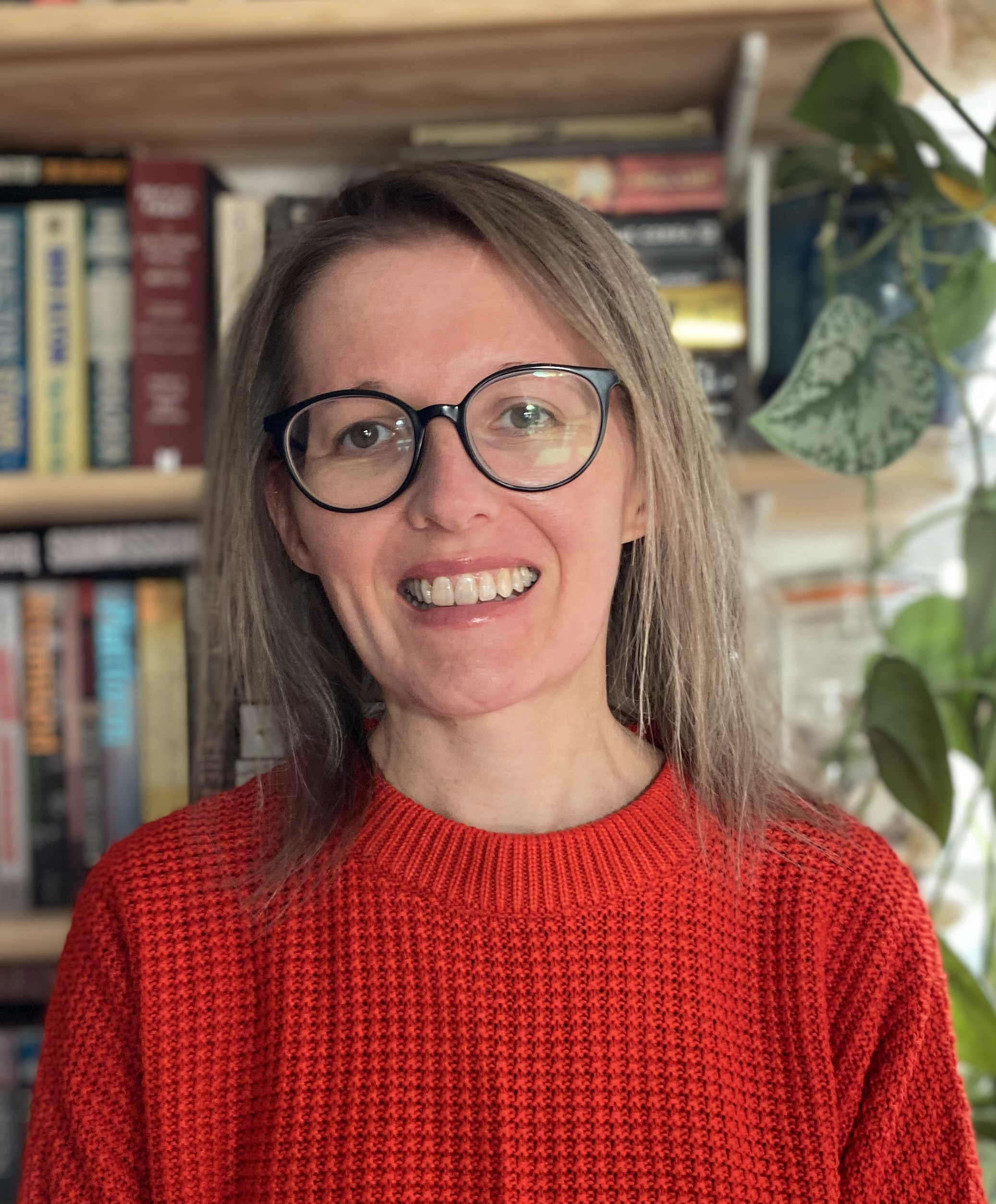
Carryl writes historical fiction with a focus on the 20th Century. Her writing explores love in turbulent times, both romantic and familial. The people we’re given and those we choose for ourselves.

An early fascination with cinema led to a career as a Film and Photography Archivist. Years spent watching archive footage gave her a unique insight into how people lived in the early 20th century now brought vividly to life in her stories.

Originally from the Isle of Wight, Carryl now lives in Devon. The local landscape and locations are an inspiration for her novels. Carryl has a BA in Media and Literature and an MA in Film and Television Archiving. After working in Media Archives for seventeen years, including The Imperial War Museum and The BBC, she now writes full-time in the company of her cat, Ditsy.

Website: https://carrylchurch.co.uk/

Instagram: @CarrylChurch

Facebook: Carryl Church

Many thanks for joining us today Carryl.

Happy reading everyone,

Jenny xx

Opening Lines with Judith Barrow: The Memory

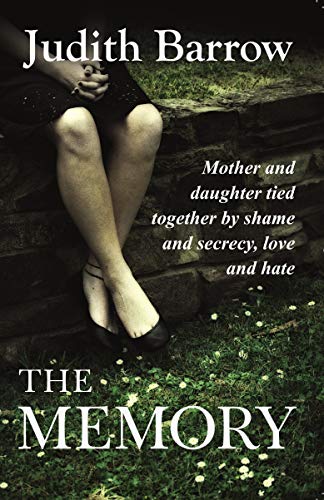
This week, I’m delighted to welcome, Judith Barrow, to share the Opening Lines from her incredibly moving novel,

The Memory.

Over to you Judith…

Many people have asked me what was the inspiration for The Memory and my answer is always – memories: memories of being a carer for two of my aunts who lived with us, memories of losing a friend in my childhood; a friend who, although at the time I didn’t realise, was a Downs’ Syndrome child. But why I started to write the story; a story so different from my other four books, I can’t remember. Because it was something I’d begun years ago and was based around the journal I’d kept during that decade of looking after my relatives.

But what did begin to evolve when I settled down to writing The Memory was the realisation of why I’d been so reluctant to delve too far into my memories. The isolation, the loneliness, that Irene Hargreaves, the protagonist, endures; despite being married to Sam, her loving husband, dragged up my own feelings of being alone so much as a child. That awareness of always being on the outside; looking in on other families, relationships and friendships had followed me; had hidden deep inside my subconscious. And now, as a contented wife and mother, with steady enduring friendships, it unsettled me. Many people, and as a creative writing tutor I’m one, say that writing is cathartic. Working through Irene’s memories; especially that one memory that has ruled her life, made me acknowledge my own. And that’s fine. I always say to my students, if you don’t feel the emotions as you write, then neither will your reader. In The Memory I’m hoping the reader will sense the poignant, sad times with Irene, but will also rejoice with her in the happier memories.

BLURB

Mother and daughter tied together by shame and secrecy, love and hate.

I wait by the bed. I move into her line of vision and it’s as though we’re watching one another, my mother and me; two women – trapped.

Today has been a long time coming. Irene sits at her mother’s side waiting for the right moment, for the point at which she will know she is doing the right thing by Rose.

Rose was Irene’s little sister, an unwanted embarrassment to their mother Lilian but a treasure to Irene. Rose died thirty years ago, when she was eight, and nobody has talked about the circumstances of her death since. But Irene knows what she saw. Over the course of 24 hours their moving and tragic story is revealed – a story of love and duty, betrayal and loss – as Irene rediscovers the past and finds hope for the future.

“…A book that is both powerful and moving, exquisitely penetrating. I am drawn in, empathising so intensely with Irene that I feel every twinge of her frustration, resentment, utter weariness and abiding love.” Thorne Moore

“Judith Barrow’s greatest strength is her understanding of her characters and the times in which they live; The Memory is a poignant tale of love and hate in which you will feel every emotion experienced by Irene.” Terry Tyler

The new novel from the bestselling author of the Howarth family saga.

FIRST 500 WORDS.

Chapter One 2001 – Irene 

There’s a chink of light from the streetlamp coming through the vertical blinds. It spreads across the duvet on my mother’s bed and onto the pillow next to her head. I reach up and pull the curtains closer together. The faint line of light is still there, but blurred around the edges.

Which is how I feel. Blurred around the edges. Except, for me, there is no light.

I move around the bed, straightening the corners, making the inner softness of the duvet match the shape of the outer material; trying to make the cover lie flat but of course I can’t. The small round lump in the middle is my mother. However heavily her head lies on the pillow, however precisely her arms are down by her sides, her feet are never still. The cover twitches until centimetre by centimetre it slides to one side towards the floor like the pink, satin eiderdown used to do on my bed as a child.

In the end I yank her feet up and tuck the duvet underneath. Tonight of all nights I want her to look tidy. I want everything to be right.

She doesn’t like that and opens her eyes, giving up the pretence of being asleep. Lying face upwards, the skin falling back on her cheekbones, her flesh is extraordinarily smooth, pale. Translucent almost. Her eyes are vague under the thick lines of white brows drawn together.

I ignore her; I’m bone weary. That was one of my father’s phrases; he’d come in from working in the bank in the village and say it.

‘I’m bone weary, Lil.’ He’d rub at the lines on his forehead. ‘We had to stay behind for half an hour all because that silly woman’s till didn’t add up.’ Or ‘… because old Watkins insisted I show the new lad twice how I leave my books at night; just so he knows, as though I might not go in tomorrow.’ Old Watkins was the manager, a job my father said he could do standing on his head but never got the chance.

And then, one day, he didn’t go into the bank. Or the day after that. Or ever again.


I wait by the bed. I move into her line of vision and it’s as though we’re watching one another, my mother and me; two women – trapped.

‘I can’t go on, Mum.’ I lift my arms from my side, let them drop; my hands too substantial, too solid to hold up. They’re strong – dependable, Sam, my husband, always says. I just think they’re like shovels and I’ve always been resentful that I didn’t inherit my mother’s slender fingers. After all I got her fat arse and thick thighs, why not the nice bits?

I’ve been awake for over a day. I glance at the clock with the extra-large numbers, bought when she could still tell the time. Now it’s just something else for her to stare at, to puzzle…

You can buy The Memory from all good retailers, including-

Honno Page: https://bit.ly/2XL0zCi

Amazon: http://amzn.to/2klIJzN

BIO

Judith Barrow, originally from Saddleworth, a group of villages on the edge of the Pennines, has lived in Pembrokeshire, Wales, for over forty years.

She has an MA in Creative Writing with the University of Wales Trinity St David’s College, Carmarthen. BA (Hons) in Literature with the Open University, a Diploma in Drama from Swansea University. She is a Creative Writing tutor for Pembrokeshire County Council and holds private one to one workshops on all genres.

LINKS

Website: https://judithbarrowblog.com/

Facebook: https://www.facebook.com/judith.barrow.3

Twitter: https://twitter.com/judithbarrow77

Goodreads: https://bit.ly/3kMYXRU

LinkedIn: https://bit.ly/3oNJZxq

***

Many thanks for sharing your Opening Lines today, Judith.

Happy reading everyone,

Jenny x

Powered by WordPress & Theme by Anders Norén