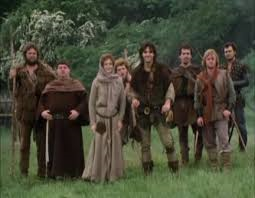
Jenny Kane: Coffee, cupcakes, chocolate and contemporary fiction / Jennifer Ash: Medieval crime with hints of Ellis Peters and Robin Hood

Category: Historical fiction Page 23 of 25

My First Time: Tom Williams

My new fortnightly blog series, talking about authors first publishing experiences, continues today with a geat interview from historical novelist, Tom Williams.

First Time

My First Time

I can’t remember the first story I ever wrote. For this blog we’re not supposed to include stories we were made to write at school, but I loved writing stories at school. I wrote stories, poems, essays … I wrote anything and everything. I’ve always enjoyed writing.

When I was a teenager I decided I’d like to write short stories for publication. I bought loads of women’s magazines and read them and then tried to write something that would fit their market, but I never cracked it. This was in the days before word processing so I got individually typewritten rejection letters. I remember they were often on very small sheets of paper. Presumably they sent so many of them out that using small sheets meant a real saving.

That was when I started my world-class collection of rejections. I’ve still got a lot of them, hidden in a box in the loft.

Eventually I grew up (more or less), got a job, got married, and got a life (not necessarily in that order). I’ve always been incredibly jealous of people who can organise their writing round work/marriage/hobbies. I’ve never been able to. I think it’s even harder when, like me, you do a lot of writing in the course of your work. I more or less gave up writing fiction for years but then decided that I would take time out and try and produce the novel I had always dreamt of. It took me almost a year and it attracted the interest of quite a well-known agent who sent me to an editor. I was still very young and had absolutely no idea of how lucky I was to get that far. Instead of persevering, I got increasingly frustrated until the editor suggested that I should rest the book, do something else, and come back to it. I rested it for over twenty years before I decided to have a crack at another novel. When I thought about what I wanted to do, I realised that I could take the story that I had tried to tell all those years ago and twist it round to tell it from another direction. This is the book that eventually became The White Rajah. Yet again, it did find an agent, but, though he sent it to several major publishers all of them politely declined it. It was, they said, a “difficult” first novel. Why not write something more commercial and then tried to sell The White Rajah once I was established?

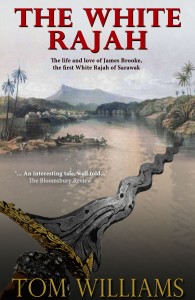
The White Rajah2

I obediently went off to write something “more commercial” (it eventually became Burke in the Land of Silver) but I was beginning to think that I would be cold in my grave before The White Rajah ever saw publication. Then I saw that a tiny US indie publisher, who specialised in novels for the gay community, was looking for historical works. I had a suspicion that one of the things that made The White Rajah “difficult” was that it featured a love story but also a pronounced absence of any female characters. I decided that a niche indie publisher was probably the way to go so The White Rajah finally saw publication.

[Scrabbles desperately around and finds Jenny’s interview questions. Tries to pull himself back on track.]

What effect did that have on your life?

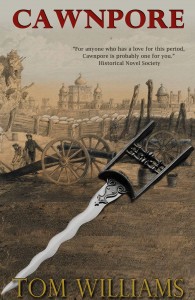
In practical terms, not a lot. I think everybody imagines that their first published book will change their lives, but it’s very rare that it does. It got some nice reviews and enough people bought it for JMS to ask me to produce a sequel so I did. That was Cawnpore. For what it’s worth, I think it’s the better book, but I’m happy to have written both of them.

Cawnpore_edited-1

Does your first published story reflect your current writing style?

Yes and no. I finally took the advice I had been offered years earlier and tried to write something more commercial. So I’ve written three books about a (very) heterosexual spy in the time of Napoleon and am working on a fourth. Apart from the fact that these are historical novels, they have practically nothing in common with the first two books. At the same time I produced another book in the original series, Back Home, which will be published by Accent in April. That’s totally in the style of the first two. It was never originally conceived as a trilogy, but it has worked out very naturally. The three books have different subjects but they are all seen through the eyes of John Williamson. We meet him first as a young man setting out from England for adventures in the Far East and then, in Cawnpore, as an established figure in British colonial administration who sees everything he has worked for being destroyed in the Indian Mutiny. The final book sees him back in England, closing the circle of his life. It’s fair to say that they’re not cheerful, but I honestly think they’re worth a read.

What are you working on at the moment?

Another book about my spy, James Burke. This time he will be fighting in the Peninsular War.

Tom Williams

Bio

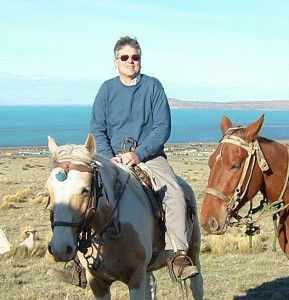
Tom Williams used to write about boring things for money. If you wanted an analysis of complaints volumes in legal services or attitudes to diversity at the BBC, then he was your man. Now he writes much more interesting books about historical characters and earns in a year about what he could make in a day back then. (This, unfortunately, is absolutely true.) He also writes a blog (http://thewhiterajah.blogspot.co.uk/) which is widely read all over the world and generates no income at all. Besides making no money from writing, Tom makes no money out of occasionally teaching people to tango and then spends all the money he hasn’t made on going to dance in Argentina.

Please save Tom from himself and buy the bloody books.


Here are links to the published stories about John Williamson.

The White Rajah:  myBook.to/WhiteRajah

Cawnpore: myBook.to/Cawnpore

Back Home will be published in April.

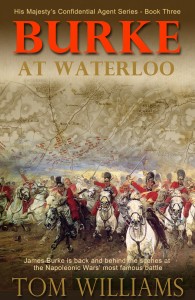
TW1Burke at Waterloo

And here are the stories about James Burke.

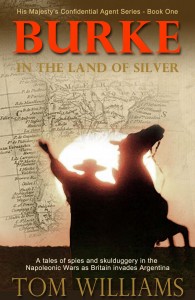
Burke in the Land of Silver: myBook.to/LandofSilver

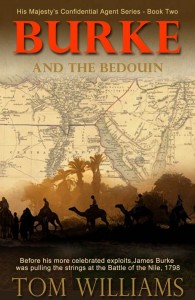
Burke and the Bedouin: http://mybook.to/Bedouin

Burke at Waterloo: myBook.to/BurkeWaterloo

Burke in the land of silver

Many thanks Tom. Great interview!

Happy reading everyone,

Jenny xx


Happy Valentine’s Day: Robin Hood Style

Valentines

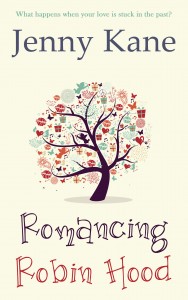
To celebrate Valentine’s Day, I thought I’d share a little of Romancing Robin Hood– my part romance/part medieval mystery novel- with you.

RRH- new 2015

Blurb

Dr Grace Harper has loved the stories of Robin Hood ever since she first saw them on TV as a girl. Now, with her fortieth birthday just around the corner, she’s a successful academic in Medieval History, with a tenured position at a top university.

But Grace is in a bit of a rut. She’s supposed to be writing a textbook on a real-life medieval gang of high-class criminals – the Folvilles – but she keeps being drawn into the world of the novel she’s secretly writing – a novel which entwines the Folvilles with her long-time love of Robin Hood – and a feisty young girl named Mathilda, who is the key to a medieval mystery…

Meanwhile, Grace’s best friend Daisy – who’s as keen on animals as Grace is on the Merry Men – is unexpectedly getting married, and a reluctant Grace is press-ganged into being her bridesmaid. As Grace sees Daisy’s new-found happiness, she starts to re-evaluate her own life. Is her devotion to a man who may or may not have lived hundreds of years ago really a substitute for a real-life hero of her own? It doesn’t get any easier when she meets Dr Robert Franks – a rival academic who Grace is determined to dislike but finds herself being increasingly drawn to…

***

Romancing Robin Hood is a contemporary romance is based on the life of Dr Grace Harper, a medieval history lecturer with a major Robin Hood obsession. So much so, that instead of writing a textbook on medieval life, Grace is secretly writing a novella about a fourteenth century girl called Mathilda, who gets mixed up with a real outlaw family of the day, the Folvilles. As you read Grace’s story, you can read the medieval mystery she is writing alongside!

The problem is, Grace is so embroiled in her work and passion for outlaws, that real life is passing her by.

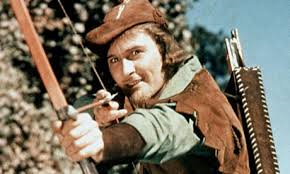
RH- E Flynn


With her wedding approaching fast, Grace’s best friend Daisy can’t help wishing a similar happiness to her own for her Robin Hood loving friend…

Extract

…Daisy hadn’t grown up picturing herself floating down the aisle in an over-sequinned ivory frock, nor as a doting parent, looking after triplets and walking a black Labrador. So when, on an out-of-hours trip to the local vet’s surgery she’d met Marcus and discovered that love at first sight wasn’t a myth, it had knocked her for six.

She’d been on a late-night emergency dash to the surgery with an owl a neighbour had found injured in the road. Its wing had required a splint, and it was too big a job for only one pair of hands. Daisy had been more than a bit surprised when the locum vet had stirred some long-suppressed feeling of interest in her, and even more amazed when that feeling had been reciprocated.

It was all luck, sheer luck. Daisy had always believed that anyone meeting anybody was down to two people meeting at exactly the right place, at exactly the right time, while both feeling precisely the right amount of chemistry. The fact that any couples existed at all seemed to Daisy to be one of the greatest miracles of humanity.

She pictured Grace, tucked away in her mad little office only living in the twenty-first century on a part-time basis. Daisy had long since got used to the fact that her closest friend’s mind was more often than not placed firmly in the 1300s. Daisy wished Grace would finish her book. It had become such a part of her. Such an exclusive aim that nothing else seemed to matter very much. Even the job she used to love seemed to be a burden to her now, and Daisy sensed that Grace was beginning to resent the hours it took her away from her life’s work. Maybe if she could get her book over with – get it out of her system – then Grace would stop living in the wrong timeframe.

Daisy knew Grace appreciated that she never advised her to find a bloke, settle down, and live ‘happily ever after,’ and she was equally grateful Grace had never once suggested anything similar to her. Now she had Marcus, however, Daisy had begun to want the same contentment for her friend, and had to bite her tongue whenever they spoke on the phone; something that happened less and less these days.

Grace’s emails were getting shorter too. The long paragraphs detailing the woes of teaching students with an ever-decreasing intelligence had blunted down to, ‘You ok? I’m good. Writing sparse. See you soon. Bye G x’

The book. That in itself was a problem. Grace’s publishers and colleagues, Daisy knew, were expecting an academic tome. A textbook for future medievalists to ponder over in the university libraries of the world. And, in time, that was exactly what they were going to get, but not yet, for Grace had confided to Daisy that this wasn’t the only thing she was working on, and her textbook was coming a poor third place to work and the other book she couldn’t seem to stop herself from writing.

‘Why,’ Grace had forcefully expounded on their last meeting, ‘should I slog my guts out writing a book only a handful of bored students and obsessive freaks like myself will ever pick up, let alone read?’

As a result, Grace was writing a novel, ‘A semi-factual novel,’ she’d said, ‘a story which will tell any student what they need to know about the Folville family and their criminal activities – which bear a tremendous resemblance to the stories of a certain famous literary outlaw! – and hopefully promote interest in the subject for those who aren’t that into history without boring them to death.’

It sounded like a good idea to Daisy, but she also knew, as Grace did, that it was precisely the sort of book academics frowned upon, and she was worried about Grace’s determination to finish it. Daisy thought it would be more sensible to concentrate on one manuscript at a time, and get the dry epic that everyone was expecting out of the way first. Perhaps it would have been completed by now if Grace could focus on one project at a time, rather than it currently being a year in the preparation without a final result in sight. Daisy suspected Grace’s boss had no idea what she was really up to. After all, she was using the same lifetime of research for both manuscripts. She also had an underlying suspicion that subconsciously Grace didn’t want to finish either the textbook or the novel; that her friend was afraid to finish them. After all, what would she fill her hours with once they were done?

Daisy’s mobile began to play a tinny version of Nellie the Elephant. She hastily plopped a small black guinea pig, which she’d temporarily called Charcoal, into a run with his numerous friends, and fished her phone from her dungarees pocket.

‘Hi, Marcus.’

‘Hi honey, you OK?’

‘Just delivering the tribe to their outside quarters, then I’m off to face the horror that is dress shopping.’

Her future husband laughed, ‘You’ll be fine. You’re just a bit rusty, that’s all.’

‘Rusty! I haven’t owned a dress since I went to parties as a small child. Thirty-odd years ago!’

‘I don’t understand why you don’t go with Grace at the weekend. It would be easier together wouldn’t it?’

Daisy sighed, ‘I’d love to go with her, but I’ll never get her away from her work more than once this month, and I’ve yet to arrange a date for her to buy a bridesmaid outfit.’

‘Well, good luck, babe. I’m off to rob some bulls of their manhood.’

Daisy giggled, ‘Have fun. Oh, why did you call by the way?’

‘Just wanted to hear your voice, nothing else.’

‘Oh cute – ta.’

‘Idiot! Enjoy shopping.’

As she clicked her battered blue mobile shut and slid it back into her working clothes, Daisy thought of Grace again. Perhaps she should accidentally invite loads of single men to the wedding to tempt her friend with. The trouble was, unless they wore Lincoln Green, and carried a bow and quiver of arrows, Daisy very much doubted whether Grace would even notice they were there…

***

RH- Ros 1

If that extract has whetted your appetite for more, Romancing Robin Hood is available in paperback, and e-formats from all good retailers- including-

Amazon UK- http://www.amazon.co.uk/Romancing-Robin-Hood-Jenny-Kane-ebook/dp/B00M4838S2/ref=sr_1_1?ie=UTF8&qid=1407428558&sr=8-1&keywords=romancing+robin+hood

Amazon.com- http://www.amazon.co.uk/Romancing-Robin-Hood-Jenny-Kane-ebook/dp/B00M4838S2/ref=sr_1_1?ie=UTF8&qid=1407428558&sr=8-1&keywords=romancing+robin+hood

Nook – http://www.nook.com/gb/ebooks/romancing-robin-hood-by-jenny-kane/9781783754267

Kobo- https://store.kobobooks.com/en-US/ebook/romancing-robin-hood

***

Happy Valentine’s Day,

Jenny x
Introducing a New Blog Series: My First Time

This coming Wednesday sees the dawn of a new (fortnightly) series of blog interviews on this site, called My First Time.  I have to admit I rather excited about it!

First Time

Each fortnight I will be asking an author- often established, but sometimes brand new- about their very first story writing and publishing experiences. The series kicks of this week with the brilliant Gilli Allan.

Putting the interviews together has made me reflect upon my own publishing experiences.

I wasn’t very good at English at school. I am a little dyslectic, and always struggled (and still do) with spelling. It was a big a surprise to me as anyone that I started to write.

It began when I suddenly had time on my hands after my children went to school, and I scribbled down a story for fun.

User comments


I entered the world of publications in a rather backwards sort of a way. There was never any talk of agents or having to have representation. I just bumbled from being a short story hobbyist- to someone who was paid to be a short story writer, to someone who got an email one day asking if I’d ever thought of writing a novel!! And here I am- still no agent- still bumbling- still writing…

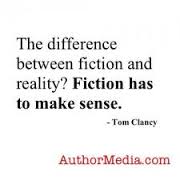
make sense

I am interested to see how many other people ‘fell’ into writing, or if everyone else was grown up and did it the ‘proper’ way!!

So why not join me this Weds, and every other Weds after, to discover just how some of you favourite authors found themselves slaving away at a keyboard for hours each and every day, living in fictional worlds that- let’s face it- are often much nicer than reality!!

See you on Wednesday!!

Jenny x
 

Interview with Caroline Dunford

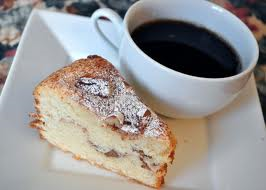
It’s interview time! Today I have the lovely Caroline Dunford dropping by for coffee and cake. So why don’t you take five minutes out of your day and join us for a cuppa?

coffee and cake

Do you model any of your characters after people you know? If so, do these people see themselves in your characters?

One of the risks of admitting you’re a writer at parties is you are often immediately asked where do you get your ideas? If you answer truthfully, that you get your ideas from your life experience, and your questioner isn’t yet too full of party cheer, then more often than not your questioner will sidle off looking nervous and muttering about having left the cat in the fridge, or something equally unlikely. They are, of course, terrified you will ‘put them in a book.’ There are those who offer themselves up as excellent characters for books or who have the best ideas for a book, and these are the ones writers tend to sidle away from.

I would like to put on record that I cannot write other people’s ideas. If it doesn’t come from the murky depths of my own subconscious then it simply doesn’t work for me. Like any writer I use my experiences and they are exactly that; they are how I experience my world. There is no way I could ever possibly write about anyone else accurately. Even if I chose to base a character on someone I knew, it would be based on how I saw that person and almost certainly not how they saw themselves.

As a writer I make up inner thoughts and motivation for my characters, but I have no ability to scan the mind of anyone else and collect this information. It would be a lot easier (though possibly libellous!) if I did. This means even if I did base a character on someone I know I can pretty much guarantee they would never recognise themselves. But I don’t. All my characters come from my thoughts, feelings and imagination. When I am writing they become like voices in my head. Even sometimes adding events and speeches to the story that I certainly had not planned on writing. They become alive to me. I know them so well because they have come from me.

All this is a little embarrassing to admit. I do have some pretty awful characters in my books and they must reflect a dark part of my psyche. I can only console myself with the thought that I also have likable and estimable characters in my stories too. These, hopefully, form the most influential part of my psyche in everyday life. Though I suspect Euphemia, my murder mystery heroine, is far braver than me. We are definitely equally stubborn. I only hope I am not as naïve as she can sometimes be – a naivety that invariably leads her into danger.

CDimage1

What type of research did you have to do for your book?

When I am writing a historical novel I research the period – the events, the clothing, the ideas of the era and everything else I can get my hands on. However, I am not an historian. My desire is to create a compelling story and I am more interested in building my characters – their loves, foibles, ideas, fears and ambitions – than anything else. For me the historical era is important because it not only frames these, but also informs them. I also need to know their world, in particular who the important people in their lives are and what they are like. It is often out of the interconnecting personalities that the stories take form.

CDimage2

Which Point of View do you prefer to write in and why?

In the Euphema Martins Mysteries I use the first person. Euphemia has a unique voice that uses slightly more archaic speech and is invariably full of slips (and even innuendos) that she is unaware of. It is enormous fun as a writer to create these. While Euphemia is saying one thing, the reader is understanding another – and this is often where the humour lies.

Writing in the third person, that is setting yourself up as a narrator outside the story, has the advantage that you can move more easily between events. In the Euphemia books the reader only ever experiences what she experiences. The biggest problem in writing as a narrator is that it is harder to get your audience to emote – they are just that one step removed from the action.

CDimage3

Do you prefer to plot your story or just go with the flow?

In a murder mystery I need to know who the murderer is and I also generally know the main turning points in the story. However, Euphemia and her friends are pretty well formed now after nine books, and they do have a tendency to hijack the plot. Of course, I only let them do this if I think they have come up with something more exciting than I have!

What is your writing regime?

There is only one thing you need to do to be a writer and that is write. It would be lovely to wait from the muse to spring into your mind, but in reality writing novels is a lot about plotting and planning, and agreeing with your editor what you are going to supply. Remember publicity for a book can be created before the book is finished! However, if the story is right then I find it will come alive at your fingertips. But this still means every morning sitting down at the laptop even when you would much rather be reading in bed. Sadly, I find my muse responds to coffee and perseverance rather than wishful thinking.

What excites you the most about your book?

Honestly? Finishing it! I love it when I have a complete story, fully edited and ready to go. I can feel proud of my hard work. No matter how much I love writing when I am creating a novel I am always terrified I won’t be able to complete it, so reaching the end is a huge relief. It’s sort of like sitting a very hard physics exam very time you write one. And I was never very good at physics. I have to work hard to get it right!

***

Bio

Caroline has been creating stories since primary school when she first learnt that creating fictional games could gain her friends! She has held a variety of jobs, but most notably journalist, where she learnt the art of making deadlines, and psychotherapist, where she gained a valuable insight into the human condition. She lives by the sea with her supportive (and long suffering) partner and two sons, both of whom think writing a book is no big deal.

Links

Caroline is @verdandiweaves on twitter

Her facebook fan page is Caroline Dunford fanpage

All her books are available from Amazon uk at http://www.amazon.co.uk/s/ref=nb_sb_ss_i_1_13?url=search-alias%3Dstripbooks&field-keywords=caroline+dunford&sprefix=Caroline+dunf%2Cstripbooks%2C170

And amazon.com http://www.amazon.com/s/ref=nb_sb_ss_i_1_13?url=search-alias%3Daps&field-keywords=caroline+dunford&sprefix=caroline+dunf%2Caps%2C255

A Death for a Cause

http://www.amazon.co.uk/Death-Cause-Euphemia-Martins-Mysteries-ebook/dp/B015ZM4A2Q/ref=sr_1_1?s=books&ie=UTF8&qid=1452035955&sr=1-1

Coming May 2016 A Death by Arson

http://www.amazon.co.uk/Death-Arson-Euphemia-Martins-Mysteries/dp/1783757159/ref=sr_1_1?s=books&ie=UTF8&qid=1452036026&sr=1-1&keywords=A+Death+by+arson+Caroline+dunford

CDimage4

Highland Inheritance

http://www.amazon.co.uk/Highland-Inheritance-Caroline-Dunford-ebook/dp/B00M0FZMAG/ref=sr_1_15?s=books&ie=UTF8&qid=1452036100&sr=1-15

CDimage5

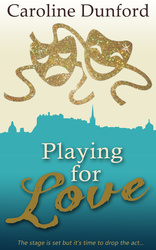
Playing for Love

http://www.amazon.co.uk/Playing-Love-Caroline-Dunford-ebook/dp/B011OG0L3O/ref=sr_1_16?s=books&ie=UTF8&qid=1452036100&sr=1-16

ALL OF THE ABOVE ALSO AVAILABLE DIRECT FROM

https://www.accentpress.co.uk/caroline-dunford

Young Adult Fantasy

CDimage6

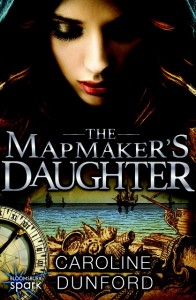
The Mapmaker’s Daughter

http://www.amazon.co.uk/Mapmakers-Daughter-Caroline-Dunford-ebook/dp/B00J5JE346/ref=sr_1_12?s=digital-text&ie=UTF8&qid=1452036321&sr=1-12

***

Many thanks for such a great interview Caroline,

Happy reading everyone,

Jenny x



My Writing Space

I love my writing space. Tucked away in the corner of one of the many coffee shops in the Devonshire town where I live, I sit at the same little wooden table every day, writing words of romance and friendship.

I’ve never been able to write well at home. There are just too many distractions, too much housework to do, too many boxes of work (I have a part time job as an educational blogger and data imputer which I do from home), and consequently too much guilt connected with what I ‘ought to be doing’ ready to interrupt my imagination.

Coffee good or evil

My writing has always flowed at its best in an atmosphere of bustle. I like to be surrounded by happily chattering people, enjoying a break from their ‘real’ lives, while I let my invented characters take control of my pen-wielding fingers. Sometimes, I admit, the café can get a bit too noisy. However, that is no problem at all. I simply lower the volume around me by taking out my hearing aids- being deaf sure does have its benefits sometimes!

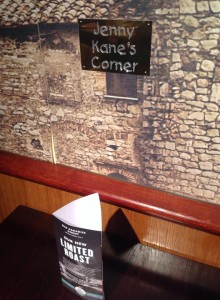
I even have, thanks to the lovely staff within my ‘writing’ café, a brass plaque on the wall above my writing space, engraved with the words, Jenny Kane’s Corner.

Jenny's Corner Costa

How amazing is that?! So now I am officially the cafe’s writer in residence; and as I sit and write in my little space I feel rather like one of my all time favourite literary characters; Winnie-the-Pooh! For just like him, I have my own corner!

Every week day I am at my desk so early that I have no fear of anyone else being sat there. At the weekend however it is a different matter, and I have to take my chances. I don’t mind other people sitting at my table- after all, I don’t own it – and I am perfectly OK working at other tables- providing I have coffee to hand. Today- right now in fact- as I sit at a table next to my usual writing spot- my heart goes out to my poor little desk!

A group of rather unpleasant teenage girls are sat there, happily flicking hot chocolate everywhere, while putting on make up they don’t need to wear, listening to music that would make my ‘Kay’ persona blush, while making unsubtle gestures at a group of teenage boys at the opposite end of the café. (My heart goes out to them as well, because they look like a nice set of lads who just want a quiet catch up after a week at college)

Of course, the girls will get fed up and leave soon; I’ll get out the cafe’s disinfectant (I more or less live in here, so I know where all the cleaning stuff is), and my lovely writing space will be a happy sanctuary of words once more.

And there are three plus sides to their unpleasant use of my lovely space-

1. I have something to blog about today.

2. Next time I need to write about the more thoughtless members of our teenage population I’ll have a memory to use as story fodder!

3. It never hurts me t be reminded how lucky I am to have such a space in the first place (not to mention, how lucky I am to have such well behaved children!)

Always a silver lining!!

Happy reading,

Jenny x
 

Happy New Year: A Quiet 2016? Ummm….

Happy New Year 2016

I hope you have all had a lovely Christmas and that 2016 has kicked off for you in fine style.

Last night, as a sipped a delicious glass of Baileys- complete with Maltesers (it has to be tried!); I was seized with the sudden sensation that I hadn’t achieved very much in 2015. Somehow it seemed to arrive and disappear at such speed, that I hardly had time to catch breath, let alone write all the words I intended to.

No sooner had I shared this view with my husband, when I found myself on the receiving end of a look of total disbelief, followed by a brief lecture on the subject on the subject of ‘remember you are only human, there are only 24 hours a day, and you do occasionally have to eat and sleep!’

He has a point. I do have a habit of thinking that whatever I’ve done, however hard I’ve worked, it’s never enough. So, as Big Ben chimed, and the time for New Year Resolutions came, I said (recklessly perhaps) that I would try and be a little kinder to myself work wise this year. We will see…

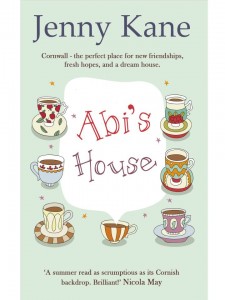
2015 was, now I think about it, rather busy. The main event was certainly the release of my Cornish romance, Abi’s House. My bestselling novel to date, I have been touched by the number of kind reviews, personal messages of thanks, and encouragement from so many of my readers after it was published last summer.

Abi's House new cover

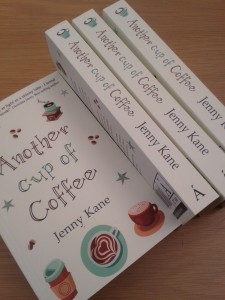
Of course Abi’s House was actually written in 2014, it was my forthcoming novel, Another Glass of Champagne which took up my writing time in the early part of 2015. The fifth and final instalment in my Another Cup of Coffee range, this full length novel will be out in the summer (probably June), and continues the story of the Pickwicks Coffee House crew, Amy, Jack, Kit, Phil, Megan, Peggy and Scott.

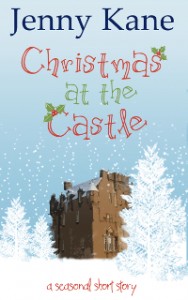
I’ve loved every minute of writing my ACOC series, and even though I still have the pre-publish edits to do, I’m already bracing myself for how much I’m going to miss writing about Peggy and the gang. Since Another Cup of Coffee came out, I’ve written a Pickwicks story every year since, including Christmas at the Castle, which came out last November.

Christmas at the Castle

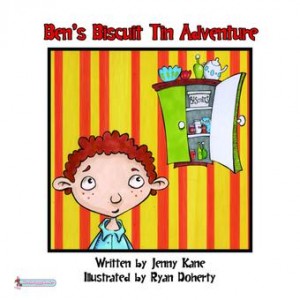
So, now I think about it- in 2015 I wrote one novel (Another Glass of Champagne), edited another (Abi’s House), and wrote a novella (Christmas at the Castle). Then, of course, there was the publication of my children’s picture book, Ben’s Biscuit Tin Adventure, my adult books under the pen name of Kay Jaybee, and all the coffee blogs, guest blogs, reviews, articles and- not forgetting- my ‘real’ job.

Title Page

So perhaps I haven’t been quite as slack as I thought over the last 12 months!

So what of the next 12 months? What can I promise you in 2016 as well as Another Glass of Champagne?

You’ll have to wait and see…but I have been plotting the chapter plans for two new novels, a novella, and I have very exciting news to share on top of all that…

OK- it’s looking like I’m going to be breaking that New Year resolution fairly quickly!

Happy New Year!!

Jenny x

Guest Blog from Marie Laval: What’s in a name? Or how I found my ideas for THE DREAM CATCHER!

I’m delighted to welcome Marie Laval back to my blog today to give us some background information on her brand new novel, The Dream Catcher.

Over to you Marie…

Someone asked me recently for some advice on how best to start writing a novel.

‘I just don’t know what to do,’ she said. ‘How do you get your ideas? Do you just sit down and write or do you plan ahead? And what comes first, the plot or the characters?’

She looked at me expectantly, but I couldn’t really give her any answer. Not only were her questions very tricky, but in my case, every story has a different starting point. Sometimes my main source of inspiration is a character, and everything slots around him or her. Other times it’s a vague idea about the plot which comes to my mind first.

The Dreamcatcher FINAL

In the case of THE DREAM CATCHER (and THE DANCING FOR THE DEVIL Trilogy), however, I can answer without the trace of a doubt that what came first was the location. Cape Wrath. What a name! As soon as I saw it on the map of Scotland, I knew it had to be the location of my novel. I looked it up immediately and found beautiful photos of wild and angry seas, of forbidding cliffs and miles of deserted moorland and deserted beaches stretching under moody skies.

Yes, I thought, this is it!

capewrath

My hero was born at that very moment too. What kind of man would live there? I asked myself. What personality would he have, what would he look like, what would be his family background, his struggles, his dreams?

It didn’t take much research to find out that nobody actually lived there. It is too exposed, too wild, and has been used as a military firing zone for years. That didn’t deter me at all. I would build an old castle on the cliff there and set up a fishing village too! My hero would be Lord Bruce McGunn, the local laird, and he would be as dark, moody and troubled as the name Cape Wrath suggested. And never mind the fact that Cape Wrath doesn’t actually have anything to do with ‘anger’ and ‘rage’ like I first thought, but that it finds its origins in the Norse for hvarf, which means “turning point”, since Vikings are believed to have used the cape as a navigation point where they would turn their ships.

So there you are. I saw an intriguing name on a map. That’s how THE DREAM CATCHER came to be.

capewrath3


THE DREAM CATCHER blurb

Can her love heal his haunted heart?

Cape Wrath, Scotland, November 1847.

Bruce McGunn is a man as brutal and unforgiving as his land in the far North of Scotland. Discharged from the army where he was known as the claymore devil, haunted by the spectres of his fallen comrades and convinced he is going mad, he is running out of time to save his estate from the machinations of Cameron McRae, heir to the McGunn’s ancestral enemies. When the clipper carrying McRae’s new bride is caught in a violent storm and docks at Wrath harbour, Bruce decides to revert to the old ways and hold the clipper and the woman to ransom. However, far from the spoilt heiress he expected, Rose is genuine, funny and vulnerable – a ray of sunshine in the long, harsh winter that has become his life.

But Rose is determined to escape Wrath and its proud master – the man she calls McGlum.

DREAM CATCHER is the first of the DANCING FOR THE DEVIL trilogy and is followed by BLUE BONNETS and SWORD DANCE. It is published by Áccent Press and is available on Amazon.

MarieLaval (2)

Marie Laval author bio

Originally from Lyon in France, Marie has lived in Lancashire for the past few years. She has three children and teaches French in a large secondary school. When she isn’t busy looking after family, or marking books and planning lessons, she loves dreaming up romantic stories. THE DREAM CATCHER is her third historical romance and is published by Áccent Press. It is related to her two other historical romances, ANGEL HEART and THE LION’S EMBRACE, also published by Áccent. Marie also writes contemporary romance. A SPELL IN PROVENCE was released last January and is available from Áccent Press too…

You can find Marie here

http://www.amazon.co.uk/Marie-Laval/e/B00A03UV3I/ref=ntt_athr_dp_pel_1

and here

https://www.facebook.com/marielavalauthor/?fref=ts

https://twitter.com/MarieLaval1

***

Thanks ever so much for visiting today Marie,

Happy reading everyone,

Jenny x



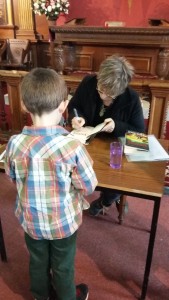
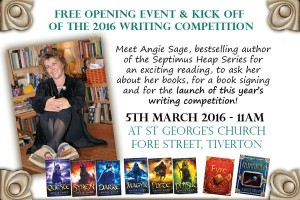
COSTA BOOK SIGNING EVENT: 23rd November at Tiverton, Devon

Costa poster

Interview with Nicola Cornick: House of Shadows

I’m delighted to welcome fellow writer and RNA member, Nicola Cornick, to my site today to answer a few questions about her latest historical romance. So why not take a break, grab a cuppa, and have a read.

coffee and cake

What inspired you to write your book?

The inspiration for House of Shadows came from my love of history and the work I do for the National Trust at Ashdown House, a 17th century hunting lodge with an amazing history. Over the years I have researched so many fascinating aspects of the house and the family who owned it that I knew I had to write a book about it. However the inspiration also came from my own love of reading books with an element of the supernatural in them. I’m intrigued by ghost stories, reincarnation, time slip, magic… I wanted to explore those ideas in a book and House of Shadows was the result!

Do you model any of your characters after people you know? If so, do these people see themselves in your characters?

I think that like a lot of authors I take aspects of the characters of people I know and use them in my writing but I also change a lot of things about the character as well so they are a work of imagination. In House of Shadows there is a character that is based on a very dear friend of mine but only “half” of her. Fran, in the story, is expressive, extrovert and endearingly tactless whereas the friend I modelled her on is very expressive but also discreet and thoughtful.

Whilst researching House of Shadows I was intrigued to discover that no lesser author than Jane Austen had apparently used one of the historical figures I was drawing on as the inspiration for a character in Sense and Sensibility. I think authors are like magpies in that respect. We pick up bits and pieces of inspiration all over the place!

HOUSE OF SHADOWS web

What type of research did you have to do for your book?

I did a lot of research and loved every minute of it! I read a lot of contemporary writing from the 17th century, including Elizabeth of Bohemia’s correspondence and various sets of memoirs that referred to her. I love reading letters because it does give you an insight into the minds of the people who wrote them and feels very personal. I also used a lot of material objects to research the book, especially portraits for the details of things like clothes and jewellery. For the 19th century thread of the story I read about all sorts of things from the lives of courtesans to the work of the Ordnance Survey in mapping England during the Napoleonic Wars!

Which Point of View do you prefer to write in and why?

I’m most accustomed to writing in the third person but for one of the strands in House of Shadows I wrote in the first person and enjoyed it very much. I felt as though I got deeper under the skin of the character – or more closely into their mind. My current manuscript has a dual timeframe and one of those is also in the first person. I’m definitely getting a taste for it! It feels very immediate and real to me.

If you were stranded on a desert island with three other people, fictional or real, who would they be and why?

Ha! Great question! Being stranded on a desert island is a bit different from choosing dinner party guests – I think I’d need people who were resourceful as well as interesting since I’m not very practical myself. I’d go for Florence Nightingale, Prince Rupert of the Rhine and The Frenchman from Daphne Du Maurier’s Frenchman’s Creek!

***

Links

www.nicolacornick.co.uk

https://twitter.com/NicolaCornick

https://www.facebook.com/nicola.cornick/

Nicola Cornic 1

Bio

Nicola Cornick is an international bestselling author of historical romance and historical fiction. She has lived in Oxfordshire for 20 years and draws her inspiration from the myths and history of the local landscape.

Nicola became fascinated with history when she was a child, and spent hours poring over historical novels and watching costume drama. She studied history at university and wrote her master’s thesis on heroes and hero myths. In her spare time she works as a guide in the 17th century hunting lodge, Ashdown House. She also acts as a historical advisor for television and radio.

***

Many thanks for a great interview Nicola,

Happy reading everyone,

Jenny xx


Guest Post from Jane Jackson: Being Mysterious as Rachel Ennis

Today I am welcoming the lovely Jane Jackson back to my site. On this visit Jane is chatting about her latest book, The Loner, which was written by the ‘other her’- Rachel Ennis!

Over to you Jane (or should that be Rachel?)…

For the past fifteen years I have been writing historical romantic fiction. I’m fascinated by life in the past, especially my chosen period of 1795 – 1905. Momentous changes were taking place in every aspect of life: the Napoleonic wars with France, railways that spread like tentacles across the length and breadth of the country, physician Edward Jenner’s development of a smallpox vaccine saving thousands of lives, the Falmouth-based packet service transporting mail all over the world, dispatches to theatres of war, and bringing back gold bullion from the sugar plantations of Jamaica.

The Loner

Society was changing too. The industrial revolution brought a massive exodus from countryside to cities and jobs in the new factories whose prosperous owners were the basis of a new middle class.

The fun and frivolity of the Regency was crushed beneath the repression and hypocrisy of Victoria’s reign. I’d need another lifetime to write all the books I have ideas for.

Then in November 2014 I was offered the chance to contribute to an anthology of Christmas stories published by Accent Press entitled ‘Wishing on a Star.’

Wishing on a Star

This was a great opportunity to write a contemporary story. But as I was stepping outside my comfort zone I decided to set it in a location familiar to me – a Cornish coastal village. I named it Polvellan (translation from Cornish is top – or head – of the mill, because there is an old mill at the back of the quay) and the story featured the birth of a baby during a carol concert, but with a very contemporary twist.

I loved writing it. My editor enjoyed it and suggested a series. That was how ‘Polvellan Cornish Mysteries’ and my new name of Rachel Ennis came into being.

Several authors published, like me, by Accent Press write murder mysteries and they are excellent. But this wasn’t a direction I wanted to take. Then I had my lightbulb moment. I would make Jess Trevanion – my main character – an amateur genealogist. Asked to find people’s ancestors she makes unexpected, shocking, remarkable, and occasionally tragic discoveries. And I get to explore more recent history!

Born and brought up in Polvellan, Jess returned to live there after her husband’s unexpected death left her in desperate financial straits. Because she is known and trusted, people confide in her.

Each of Jess’s friends: Annie, Gill, Morwenna and Viv, has their own story gradually revealed throughout the series, as are Jess’s past and current problems. She and childhood sweetheart, Tom Peters, are rebuilding their romance but both carry baggage from the past.

I never take people from real life as characters. Yet the villagers in Polvellan are as real to me as my family. In some ways I know them better, because in each story they reveal more about their secrets, fears and hopes.

As Jess’s reputation spreads she is asked to undertake more investigations. But some people aren’t happy, afraid of what might come out.

‘The Loner’ is the third in the series. Calling at the cottage of recluse John Preece to give him some tomato plants, Jess finds him dead on the floor.

Police and Coroner deem it an accident: he tripped on the rug and hit his head on the granite hearth.

When talk turns to the funeral arrangements Jess’s sadness becomes resolve when she realises that, like herself, very few people knew the real John Preece. Though he lived in the village for many years, his background is a mystery. Using her investigative skills to research John’s family, she is surprised and horrified by what she finds out.

Meanwhile, she is also investigating the history of Marigold’s, a famous local venue recently inherited by the new heir to the Chenhall estate. Who was Marigold and what was her claim to fame?

***

You can buy ‘The Loner’ 3rd of the Polvellan Cornish Mysteries as an Ebook Pub. for 99p from- http://www.amazon.co.uk/Loner-Polvellan-Book-3-ebook/dp/B01613GQNO/ and all good eBook retailers.

***

Jane Jackson TTH pic

You can find more about the work of Jane Jackson (aka Rachel Ennis) at-

Facebook: www.facebook.com/PolvellanCornishMysteries

Blog: http://writethepast.co.uk

Website: www.janejackson.net

***

Many thanks for a great blog Jane.

Happy reading everyone,

Jenny x 
Page 23 of 25

Powered by WordPress & Theme by Anders Norén