Jenny Kane: Coffee, cupcakes, chocolate and contemporary fiction / Jennifer Ash: Medieval crime with hints of Ellis Peters and Robin Hood

Tag: blog Page 27 of 36

Apaches, Blues and Cadillacs – The ABC of Growing Up With American As A Second Language

I’m delighted to welcome Richard Wall to my place with a fascinating blog about living- and writing- with the duel influences of American and British culture.

Over to you Richard…

Apaches, Blues and Cadillacs – The ABC of Growing Up With American As A Second Language

The USA has been in the news lately for all the wrong reasons. A new president who comes across as petulant, ignorant and divisive, and a spate of mass shootings is giving a great nation extremely bad press when it comes to world opinion.

As ever, the actions of the “few” has created a backlash of bad feeling towards the “many” – ordinary Americans just trying to get on with their lives.

America, it seems, is like Marmite. But whether you love the place with a passion or hate it and all it stands for, there is no denying the huge cultural impact the United States has made on life in Great Britain since the end of WW2.

Opinion varies as to whether this is a good thing or not, but what follows is my personal viewpoint.

As a writer, people often ask me why, as an Englishman, my stories contain so many references to American culture. Well, you could say I had no choice in the matter! Despite growing up in the backwater of a small market town in rural Herefordshire, I’ve been around Americans all my life.

I was born in 1962 and my g-g-generation was (I think) probably the first to be subjected daily to the American way of life without ever having to leave British shores. In the early 1960’s, television technology advanced and TV sets became accessible to more and more UK households; the numbers of channels and programmes increased and TV influences from across the pond came thick and fast. As a result of this, I, like everyone else in my age-group, grew up with American as a second language, absorbing an influence that reflects strongly in my writing.

My earliest memories are of watching John Wayne movies on our old black and white TV, and then playing cowboys and indians (I always wanted to be Geronimo, leader of the Apaches). I watched Neil Armstrong step onto the moon and news reports of the Vietnam war.

There were also countless US TV shows: Champion The Wonder Horse, Casey Jones, Bonanza, Kojak, Starsky and Hutch, The Rockford Files, M*A*S*H, Taxi, and many more.

When I began to take an interest in music I learned that blues men from the 1930’s inspired the Beatles, the Rolling Stones (also in their 50th year), Led Zeppelin and other British bands who took this music back to America to a white audience who were largely unaware of their own musical heritage.

American movies introduced me to classic American cars: Steve McQueen’s 1969 Ford Mustang (Bullitt), Gene Hackman’s 1971 Pontiac Le Mans (The French Connection), Jim Rockford’s Pontiac Firebird and Barry Newman’s Dodge Challenger (Vanishing Point).

Someone once said; “if you can’t see the beauty in an old American car, then you’ve got no soul.

American writers, such as: Stephen King, Andrew Vachss, Elmore Leonard, John Steinbeck, and Langston Hughes (and lately Ran Walker), added layers of depth and context to my TV and film influences, and gave me an ear for US colloquialisms.

When I finally realised my dream and visited the USA (Florida, and Rhode Island, courtesy of a nuclear submarine), I found it every bit as cool and exciting as I imagined it to be as a child.

Since then I have returned many times; visiting California, Oklahoma, New Mexico, Texas, Colorado and including one memorable road trip through Tennessee, Arkansas, Louisiana and the Mississippi Delta, visiting blues heritage sites and seeing with my own eyes the places where my blues heroes were born, lived and died.

All of these lifetime influences have been bubbling and fermenting in a cultural stew that I hope adds flavour to my writing.

My first short story to be published on Amazon was ‘Evel Knievel and The Fat Elvis Diner

An Englishman in Oklahoma is watching a storm approaching when he receives an email on his phone. As he waits for the email to download, it causes him to reflect on his childhood in 1970’s England, his relationship with his father and the journey that brought him to the USA.

Five Pairs of Shorts’ a collection of short stories, some with strong American influences, followed soon after.

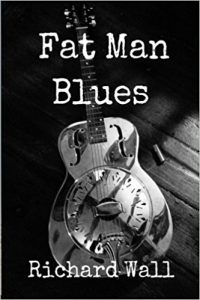
In 2015 came my first novel, Fat Man Blues, inspired by the Mississippi road trip, and which has attracted a great deal of interest (and praise) across the world since its release. Fat Man Blues has opened the doors to a fascinating world where I have been extremely fortunate to meet and become friends with talented and creative people from across the planet.

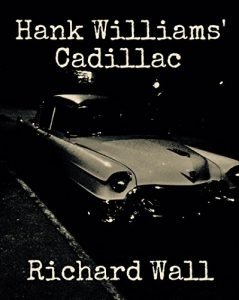
Earlier this year I wrote another short story: ‘Hank Williams’ Cadillac’:

Vince and Stu’s road trip through Texas is cut short when Stu’s ancient Honda breaks down in the quiet town of Rambling. Nearby is Bubba’s used-car lot, containing a collection of classic American cars. Following a bizarre encounter with a talking crow, and a deal signed in blood, Stu trades in his Honda for a powder-blue 1952 Cadillac convertible. Back on the road, the two buddies continue their journey in style, until a series of Burma Shave road signs and an encounter in a cemetery changes things forever.

This was inspired by a road trip with friends, from Oklahoma City to Colorado, which took us along parts of Route 66, where glimpses of the America from my childhood imagination can still be seen. By the way, the cover photograph (taken by me in 2012) features the beautiful 1955 Cadillac in which we took a tour of Memphis.

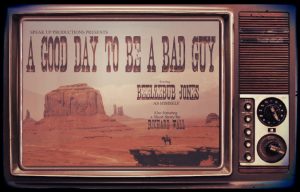
The American influence continues with another short story due to be released at the end of the year. Beelzebub Jones will accompany the spaghetti western-themed concept album of UK Blues Man, Andrew ‘HalfDeaf’ McClatchie.

So, America. Good guys or bad guys?

Well, my personal view is that I’m British and proud to be so, but I can also speak American, because I grew up with it. At the end of the day we are all just people.

Ordinary Americans just want a quiet life, like we all do, and are among the friendliest people on the planet.


In the town of Kingfisher, Oklahoma, I was honoured to meet a WW2 veteran who, it transpired, fought in North Africa around the same time as my late father. He shook my hand with an iron grip and said: In North Africa we had everything and the Brits had nothing. I got nothing but respect for them; you push ’em back and push ’em back and push ’em back until they’re up against the wall and then they come back at you like tomcats…”

These words from an American made me proud to be British.

Oh, and I love Marmite.

***

Richard Wall can be found loitering around www.richardwall.org 

***

Many thanks for sharing your blog with us today Richard. Great stuff.

Happy reading,

Jenny x

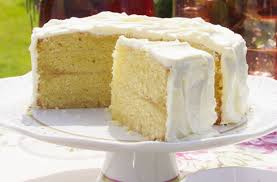
Improving the recipe: a slice of lemon cake

In May of this year I started to write a brand new contemporary fiction novel. Normally I would have finished it long ago, but what with writing a novel as Jennifer Ash and starting Imagine, as well, I have been rather slower with my Jenny Kane words this year.

However, I am delighted to say that I have now reached the redrafting stage of my next novel, which goes by the working title of Lemon Cake, Espresso, and Thigh Boots.

Redrafting is rather like improving a recipe. I’m adding in an extra spoonful of words here and there, taking out excess sugar, and removing the overdose of fat (well commas actually).

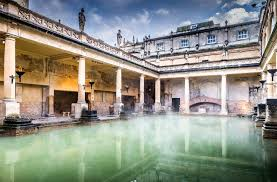
Set in and around both the Roman Baths, Bath and the New York Central Public Library in the USA, this novel will have a little more in the way of spice than my previous JK novels- although not enough for it to warrant an over 18’s only sticker!

Roman Baths

Playful and fun, this story deals with the problems that go hand in hand with consciously deciding to live with two personalities…something I might just know something about.

There will – of course- be coffee involved. Espresso in this case- plus a serious- and I do mean serious- lemon cake craving.

I shall say no more about the plotline for now.

When will it be finished?

Watch this space…

Happy reading,

Jenny xxx


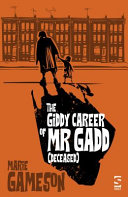
Guest post from Marie Gameson: The Giddy Career of Mr Gadd (deceased)

I’m delighted to welcome Marie Gameson to my blog today to talk a little about her fascinating new book, The Giddy Career of Mr Gadd (deceased).

Over to you Marie…


“Winifred is exasperated by her Catholic mother’s inability to accept her conversion to Buddhism, and by her family’s determination to drag her back to her former life. But when an elderly stranger – haunted by his dead father – turns up on Winnie’s doorstep, insisting that stories she wrote as a teenager hold the key to his supernatural problems, Winnie is forced to renew acquaintance with her younger self.

Why did she write about a Mr Gadd, who died years before she was born?”

The Giddy Career of Mr Gadd (deceased) does have lots of humour, but the main theme is grief – not so much grief for the dead as for the living. The main character, Winnie Rigby, is exasperated that her conversion to Buddhism and attachment to the Orient are strongly resisted by her Catholic family, who make persistent attempts to remind her of the person she used to be.

I wrote this book to explore an issue which has long bothered me, and more so recently:  how do you cope when someone close to you has substantially changed? The reason could be because they have had some physical or mental trauma, joined a cult, become an addict, or simply because they have adopted a new political or spiritual belief system. Of course, in the case of the latter, the grieved-for person can be annoyingly positive about the change; most of us have come across a new zealot, and have good reason to avoid ‘born-again Christians’, or ‘born-again anythings’. But whatever the reason for someone changing, that person is still alive, still looks pretty much the same, and yet is no longer the person you remember.

In the case of Winnie Rigby, after practising Zen Buddhism for some years, she had an enlightening experience whilst on a mountain in Taiwan, which increased her resolve to further her practice. Since being forced back to the UK by her family, she feels alienated and out of touch with her old life; in fact neither her old neighbourhood nor her old acquaintances seem familiar, which is inconvenient, as people who insist they know her turn up with irritating frequency.

Consequently, her only objective is to get back to Taiwan just as soon as she can figure out how to replace the funds that have mysteriously disappeared from her account – (on her instructions according to the Bank) – but which seem to have gone to a cause that sounds suspiciously close to her mother’s heart.

Winnie’s refusal to return to her former persona or to traipse through pointless memories is challenged when an elderly man turns up on her doorstep, haunted by his dead father’s restless spirit, and insisting that the younger Winnie knew something about this late Mr Gadd. Although Winnie has no time for ghosts or superstition, when she is given proof that she did indeed write about Mr Gadd, she reluctantly agrees to try and find out why she wrote about a man who not only died years before she was born, but whose afterlife she seems to have recorded.

But the more she remembers, the more the answers seem to lie in the East. In her search for the elusive Mr Gadd, Winnie may fulfil her wish to return to the Orient – but unravelling the mystery of Gadd is bringing another unexpected revelation.


Taroko Gorge, Taiwan (where Winnie ‘saw the light’)


Although the book took a year to write, the preparation included a few months in Taiwan, two trips to China, an MA in Translation, a dissertation about Chinese ancestor worship, and frankly – countless fags and glasses of wine. It’s really nice that some people have said that they loved the book, but it is possible that I have reacted a little negatively when they have gone on to ask when the next one is coming out…

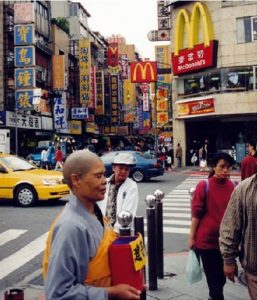
But with that little whinge out the way, the book has been a wonderful journey for me in terms of trying to reconcile East and West. Whether they are truly reconcilable or not, I will finish with a photograph I took some years back in Taipei of a Buddhist nun begging for alms. I rather like it.

Bio-

Marie Gameson is half of the mother and daughter writing team who published The Turtle Run as ‘Marie Evelyn’. Her latest book, The Giddy Career of Mr Gadd (deceased) was published by Salt this summer and is available on Amazon. You can find out more about her and her books at her website, www.marie-gameson.com 

You can buy The Giddy Career of Mr Gadd (deceased) from-

https://www.amazon.co.uk/Giddy-Career-Mr-Gadd-deceased/dp/1784631183/

***

Many thanks for visiting today Marie. This sounds like a fantastic read.

Happy reading everyone,

Jenny xx

Interview with Sarah Dahl: Monk

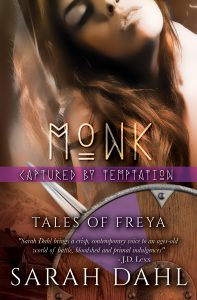
 I’m delighted to welcome Sarah Dahl back to my site to enjoy a cuppa and a chat about her latest historical romance (with spice); Monk.

Why not grab a slice of cake and join is?

What inspired you to write your book?

It has never been clearer than in this case: “Monk” was created out of mild frustration and the question “What if?”. There’s this scene in the first series of History Channel’s Vikings where Ragnar brings home an attractive young monk, Athelstan, who makes the couple curious. They enter his room and ask him to join them in bed. The audience doesn’t get to know if that is a test of Ragnar’s, to check if the “new man in the house” will be a threat to his marriage. Or if they just want to have their own version of fun with the man of God who seems so stressed out by their love-making. We know the Vikings had a very relaxed attitude towards phyical aspects, including sex. The scenario is not too far-fetched. But: in the series, the monk shies away. The atmosphere is sizzling and tense, you literally hold your breath before he answers “no, I can’t” – although you see his eyes and body saying the opposite. That didn’t leave my mind. I wondered if the producers were shying away from his “yes” out of realistic thinking or just Hollywood-esk prudery. We couldn’t know then how the monk’s answer would affect the coming plotlines.

But from that day I pondered the question “What if the monk had said yes? He wanted to. The temptation was too much, he was overwhelmed. He was close to a “yes”. But was it realistic? I thought: Heck, I can do this. I’ll write what would have happened, and make it just as sizzling …

So I did my very own version of a monk being seduced by his Viking captors.

Do you model any of your characters after people you know?

In this case: see above. I bluntly admit to stealing the main characters’ basics from the series, then made them my own people in my own story and setting. I go very much deeper into their minds and world views. All three, Yngvarr, his wife Runa, and the monk Alistair, are very vivid and accessible on several levels. So concerning your question:

Which Point of View do you prefer to write in and why?

I went bold and brave with this one, and made it three points of view. Which is a first, for such a relatively short piece. This way, readers can dive into every character separately and feel with them, make it a tight and direct experience. Eliminate the guessing and questions. You can’t do that with TV-series’ characters, whose feelings and thoughts are guess-work after all. But in “Monk” I play with the three views and how the actions unfolding affect every one of the three – and ultimately change them.

Yes, it’s carnal, but also: very emotional, a revelation, a turmoil, life-changing. All three of them hand themselves over to the situation and come out differently, not having anticipated what this “game” would do to them. So maybe I modelled my characters after what inspired me, but I very much made them my own material and went deep with them. Through their shy monk –  despite him being very much at their mercy – my Vikings are suddenly not so fierce and confident anymore 😉

What type of research did you have to do for your book?

This is especially funny for “Monk”. I’m quite solid concerning Viking research and reality and am very aware of staying realistic and true to the period in every detail. To then be extra-sure I always give the stories to my researcher-friend, John, who then double-checks for any flaws that distort the reality of the era. I was very sure that by now I’m firm enough, and he won’t find anything major, but then came the discussion of “the rope”, haha. He said no sane Viking would just cut the rope that lay around the captives neck. They used iron collars, for one, and then would never cut a valuable rope when freeing the slave. It would be a strange act to destroy the thing. My problem was that the Viking should scare the monk a little with the swift movement of the knife, make him flinch and graze his Adam’s apple; make him aware that he is, from now on, at their mercy. It should break the confident gaze of the captive and display the mortal danger he is in. There’s so much to that brief moment! But could that work with iron collars the Viking would have to fiddle with? Would him forcing these open in slow motion have the same effect for monk and readers as a fast-moved knife? Surely not. My monk would have impatiently rolled his eyes at some point, haha. So: even though my researcher was right, technically, I overruled his verdict and stuck with my fast and threatening knife-movement. I needed to shock the monk, not bore him to death before the real action had even started 😉

Links:

Author homepage and buy links: https://sarah-dahl.com/book/monk

Publisher Pronoun with buy links: https://books.pronoun.com/sarahdahl

Goodreads: https://www.goodreads.com/author/show/16341241.Sarah_Dahl

Facebook page: https://www.facebook.com/sarahdahl13

Twitter: @sarahdahl13

Bio:

Sarah Dahl lives on the edge of the rural German Eifel and writes historical fiction (novels and short stories) primarily set in the Viking age. She also works as an editor, translates, and coaches new writers in German and English. She is interested in everyday life in bygone centuries and the human stories that may have occurred behind the hard, historical facts. Her author page is: sarah-dahl.com 

***

Many thanks Sarah for dropping by today hun. Good luck with your new story.

Happy reading everyone,

Jenny x

End of the month round up with Nell Peters

OK- I am in denial. It is not the end of September! It can’t be…except, it is…

Over to Nell!

Good grief! We’ve reached the end of September already – how did that happen? Anyway, let’s not waste any time as I’m sure you have better things to do, like giving your pet rhino a pedicure, or similar.

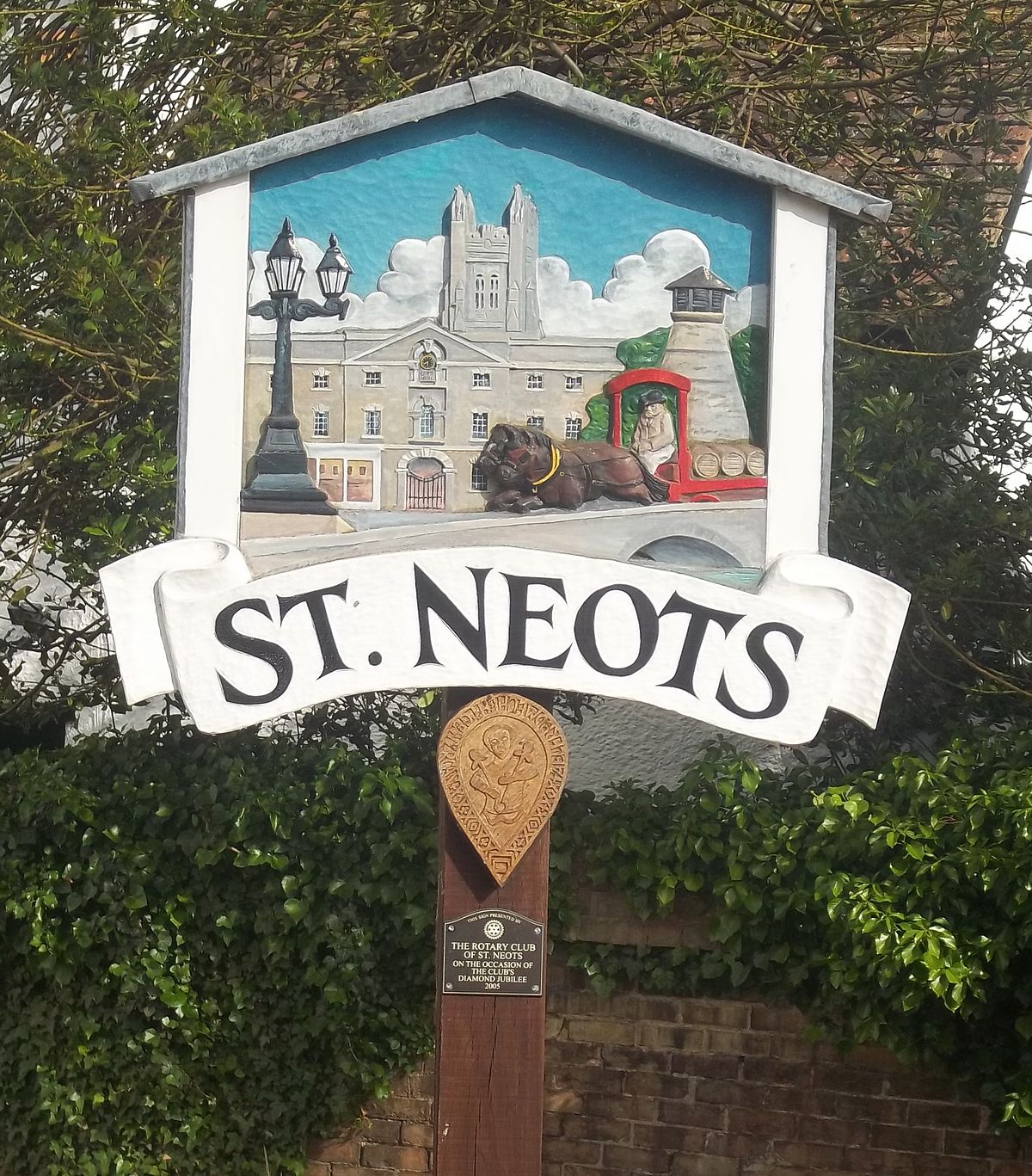
Red-headed actress Rula Lenska was born seventy years ago today as Róża Maria Leopoldyna Łubieńska – wow, pity her poor teachers calling the register. And she must have had custom-made, extra-long name tags for her school uniform. The family claim membership of the Polish aristocracy, with her parents being a count and countess – I wonder how impressed the good folk of St Neots were by that, because that’s where Rula was born. Perfectly nice town though it is, St Neots doesn’t quite conjure the same mental image as Warsaw, Krakow, Gdansk or even Radomsko, does it?

Early on in her career and certainly by the time she hit thirty, Lenska had renounced her countess title. She said at the time, ‘In England it doesn’t count, if you’ll excuse the pun.’ Oh, how very droll. However, a good few years afterwards in January 2006, when she signed up for Celebrity Big Brother, she justified her decision to take part with the words, ‘I’m a crazy Polish countess who likes a challenge’. Do make up your mind, dear.

I’ve never seen CBB – a fact that horrified near-neighbour Peter, who is a designer on the show, when we were chatting at a party locally. Even I, though, knew about RL cavorting with MP George Galloway in a role-play task where he pretended to be a cat licking milk from her cupped hands, and Lenska stroked his ears and moustache. Eew … or perhaps mew. Apparently, she also managed to lock herself in the toilet during her time in the house, giving late singer Pete Burns the golden opportunity to quip, ‘Oh dear, what can the matter be, clapped-out actress stuck in the lavatory.’ How brutal – made me laugh when I read it, of course, but rather mean. I’m hanging my head in shame … really.

My mother also managed to lock herself in the downstairs toilet, a few days before my dad’s funeral. I got a call from the Bluebird lunch carer saying Mum had been in there quite some time and seemed to have forgotten how to slide back the basic lock in order to get out. When Sally (said carer) tried to relay instructions through the door, my mother said she didn’t know what she was talking about and became abusive. So, Sally rang her office and some bright spark there told her to contact me. What sensible advice, when they were in Twickenham and I was at home in Norfolk – a buck expertly passed if ever there was one.

Sally decided a chisel to jimmy the lock was the way to go and so I guided her through the idiosyncratic locked door system of the ground floor – each lock with ever more weirdo-shaped keys that need to be persuaded into action – out into the back garden and around the house to the potting shed. My father was always one for ‘we’ll get a man in’ but did have some basic tools and I was pretty sure that was where they’d be, along with various lawn mowers and other garden machinery, an ancient bicycle or two, a zillion disused flower pots and industrial strength spider webs. After she managed to get the shed door open, Sally quickly located a chisel and squealed with delight when she saw an axe. I persuaded her (with much difficulty) to leave that where it was.

While she was attempting her breaking and entering, she had to hang up the phone, promising to call back when the prisoner had been sprung. An hour passed and I was beside myself with worry, when she finally rang back. Mission aborted. She’d called the Fire Brigade. We had to end the call once again, as she was expecting them to ring. By the time I heard from her again, I was (even more of) a basket case – but job done. Not impressed by three hunky firemen setting her free with a strategically placed crowbar, my mother had spat harsh words at Sally for letting strangers into her house and insulted the poor guys loud and long – nothing to do with dementia, that’s how my mother rocks.

Going back to aforementioned Rula Lenska, Marc Bolan shared her date of birth, but died just two weeks short of his thirtieth birthday when the Mini being driven by his girlfriend hit a tree on Barnes Common – I passed the spot on many an occasion when I lived in London, and there were always flowers placed there. The singer/songwriter/poet/musician was actually born Mark Feld and tried out stage names Toby Tyler and Mark Bowland along the way, before settling on Marc Bolan. Through his father Simeon’s bloodline, he shares Rula Lenska’s Polish (plus in his case, Russian) ancestry, but does not appear to lay any claim to the nobility – so, just dead common like the rest of us.

While at school (from which he was expelled at fifteen for bad behaviour), he played guitar in the trio Susie and the Hula Hoops, with vocalists Helen Shapiro, twelve at the time, and Helen’s cousin the appropriately-named Susie Singer. I can remember Helen’s hit, Walking Back to Happiness – boy I’m old, but not as old as her, because she was born on 28th September 1946, the year before Lenska and Bolan.

The glam rock band T. Rex recorded Ride a White Swan in 1970 with producer Tony Visconti (who also managed David Bowie) – it was the single that changed Bolan’s career, and was inspired by Mungo Jerry’s success with In the Summertime, tempting Bolan away from predominantly acoustic to a more electric sound. Friends Bolan and Bowie both inflicted pretty awful names on their sons – Rolan (although he was named as Rolan Seymour Feld on his birth certificate) and Zowie, who wasn’t so lucky but is now rather more prosaically known as film director Duncan Jones.

The band were originally known as Tyrannosaurus Rex, named after one of the largest carnivorous dinosaurs – a ferocious beastie capable of the ultimate in bone-crushing action. Ouch. These prehistoric predators were approx 40’ long and up to 20’ tall, with strong thighs and long, powerful tails built for speed, plus a 5’ skull which drilled into prey. They suffered from a bit of a design fault, though – while the two-fingered forearms could seize prey, they were too short to reach the mouth and deposit the poor unfortunate victim. Doh! That’s when their serrated, conical teeth came in handy (sorry!) – to pierce and grip flesh, and then rip it away from the body of their quarry. That could become the latest diet craze – tie up your arms somehow to make their reach shorter! Because we don’t have T. Rex-type teeth, no food would make it as far as the lips, ergo no calories consumed – sorted! I may yet become rich and famous …

On this day in 1955, another young man died as the result of a car crash – one James Dean, twenty-four year old American actor and cultural icon of teenage disillusionment, angst and social estrangement, as portrayed in arguably his most famous film, Rebel Without a Cause. American teens of the era easily identified with the dilemma of his character, Jim Stark, who feels that no one, not even his peers, can understand him.

A keen participant in motor racing, Dean was driving his Porsche 550 Spyder to a race meeting when the accident happened, having been stopped less than two hours earlier for speeding. The crash occurred at an intersection, when a 1950 Ford Tudor driven by Donald Turnupseed (I kid you not!) turned in front of the Porsche. Because he was driving too fast, Dean was unable to stop, colliding side-on with the other car. The actor died instantly, while Donald walked away with minor injuries. A subsequent coroner’s jury delivered a verdict that Dean was entirely at fault due to his speed, and found Turnupseed innocent of any criminal act. Fellow actor Humphrey Bogart observed about JD’s image and legacy: ‘Dean died at just the right time. He left behind a legend. If he had lived, he’d never have been able to live up to his publicity.’ Harsh, but possibly true. Unbelievably, according to Forbes Magazine (a US bi-weekly business publication, maxim The Capitalist Tool), James Dean’s estate still makes around $5M annually. Not too shabby …

This year, the Day of Atonement, or Yom Kippur is observed on 30th September, being the 10th of Tishri in the Hebrew calendar, or the tenth day of the seventh month, and is regarded as the ‘Sabbath of Sabbaths’. It is considered the most important holiday in the Jewish faith. Falling in the month of Tishri (variably September or October in the Gregorian calendar), it marks the culmination of the Ten Days of Awe, a period of introspection and repentance that follows Rosh Hashanah, the Jewish New Year.

I wonder quite how that sits with International Blasphemy Day, observed annually (mostly in North America and Europe) on 30/9 since 2009, after a student contacted the Centre for Inquiry in New York proposing the idea, which the CFI supported. Ronald Lindsay, president and CEO of the CFI said of Blasphemy Day, ‘We think religious beliefs should be subject to examination and criticism just as political beliefs are …’ For those who – like me – haven’t heard of the CFI, they are a non-profit educational organization, their primary mission to foster a secular society based on science, reason, freedom of inquiry, and humanist values. In January 2016, Richard Dawkins hitched his foundation’s wagon to the CFI. Probably enough said.

Today is also Chewing Gum Day (a lot of blaspheming going on when folk tread in the damned stuff?), International Lace Day and Family Health and Fitness Day USA – the latter two taking place on the last Saturday in September rather than a specific date. And then there’s National Mud Pack Day, also an American affair. The blurb says, ‘This holiday is for learning and appreciating the use of mud on the face or really any part of the body. Mud packs have been popular for years for facial treatments to keep the skin young, soft and supple, so let today be the day you learn how to nourish your skin with mud.’

No sooner said than done – it has been raining, so I’m off to dig up the garden (or maybe I’ll get a man in) and then luxuriate with a homemade concoction slathered over all the wrinkles. You may not recognise the youthful creature who guest blogs next month – plus, of course, I will be super-skinny from trying out and perfecting The T. Rex Short Arm Diet! May have to work on the name …

Thanks, as always, for having me, Jenny!

Toodles.

NP

Many thanks to Nell for another entertaining and fascinating blog. I will never look at Rula Lenska in the same way again!

Happy reading everyone.

Jenny x


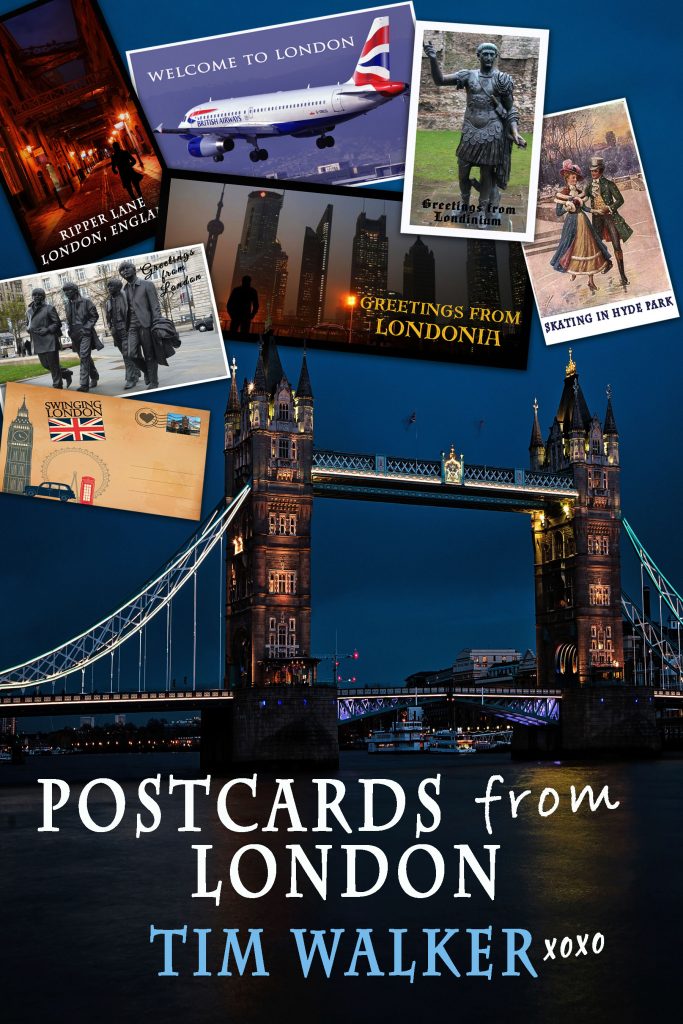
Guest Post from Tim Walker: Postcards from London

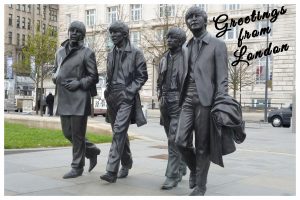
Today I’m delighted to be able to welcome Tim Walker to my site. A successful independent author and former journalist, Tim is sharing a short story from his new collection, Postcards from London. All I’ll say is- this is a must read for any Beatles fan!

So pop the kettle on, put your feet up for five minutes, and indulge a few moments of reading pleasure.

***

Blurb to Postcards of London

The city of London is the star of this collection of fifteen engaging stories from author Tim Walker. Drawing on the vivid history of the city where he has both lived and worked, Postcards from London celebrates the magnificently multifaceted metropolis that is home to 8.8 million people.

Imagine Iron Age fishermen, open-mouthed to see Roman galleys, rowed by slaves, dropping anchor at their village – a place the Romans would turn into the port and fortified town of Londinium. These Romans were the first of many men of vision who would come to shape the city we see today.

London’s long and complex history almost defies imagination, but the author has conjured citizens from many familiar eras, and some yet to be imagined. Turn over these picture postcards to explore his city through a collage of human dramas told in a range of genres. See the tumult of these imagined lives spotlighted at moments in London’s past, present and, who knows, perhaps its future.


Let it Be

A flash fiction postcard in Postcards from London by Tim Walker…

A bright, chilly January morning in 1969 saw Brian on the West End beat. Rounding the corner into Savile Row, he found a small crowd gathering outside Apple Records, the headquarters of world-famous pop group, The Beatles. First bobby on the scene, he asked a young man what was going on.

“We’ve heard a rumour that The Beatles are going to play on the rooftop,” the excited youth said.

PC Brian Smith radioed it in, and was told to enter the building and wait for further instructions. He squeezed past busy roadies carrying equipment up three steps and into the narrow front door of what was a large grey stone converted townhouse – glancing at a row of framed gold records on the walls before his eyes settled on the receptionist. Her pretty face, heavily made-up with Mary Quant mascara on long lashes framed by a lacquered brown bob, wore a pensive look. She hesitated before confirming that the band would be giving a brief performance of their new songs on the rooftop.

“Can I see the manager please?” Brian asked, showing initiative.

“Would that be the Apple General Manager or the manager of The Beatles?” she asked, holding a white phone to her neck.

“Erm, both, if I may… Emily.” He said stiffly, leaning forward to read her name on a green Apple badge.

She punched some numbers on her switchboard and spoke in a quiet voice. “A police officer would like to see you.”

Brian gazed over her head at pictures of his music heroes, the Fab Four. The smell of weed drifted into the room from what looked like the post room behind reception. Emily, seeing him sniff the air, hurriedly pushed shut the door.

“Mr Taylor, the GM, will see you in his office. You’ll have to walk up the stairs, I’m afraid, as there’s no lift. All the way to the fourth floor, left at the top of the stairs.”

Brian thanked her and followed a film crew carrying camera equipment and tripods up the narrow staircase. His radio crackled into life and he stepped into the first floor corridor to improve reception. His CO told him he had no report of permission being granted to hold a public performance on the rooftop, but was unsure if they would be breaking any laws by doing so in their own building, unless it was so loud that it caused a disturbance.

“Find out what you can and report back,” he said tersely. “I’m sending more bobbies for crowd control outside the building.”

Brian looked about him and saw the name ‘John’ on an office door. He pushed the door open and found himself looking at John Lennon, sat with his feet on a desk, leaning back in a swivel chair, smoking a joint.

“Oh, hell, is this a raid?” he asked, looking momentarily startled as he saw Brian’s uniform.

“Erm, no, Mr Lennon. I’m just here to find out about this concert on the roof. Would you mind telling me what it’s all about?”

John pointed to a chair and sat up, squeezing the lit end of his joint and throwing it in a bin.

“Sorry about that, Officer…?”

“PC Brian Smith,” he said, easing himself into a leather armchair, cradling his helmet in his arms. “Oh, don’t worry about that, I’m a big fan, you know.”

“Glad to hear it,” John said, leaning over the desk to shake his hand. “We’ve just decided to play some of our latest tunes for our next album on the roof and make a promo film, if you know what I mean?”

“Erm, yes, but if you make too much noise you’ll disturb the other businesses in the area and we’re bound to get complaints. My boss tells me you’ve not notified the police, and a crowd is already gathering in the street, so maybe…”

John got to his feet and put his arm around Brian’s shoulders. “Look, PC Brian, it’s just a few songs and won’t take long. Why don’t you come up onto the roof and watch? Honest, we won’t make that much noise. You see, the wind will carry our music away into the ether.”

John guided Brian up the stairs, collecting the other Beatles as he went.

“You see, Brian, each of us has our own floor, because we can’t stand the sight of each other after ten years together, ain’t that right Ringo?”

The mop-topped drummer grinned sheepishly as John gathered each group member as they made their way to the roof. Once up there, Brian saw the instruments and speakers set up on a wooden platform, and the camera crew buzzing around their equipment.

“We’re nearly ready, John,” said a smartly-dressed man who looked like he was in charge. He smiled at Brian and held out his hand. “Hi, I’m George Martin. Why don’t you come over here with me? We’ll be starting in a few minutes.”

Brian’s radio crackled and he heard his CO saying, “They’ve barricaded the door, we can’t get in, what’s happening, Smith?”

“I can’t hear you sir, I’ll try to move to get a better reception.” He grinned at George Martin and clipped his radio onto his belt, turning the sound dial down.

After a brief soundcheck, The Beatles started playing. Brian looked down to the street below and saw the crowd had built up considerably, as workers on their lunch break began to converge on the building. Brian knew it would only be a matter of time before his colleagues gained entry. In fact, he had listened with great enthusiasm to five songs before the first of the officers barged their way onto the roof. Turning to George Martin, Brian asked, “How much time do you need?”

Martin smiled and replied, “We’re almost through. Thanks for your support. About ten minutes should do it.”

Brian pushed his way to a burly sergeant and said, “I’ve told them to wind it up, Sarge. Just a few more minutes.” The sergeant glared at him but said nothing. The Beatles were playing a third take of ‘Get Back’ and Paul, seeing that their time was up, cheekily changed the lyrics – “You’ve been playing on the roof again, and you know your Momma doesn’t like it, she’s gonna have you arrested.”

At the end of the song, John cheekily said, “I’d like to say thank you on behalf of the group and ourselves and I hope we’ve passed the audition.”

Brian turned to George Martin who thanked him and shook his hand.

“What will the album be called?” Brian asked.

“Not sure yet – it’ll either be ‘Get Back’ or ‘Let it Be’,” Martin replied.

Brian filed downstairs behind the line of policemen. He would stick to his story that he had negotiated a swift end to the impromptu gig. It was a memory that he would carry forward – much more than another drinking-out story – it was a sense that he had been part of something special that somehow crowned the swinging sixties, and that he was one of the very few privileged people to witness it. That it was to be The Beatles’ last ever performance made it more of a poignant landmark in his London life. It left him with a sense of belonging; a sense of pride; a sense of location on the continuum of history.

***

Author Bio-

Tim is an independent author and former journalist based near Windsor in Berkshire, UK.

Born in Hong Kong, he grew up in Liverpool and studied in South Wales, before gravitating to London where he working in newspaper publishing for ten years. In the mid-90s he went to Zambia in Africa to do publishing-related voluntary work. Following this, he stayed on and set up his own publishing and marketing business, before returning to the UK in 2009.

The River Thames was the inspiration for his first book, an anthology of short stories Thames Valley Tales published in July 2015. This collection of fifteen contemporary stories combines modern themes with the rich history and legend associated with towns and places along the Thames Valley.

In 2016 he published his first novel, a near-future/dystopian thriller Devil Gate Dawn and is currently writing an historical fiction series, A Light in the Dark Ages. The first two parts, Abandoned! (a novella) and Ambrosius: Last of the Romans (a novel) are now available from Amazon in e-book and paperback formats. Part Three, Uther’s Destiny, should follow in early 2018.

In January 2017 he published a children’s book, co-written with his 12-year-old daughter Cathy, called The Adventures of Charly Holmes in e-book format. The paperback was published by Xlibris Publishers in February 2017. In September 2017 he published his second collection of short stories, Postcards from London.

Author website: http://timwalkerwrites.co.uk

Author Central: http://Author.to/timwalkerwrites

Twitter: http://twitter.com/timwalker1666

Facebook Page: http://facebook.com/timwalkerwrites


Book Links:

Postcards from London: http://myBook.to/PostcardsFromLondon

Abandoned: http://myBook.to/Abandoned

Ambrosius: Last of the Romans: http://myBook.to/Ambrosius

Devil Gate Dawn: http://myBook.to/DevilGateDawn

Thames Valley Tales: http://myBook.to/ThamesValleyTales

The Adventures of Charly Holmes: http://myBook.to/CharlyHolmes1

***

Many thanks to Tim for such a great story. Wishing you much success with your new book.

Happy reading everyone,

Jenny xx

Guest post by Jon Hartless: How not to start a novel

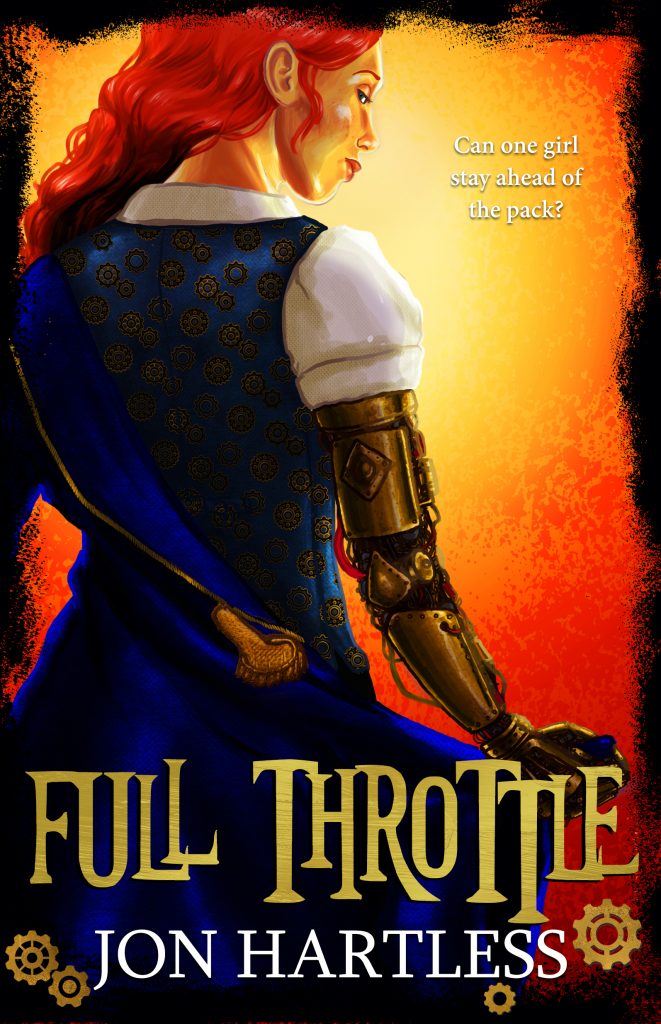
Today I’m delighted to welcome author Jon Hartless, hot on the heels of the publication of his latest book, Full Throttle.

Over to you Jon…

About four or five years ago, I had an idea. That idea was “Let’s write a steampunk motor racing story inspired by the era of the Bentley Boys.”

For those who don’t know, Steampunk is usually set in an alternative nineteenth century timeline in which technology had advanced to a greater degree than in reality, but the idea is flexible so please don’t feel that this definition is the only one. The Bentley Boys were very famous racing car drivers of the 1920s, beloved by the media for their wealth, social status, and derring-do racing lifestyle. This was at a time when most people still couldn’t even afford a car, never mind race one, and as such I thought the world of motor racing would be a perfect symbol for the gulf between the rich and the poor.

As ideas go, this one had quite a lot encoded within it. To begin with, this was to be a dirty, grubby Steampunk world, not a bright, shining version. Despite the presence of cutting-edge technology, my story would only feature glimpses of it, for only the wealthy elite would be able to afford it. This was to be a world very like ours, in which opportunity only exists for the rich and well-connected while everyone else is presented with the illusion of opportunity, a practice very familiar to us today.

And within this world we would focus on a young girl condemned to a life of poverty – material and intellectual – because of her working class background, her gender, and also her disability – she only has one arm, owing to a birth defect, and a weak knee from the same cause. But fortunately for her, her father has a small workshop and a secret project; a petrol engine designed specifically for motor racing. And there it was; an intelligent heroine named Poppy Orpington and a petrol-fuelled monster of a car called Thunderbus would rise up to challenge the racing elite and the social order, to smash conventions apart. Every piece slotted neatly into place.

And having thought of this, and having practically the whole thing in my mind, I then abandoned it to rewrite the core concept.  For no reason at all. Other than I was a complete prawn. For some reason I just lost faith in it and thought I’ll never get it accepted. Instead, I reimagined it as a book for young children, with large pictures on every page, where Poppy is a girl of about 8, whose eccentric father makes a car and they go off racing, towing a caravan behind them.

I then binned that idea and thought of making it a bit more “pulp”; in this version, Poppy – now a grown woman without any birth defect – is heading home from work one evening and is accosted by a sinister man who offers her 50 quid for something called Thunderbus. She has no idea what he’s talking about, and walks on. Then another man pops up and offers her 100 quid. Then two more agents appear and offer 250, and when again she refuses they attack her and try to take her prisoner. Poppy promptly goes Mrs Peel on their arses (old TV reference) and escapes. Back home she finds a letter from a solicitor saying very sorry, your father has died, and you have inherited everything; a small workshop, several debts, and something called Thunderbus.

So, Poppy visits the solicitor who gives her the keys to the workshop and says he has no idea what Thunderbus is. Poppy visits, the workshop, (and is probably attacked again by yet more sinister men), and finds that Thunderbus is a sort of small armoured tank with advanced weapons of the sort that has never been seen before and which will change the face of warfare, hence the many ominous agents want to get their hands on it and have killed her father in the attempt…

And at that point I gave up on that version, though it did briefly rise vampire-like with a new take, in that I thought; what if Poppy’s father knows it will take him about 15 years to make Thunderbus because of the complexity of doing it all alone, plus he knows that super-strength will be required to pilot the tank, and he looks at his baby daughter, asleep in her crib, and lops her arm off, thereafter telling her it is a birth defect and bringing her up to obey him in everything? The action would then jump forward to Poppy as a teen girl, worshiping her father as she has been brainwashed by him, and using her mechanical arm to use Thunderbus as her father commands, blowing up a bank here or a military installation there. The story would have then been of her ‘awakening’ as she realises the Mephistophelian nature of her father and rebels against him. But that idea died a death also. Thankfully.

And so, after all that, I finally thought, “hang on, what was wrong with the racing idea that practically wrote itself?” I went back to that, and the rest was plain sailing. Except for about thirty thousand rewrites and almost one hundred rejections. But these are a writer’s usual problems, or at least they are my usually problems, and finally the book was accepted and published, and here it is. If there is any point to this blog, I suppose it is have faith in a good idea. Or don’t be afraid to change it, if need be. Or something.

I hope you enjoy the book. A lot of torment went into creating it, never mind writing it…

https://www.amazon.co.uk/Full-Throttle-Jon-Hartless/dp/1786154579/ref=sr_1_1?s=books&ie=UTF8&qid=1504447643&sr=1-1&keywords=jon+hartless

https://www.facebook.com/jonhartlessauthor/

Full Throttle Extract:

PREFACE

By James Birkin, Editor.

Today, Poppy Orpington is hardly remembered at all. Some do know that she was a famous racing driver, though only a minority of these are aware that her first car was called Thunderbus, not Thunderbolt, a mistake arising from her later company of that name. Others wrongly dismiss her as the first of the modern celebrities, working the media for fame and money, while a few will gleefully recall libellous newspaper reports of harlotry in a Parisian bawdy house whenever her name is mentioned.

Most, however, are familiar only with her stained reputation from the Great War – a reputation, I maintain, that is thoroughly undeserved. However, I must not get ahead of myself. I shall explore everything in the right order and put Poppy in the context of her era. Her exoneration, should you wish to grant it, must be given at the right time and with a full understanding of Poppy’s character.

This, then, is the beginning of the testimony, taken from diaries, letters and personal contemporaneous interviews. Some may complain that my shaping of this material into a narrative rather than an academic account will diminish the authenticity of the work; I contest that Poppy’s biography is so dramatic in tone, and so rich in style, that it pulled itself naturally into this shape.

Nonetheless, a few disclaimers should be noted. Memory is fragile, and it is unsurprising to see the manner in which events can be transposed, altered and generally misunderstood. Please be assured that I have researched all areas as closely as possible and that everything in this book actually took place, though not necessarily in the order given.

Also, the spoken language at that time was rather more formal than today, especially amongst the upper classes and the well-educated, and this has driven me to lightly edit certain conversations between Poppy, Simeon, Helena and their contemporaries. Please be assured that I have endeavoured to keep the pith of each exchange, sacrificing the semi-archaic speech patterns only for the sake of lucidity.

The reader may ask just why I have devoted so much time to the Orpington archive of diaries, letters and more. Does it really matter what happened to an almost forgotten woman over a century ago? In my opinion, and simply put; yes. Poppy’s life has many parallels today, while her eventual fate in the early years of the twentieth century could – tragically – easily happen again. I will accordingly interpose a series of editor’s notes on those aspects of Poppy’s life that I feel are relevant to us. I shall endeavour to keep these interjections to a minimum, however, as they serve to illuminate rather than to distract.

Join me, then, as we travel back to when motor sport was still open to amateurs – albeit only wealthy amateurs – who could race their own cars side-by-side with the professionals of the day. Back when the sport still boasted heroic individuality rather than corporate wrangling over fuel consumption and weight limits. Back when cars were designed by hand and built by imagination, and were as much for the public road as the racetrack, unlike today’s machine-designed racing vehicles that have no function outside the sport and no individuality within it.

So, let us return to an age which is now regarded as a lost era of romance and rugged individualism, but which was also characterised by gross inequality, a rigid social order, casual violence toward women and unthinking submission toward authority. And let us never forget that the past is golden only when viewed from afar.

***

Bio

Jon Hartless was born in the seventies, which is rather long time ago. Full Throttle is his first novel with a traditional publisher.

Jon Hartless

Many thanks Jon, sounds great.

Happy reading everyone,

Jenny. xx

Guest Post from Sonja Price: A Flight of Fancy

I’m delighted to welcome fellow novelist Sonja Price to my site today to talk about her amazing novel, The Giants Look Down.

Why not grab a cuppa, put your feet up for five minutes, and have a read.

Over to you Sonja…                              

I’ve never been to Kashmir, but I’ve based my novel THE GIANTS LOOK DOWN there. What a cheek you may say! But writers go where their imaginations take them and once mine had been ignited – by a report on the car radio of the Great Earthquake of 2005- I couldn’t put the spirit back in the bottle. I discovered that the Vale of Kashmir is breathtakingly beautiful. Some of the highest mountains in the world cradle a valley lush in sycamore woods and fields of saffron interspersed with a necklace of lakes. A spectacular place to set a story, it also boasts a rich history of maharajas, princes and princesses. But this paradise has been spoilt by strife since the mostly Muslim Vale of Kashmir chose to become part of its Hindu neighbour, India. Two wars have been fought over it and India and Pakistan still stand their ground on a glacier at the highest battlefield of the world, where avalanches claim more lives than armed conflict.

There must be a story in there somewhere, I thought! What would happen if a 10-year-old Hindu girl called Jaya decided to become a doctor much to chagrin of her mother and the patriarchal society of 1960s Kashmir? My aim was solely to entertain and amuse the reader.  I did not want to take sides yet at the same time I tried to depict the situation as sensitively and genuinely as possible and drawing attention to the plight of Kashmiris could surely not be a bad thing in itself, I thought.

I wanted to show Jaya growing up and negotiating the rapids of love when she falls for the son of the family she later stays with in Scotland. Does she have to choose between dashing Alastair, a student of architecture and lover of jazz music, and her dream of becoming a doctor and returning to Kashmir to build a clinic far up in the mountains? Well you’ll just have to read the book to find out!

Going to Kashmir, if only in my mind, albeit with the help of online resources, picture books and interviews with Indians, has been a wonderful journey that started in my car!

Blurb: At the age of 10, Jaya Vaidya decides to follow in her father’s footsteps and become a doctor against her mother’s wishes and all that the patriarchal community of 1906s Kashmir expects of her. When disaster strikes, Jaya is faced with obstacles as insurmountable as the Himalayas. She is transplanted to Scotland, where she has to navigate both a foreign culture and the rapids of love. Just how far will she go to achieve her dream? (Published by Robert Hale, 2016)

Find a copy of THE GIANTS LOOK DOWN here:

AMAZON UK: https://www.amazon.co.uk/Giants-Look-Down-Sonja-Price/dp/0719819954

Author Bio: I live in Somerset but am always hopping on and off planes because I teach English at Jena University in Germany. I studied at the University of East Anglia and completed a PhD in English Literature. I’m a member of the Romantic Novelists’ Association and my short stories have appeared in Stories For Homes, the Shelter Anthology of Short Stories and In these Tangles, Beauty Lies, an anthology in aid of the Beanstalk Trust for children with reading difficulties. My debut novel The Giants Look Down came out in 2016 and made me a finalist for the Joan Hessayon Award.

Links

Website:                      www.sonja-price.com

Twitter:                       @PriceSonja

Facebook:                   Sonja Price Author

You can find THE GIANTS LOOK DOWN as a paperback or e-book on:

AMAZON UK: https://www.amazon.co.uk/Giants-Look-Down-Sonja-Price/dp/0719819954

Many thanks Sonja, for a brilliant blog.

Happy reading everyone,

Jenny x

End of the Month Blog: Nell’s Gone Aussie!

Is it me, or are the months just rushing by? 

Believe it or not, it’s that time again…Over to Nell!!!

G’day, cobbers. Nice of you to drop by – I’ll just throw another shrimp on the barbie and grab some tinnies from the fridge … OK, I’m feeling so much better now I’ve got that bit of blatant stereotyping out of my system. To be fair, despite my late father-in-law being born and bred in Australia, I’m pretty sure I never heard him say ‘cobber’, ‘barbie’ or ‘tinnies’. Not even a random ‘g’day’ …

Staying with the antipodeans for a mo, and jumping on the bandwagon of all the WWI hundredth anniversaries being celebrated (if that’s the right word?) between 2014 and 2018, on this 243rd day of the year in 1918, the Battle of Mont Saint-Quentin began. This was a successful assault by the Australian Corps during the Hundred Days Offensive, aka a rapid series of Allied victories starting with the Battle of Amiens. Defences were weakened by continual Aussie raids, the troops employing a process called ‘peaceful penetration’, which forced the German retreat from France to beyond the Hindenburg Line. Thereafter an armistice was declared. Call me picky, but a sentence that includes ‘raids’, ‘penetration’ and ‘retreat’ doesn’t immediately convey to me a particularly ‘peaceful’ option.

Former Melbourne lawyer Robert Menzies (which he pronounced Ming) and his funny eyebrows didn’t serve in WWI, even though he was of age, but he did authorise Australia’s entry into World War II in September 1939, when he was leader of the United Australian Party (UAP).

However, in 1941 he spent four months in England contributing to Churchill’s War Cabinet powwows, and upon his return found he had lost the party’s support – how very fickle of them. Ming resigned as Prime Minister and in time helped form the Australian Liberal Party, being elected as its inaugural leader on this day in 1945. He again took office as PM in December 1949 and stayed put until 26th January 1966 (Australia Day), when he resigned.

Born in 1940, multi-award winning Australian actor Jack Thompson celebrates his seventy-seventh birthday today. That wasn’t his name at birth, though – step forward baby John Hadley Pain. The poor little chap was just four when his mother died, leaving his merchant seaman father unable to care for him and his brother, David. He was sent to an orphanage by his aunt and from there was adopted by John and Pat Thompson – hence the change of surname. Film reviewer Peter Thompson (also my dad’s name) is his adoptive brother – I’ve never heard of him either.

The Australian version of Who Do You Think You Are? featured the actor in its first episode in 2008, discovering that his great-grandfather was Captain Thomas Pain, and his great-great uncle Alfred Lee, a prominent figure in Sydney society. Philanthropist Alfred donated the journal of Sir Joseph Banks, British naturalist and explorer, documenting Captain Cook’s voyage to Australia in the 1770s to the Mitchell Library in Sydney. Bonza!

Other actors sharing this birthday are; Richard Gere (loved Pretty Woman! 1949), Roy Castle (1932), James Coburn (1928), Buddy Hackett (1924) and Richard Basehart (1914). Although a pianist rather than actor, American Big Tiny Little (1930) earns his place on the list simply by virtue of his odd name. Using that criterion, let’s throw in Roman Emperors Caligula (scary chap! 12) and the outright winner, Commodus (161).


People born under the Virgo sign are typically analytical, kind, hardworking and practical. They tend to worry, are shy and don’t like to be the centre of attention, as they are modest, faithful, and quiet folk. With a tendency to be persuasive, they have a good memory* and sense of reasoning and are skilled at detailed work. Virgos are also known for their intellect and usually embrace art, literature, science, or mathematics.

Shall we plant our tootsies firmly back on British soil? In my August 2016 blog I mentioned that it was the OH’s birthday on the 31st – funnily enough, it is again this year. At least he’s consistent. (*Can I just mention here that he has a memory like a leaking sieve and is persuasive only because he is like a dog with a bone and doesn’t give up, so that others eventually lose the will to live and capitulate?) Again, it’s the anniversary of Princess Diana’s death, twenty years ago now – a twentieth wedding anniversary is china, but I’m not entirely sure how that would translate to the anniversary of a death. Quite possibly in no way at all, although I’d hazard a wild guess some wannabe entrepreneur somewhere has mass-manufactured a tacky commemorative mug. Was it really two decades ago that the accident happened, opening the floodgates for conspiracy theorists everywhere – not to mention making lots of florists rich when the public en masse bought bouquets, only to leave them rotting outside Kensington Palace in a public display of grief?

I didn’t watch Diana’s funeral on TV, although I have seen various clips of it over the years, most poignantly her two young sons following her coffin under the gaze of a worldwide audience. In contrast to all the pomp and ceremony that accompanied Diana’s day, I have recently organised a funeral on the other end of the scale – an occasion as low key as possible, to minimise my mother’s confusion when we buried my father; the aforementioned Peter Thompson. My mother has vascular dementia (as did my father) and is basically away with the fairies. Lucky her.

Because he had no religious conviction whatsoever, we opted for a graveside ceremony only in order to shorten proceedings. Overcoming pronounced differences in height, my sons and niece were pallbearers of a coffin decorated with Spitfires – although Peter wasn’t a pilot, his father was during WWI (not flying Spitfires, obvs – Sopwith Camels, I believe) and it was most likely his influence that fired an interest in vintage aircraft in his youngest son, who had quite an impressive collection of dust-attracting models. On the coffin lid sat a single red rose (donations to charity in lieu of flowers) and a battered old trilby that my father insisted on wearing to annoy the grandchildren, having a whole shelf of much newer/smarter hats in his wardrobe.

Instead of a priest or celebrant, we used the services of the Conductor; he was part of the funeral director’s staff, in charge of the proceedings and making sure everything ran smoothly. It was him who read out a short eulogy and tributes written by the grandchildren – he didn’t look at all like Mr Conductor of Thomas the Tank Engine fame. Well, not much. When it was over, we all adjourned to a local hotel for some much-needed alcoholic refreshment and buffet food – not a stale sausage roll to be seen – and in a final act of symbolism, each grandchild launched a black star helium balloon skyward from the car park. This may have given pilots taking off from Heathrow one or two worrying moments.

I was talking over the garden fence to neighbour David recently – his mother died a few weeks before my father, and he so rightly observed that there’s nothing like a death/funeral to bring out the very worst in people. No horror story I could relate beats the behaviour of his step-father, who refused to let David and his sister into their family home, after his wife died. He also arranged an alternative, rival wake to David’s, following the funeral that David organised and paid for, and – most bizarre of all – ordered from the florist an ostentatious wreath spelling out HUSBAND, to ride along with the coffin! Huh?

That should surely be termed a grave offence – so sorry! Nowt so strange as folk, as they say. Those shenanigans are pretty hard to top, so I won’t try and I’ll say toodles, until we meet again.

NP

www.Author.to/nellpeters

Huge thanks as ever hun. Fun, thought provoking, moving and- as an added bonus- a history lesson. Love it.

Happy reading,

Jenny xx

 

Abi’s House: Cornish Romance

My Cornish novel, Abi’s House, was never meant to be a romance. I hadn’t noticed it was until after I’d written it. Yet, within this tale of friendship and self discovery there lies a good old fashioned love story. 

Abi's House_edited-1

Here’s a reminder of the Abi’s House blurb!!

Newly widowed at barely thirty, Abi Carter is desperate to escape the Stepford Wives-style life that Luke, her late husband, had been so keen for her to live.

Abi decides to fulfil a lifelong dream. As a child on holiday in a Cornwall as a child she fell in love with a cottage – the prophetically named Abbey’s House. Now she is going to see if she can find the place again, relive the happy memories … maybe even buy a place of her own nearby?

On impulse Abi sets off to Cornwall, where a chance meeting in a village pub brings new friends Beth and Max into her life. Beth, like Abi, has a life-changing decision to make. Max, Beth’s best mate, is new to the village. He soon helps Abi track down the house of her dreams … but things aren’t quite that simple. There’s the complicated life Abi left behind, including her late husband’s brother, Simon – a man with more than friendship on his mind … Will Abi’s house remain a dream, or will the bricks and mortar become a reality?

Check this out this video about Abi’s House!!-  YouTube link https://youtu.be/VAumWAqsp58

So if you love the Cornish countryside, a touch of romance, a story with twists and turns- and a cute Labrador…then this is the book for you!

You can buy Abi’s House from all good bookshops and via online retailers, including…

Kindle

http://www.amazon.co.uk/Abis-House-Jenny-Kane-ebook/dp/B00UVPPWO8/ref=sr_1_1?s=digital-text&ie=UTF8&qid=1426711175&sr=1-1&keywords=Abi%27s+House+Jenny+Kane

http://www.amazon.com/Abis-House-Jenny-Kane-ebook/dp/B00UVPPWO8/ref=sr_1_2?s=books&ie=UTF8&qid=1426711253&sr=1-2&keywords=Abi%27s+House+Jenny+Kane

Paperback

http://www.amazon.com/Abis-House-Jenny-Kane/dp/1783753285/ref=sr_1_1?s=books&ie=UTF8&qid=1426711253&sr=1-1&keywords=Abi%27s+House+Jenny+Kane

http://www.amazon.co.uk/Abis-House-Jenny-Kane/dp/1783753285/ref=sr_1_1?s=books&ie=UTF8&qid=1426711343&sr=1-1&keywords=Abi%27s+House+Jenny+Kane

The sequel to Abi’s House, Abi’s Neighbour, is also contains a love story- but this time it’s the older generation having all the fun!

Here’s the blurb to Abi’s Neighbour- 

Abi Carter has finally found happiness. Living in her perfect tin miner’s cottage, she has good friends and a gorgeous boyfriend, Max. Life is good. But all that’s about to change when a new neighbour moves in next door.

Cassandra Henley-Pinkerton represents everything Abi thought she’d escaped when she left London. Obnoxious and stuck-up, Cassandra hates living in Cornwall. Worst of all, it looks like she has her sights set on Max.

But Cassandra has problems of her own. Not only is her wealthy married lawyer putting off joining her in their Cornish love nest, but now someone seems intent on sabotaging her business.

Will Cassandra mellow enough to turn to Abi for help – or are they destined never to get along?

Complete with sun, sea and a gorgeous Cornwall setting, Abi’s Neighbour is the PERFECT summer escape.

***

Happy reading everyone,

Jenny xx
 

Page 27 of 36

Powered by WordPress & Theme by Anders Norén