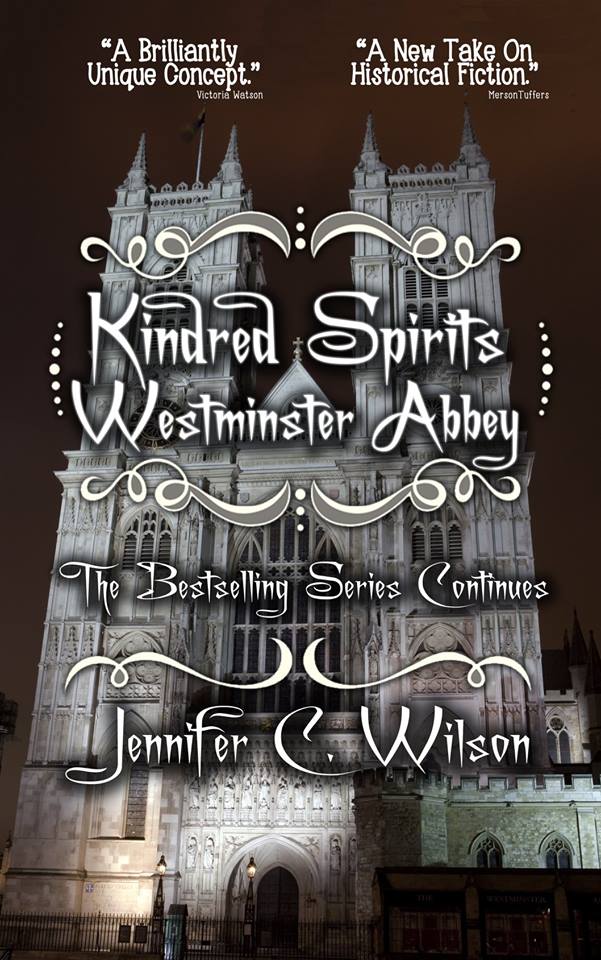
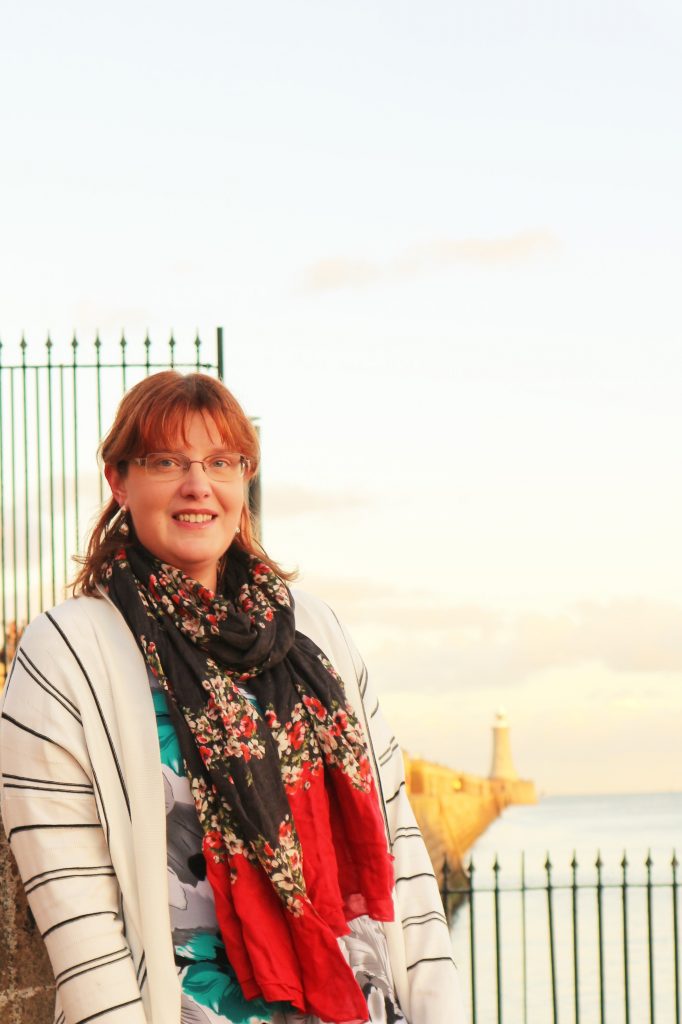
Jenny Kane: Coffee, cupcakes, chocolate and contemporary fiction / Jennifer Ash: Medieval crime with hints of Ellis Peters and Robin Hood

Category: Historical fiction Page 14 of 25

Ask a writer: Robin of Sherwood

Two weeks ago I had the pleasure of attending the Hooded Man Event in Gloucester. This gathering was for fans of the 1980’s television show Robin of Sherwood – a show that I have recently written three brand new audio scripts for.

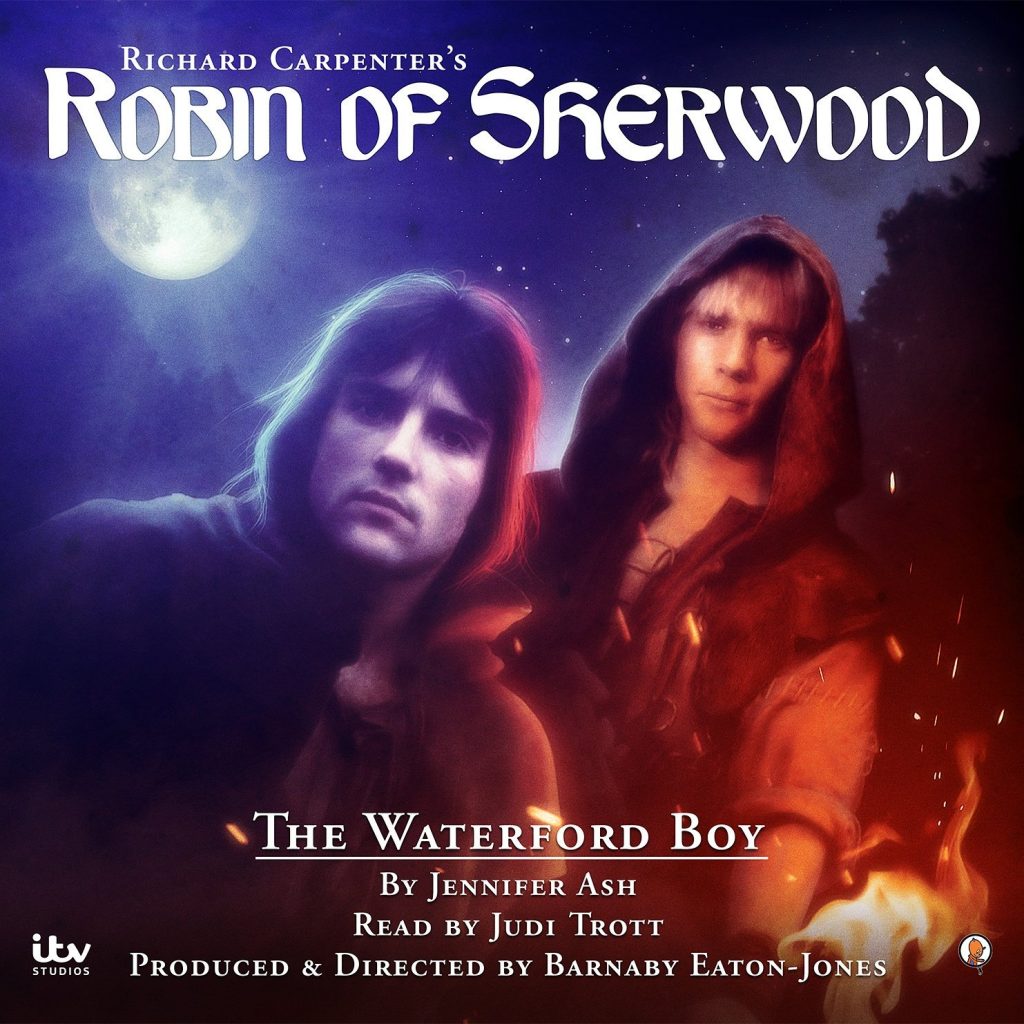
While I was in Gloucester I was busy selling my novels, so I didn’t get to talk to as many people as I would have liked. Since my return to Devon, I’ve been asked a number of questions relating to the writing of those three scripts – The Waterford BoyMathilda’s Legacy – The Baron’s Daughter.

Today, I’m going to attempt to answer those questions. Obviously the answers I give are from my angle only. I don’t work for Spiteful Puppet or ITV- so I have no knowledge as to what the future holds for RoS.

So- in no particular order….

How difficult is it to switch from writing books to script writing for audio?

Script writing is a whole new world. I had never written a script before, so I was learning fast when I wrote The Waterford Boy. I was kindly lent a couple of scripts that Iain Meadows (The Blood that Binds and The Templar’s Promise) had written in the past, so I knew how to format my work, but beyond that I felt my way along. (With help from Iain and Barnaby)

I’ve been a novelist for 12 years, so it was quite a challenge suddenly writing something where I couldn’t describe a scene properly with words. Everything has to be displayed via dialogue and background sound. This meant that writing about someone’s appearance, for example, has to be done via the comments of other characters. The scene in The Waterford Boy, where Robin, Will and Nasir disguise themselves to blend into Nottingham market, was particularly tricky to put together for that very reason.

It was slightly easier writing the two narrated stories- The forthcoming The Baron’s Daughter however, is a full cast reading…so that needed everything explaining via conversation and sound effects. You’ll find out if I managed that in a few months time!

Although writing scripts is a very different skill to writing a novel- I loved it! Let’s hope I get to do some more one day.

Will Robin of Sherwood audio do anything like prequels or sequels for example prequel Rebels of Loxley or the daughters (sons) of Sherwood? Any plans to expand the Robin of Sherwood universe further?

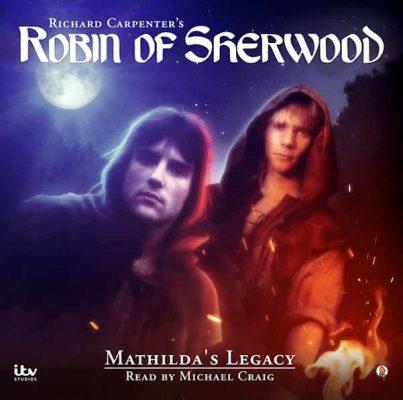
I’d have to say ‘no’ to that. The licence for what Spiteful Puppet can do is strict- plus, there isn’t the mega multi-national audience that you have for other popular shows such as Doctor Who or Star Trek. The prequel angle has been explored a little bit with Mathilda’s Legacy (the story of how the Earl of Huntington met Robert of Huntington’s mother).

However, if you enjoy all stories Robin Hood, then there are many writers who have been inspired by Robin of Sherwood and have expanded into many other directions, from fantasy to comics to legend redevelopment. You only have to look at my fellow audio script writers Paul Kane (The Red Lord) and Tony Lees (The Trial of John Little– coming soon) to find a collection of Robin Hood stories to keep you going for ages.

Do you make drawings to picture parts of your audio-book stories?

The only art work associated with the audio books is the brilliant cover showing both Robin’s.  I am not responsible for that thankfully – which is probably just as well as I have no artistic skill at all! I wish I did.

Once you knew you were doing more than one audio story, did you put your own returning characters (other than the obvious) into the stories, or was that a temptation too far (against the canon)?

It would be so tempting to do that. I would love to write more about Mathilda of Huntington if the chance ever arose. (Unlikely!) However, the answer to the question is ‘no’. The stories are slotted into the ready made framework of the existing episodes, and so any onward play with my own invented characters wouldn’t be practical – although it would be fun for me as writer.

However, I have enjoyed making reference to the characters we know and love. I took great pleasure, for example, in referencing Lord Edgar in Mathilda’s Legacy– Robert’s mother clearly had very little time for her future brother-in-law….

It is wonderful to be able to play with the nostalgia we all feel for the characters we loved – and the ones we loved to hate.

Which was your favourite of the audio scripts you’ve written?

Tricky one.

The Waterford Boy will always be special because it was my first script- and it made a dream come true. Never did I think I’d write for the best TV show of all time (to me anyway!) Judi Trott read it so beautifully as well. I have to confess to listening to it often just to hear her lovely voice.

The Baron’s Daughter was also special because it was my first full cast script. I got to put words into Michal Praed’s mouth – and who wouldn’t want to do that???

However- if pushed- I think Mathilda’s Legacy is my favourite. Partly because it was the first one I heard as a completed audio. The second I heard Michael Craig read my words- and then the famous theme music burst into life- I was a star struck 14 year old unable to believe that  I was listening to a story I’d created.

It was also quite something being given the responsibility of inventing (to some extent- David of Huntington was married to Mathilda) Robert of Huntingdon’s mother. I hope you all like the woman I created to be a future heroes mother.

Which was your favourite RoS episode?

That is an impossible question. I love them all. To narrow it down – it was either Adam Bell (first one I ever saw) or Herne’s Son parts one and two or The Prisoner…or…..

Many thanks to everyone who has sent questions to me since the HM3. I have been overwhelmed by the kindness showed to me after I fiddled with your favourite stories. I promise, if I am ever lucky enough to write more, I will continue to try as hard as I can to be true to the Robin of Sherwood ethos, and write stories to make you feel as though you have been transported back to 5.35 on a Saturday afternoon in the 1980’s. Well – I’ll try anyway!

Nothing’s forgotten,

Jennifer x

Paul Kane: Living and Breathing Robin Hood

Robin Hood obsessive alert!!!!

You’ve been warned…

I’m delighted to welcome Paul Kane to my place today. Fellow Robin Hood fan, writer of an audio script for Robin of Sherwood- and author of very much more.

Over to you Paul…
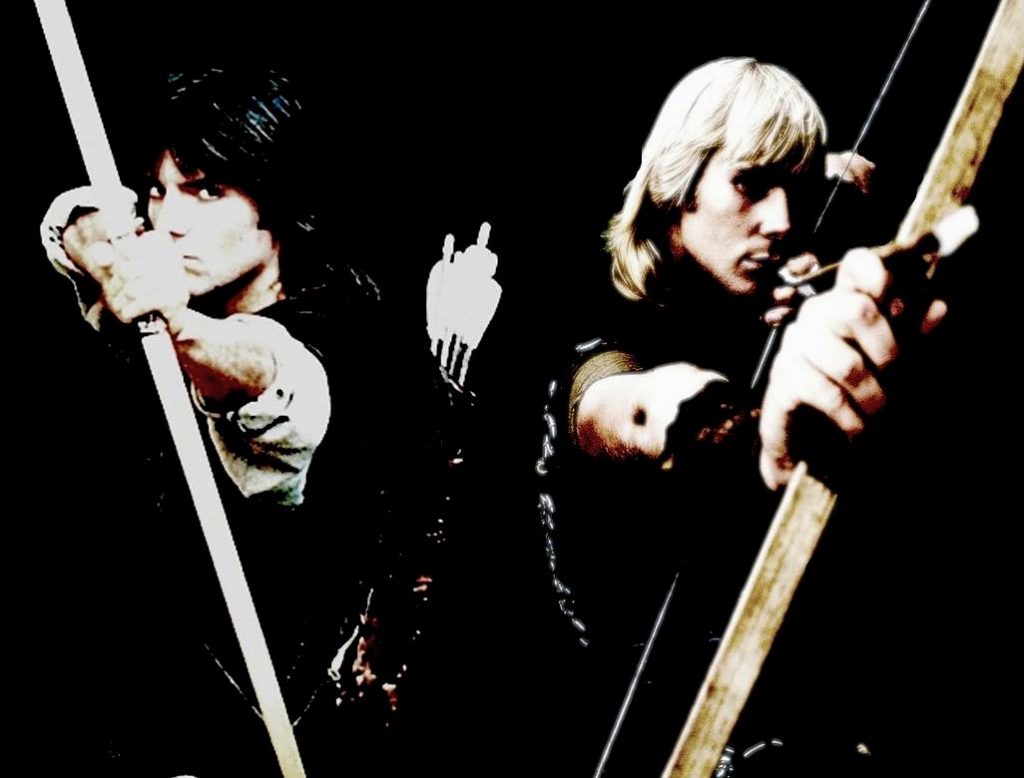
When Jen very kindly asked me to contribute a blog to her site regarding my connection with the Robin Hood legend, I started to think about how long he’s been in my life. From an early age, bank holidays were very often spent at Sherwood Forest – we lived about 20 minutes away from it. So, as well as learning about the legend – about Robin and Marion, Little John and Friar Tuck, Will Scarlet – I was breathing the same air they did back then, soaking up the atmosphere.

Then along came Richard Carpenter’s Robin of Sherwood, which I would sit and watch religiously with my dad, and Saturday teatimes would never really be the same. Of course, back then I had no idea it had been created by the same man who came up with the wonderful Catweazle, I just knew that this was a version of Hood I could get behind. As well as having all the traditional elements to it, the robbing the rich to give to the poor and so on, it also had a supernatural slant: I mean, come on, the very first episode was called ‘Robin Hood and the Sorcerer’… doesn’t get any better than that! Except, actually, it did – and as we tuned in every week we would marvel at witches, demons, Satanic cults and woodland gods. I was in seventh heaven!

Even when it came time for Michael Praed to step down from the title role, the changeover to Jason Connery was handled seamlessly. In fact, I loved it even more not knowing what was going on at the end of ‘The Greatest Enemy’. Had Robin come back from the dead, was he a ghost? No, in fact what had happened was a clever segue into that other origins story, Robert of Huntingdon taking over the mantle from Robin of Loxley – but both of them Herne’s sons. Wonderful stuff!

Then, sadly, the show finished and I mourned its passing. I watched all the other adaptations over the years – some of which even included elements that Richard had invented, like the Saracen – but none ever came close for me. Only repeated viewings of his series, when it became available, would do. At the same time, my own writing career had started to take off, moving on from journalism to short stories and finally novels and scripts, as well as taking on the job of Special Publications Editor for the British Fantasy Society and helping to run their yearly convention, FantasyCon. It was around 2006 or 2007 that I spotted a shout out for pitches from Rebellion, the publishers of 2000 AD (another staple of my formative years). They were moving into novels, in particular those which would be part of a shared universe called ‘The Afterblight Chronicles’ – set in a future where 90% of the world’s population had died out from the A-B Virus.

I knew commissioning editor Jon Oliver from my time on the convention circuit, so I threw over a few ideas – one of which was a post-apocalyptic version of Hood. It just seemed like an obvious choice, once society had crumbled and mad dictators had taken over, to bring that legend back to life. It would be part of the Chronicles, but also a very distinct story in its own right. Luckily, Jon agreed, and suddenly I was writing my first mass market paperback: Arrowhead. Needless to say, my version was heavily influenced by RoS, whilst still going its own way; it had to really, as my Robin – Robert Stokes – was facing tanks and attack helicopters. Also needless to say, I was delighted when the book was so well received that another was commissioned shortly after the first’s release (a terrific launch ten years ago at FantasyCon in, appropriately, Nottingham).
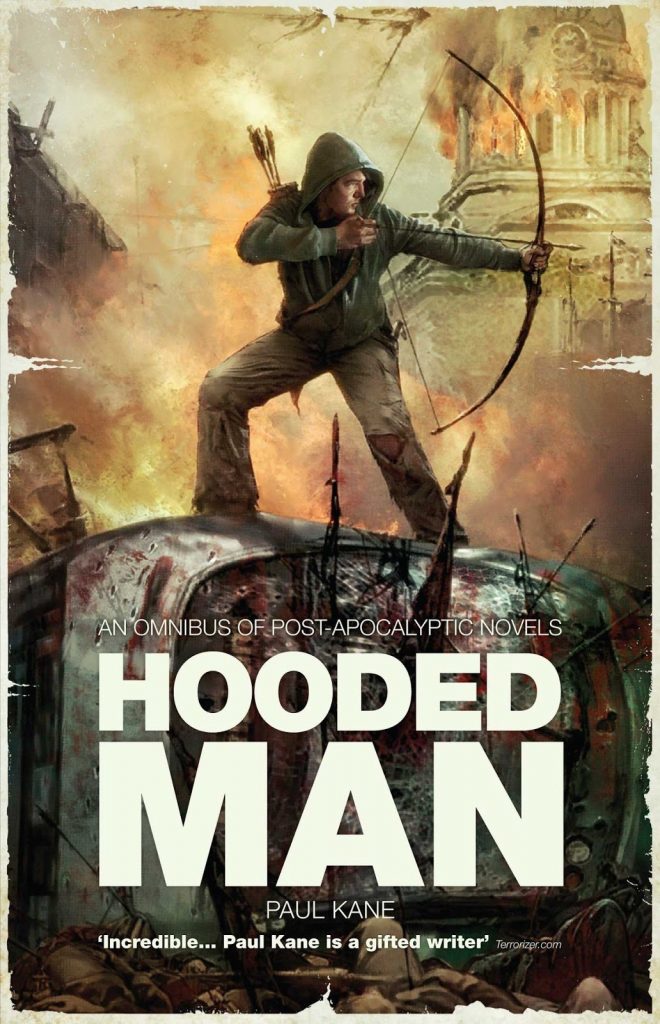
I remember I had some vague notion about doing the whole ‘death of Hood’ legend – firing the arrow into the sky and all that – when it came to writing the sequel Broken Arrow. Thankfully, Jon talked me out of it saying: “When you have a hero like that on your hands, you don’t kill him off that quickly.” He was absolutely right, of course, and after that novel came Arrowland, forming a trilogy of books Rebellion released as the omnibus Hooded Man (which sold out of its first print run incredibly quickly). Not only that, but the novels had put me on the radar of…none other than Richard Carpenter, or Kip as I came to know him. He loved them, offered me a glowing quote, and even gave his grandson a copy to read. Imagine my joy at that – things had pretty much come full circle.

Or had they?

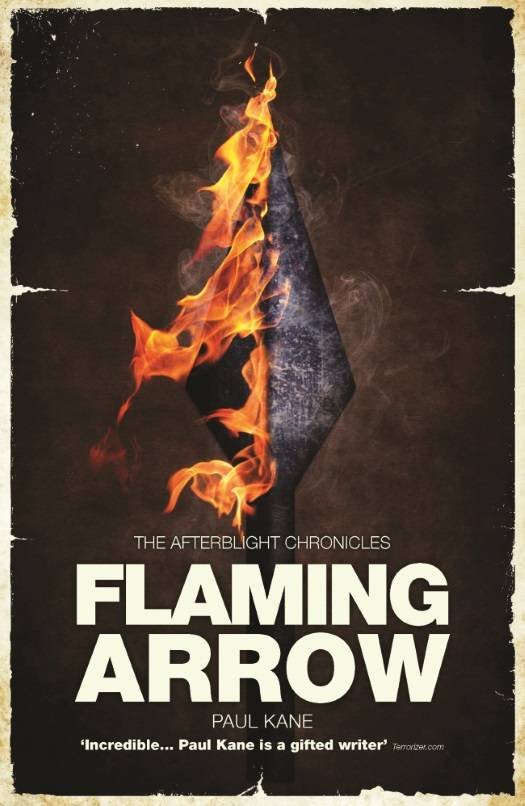
Spin on a few years, during which I’d pursued a couple of my other passions (the work of Clive Barker and Sir Arthur Conan Doyle, even crossing them over in books like Sherlock Holmes and the Servants of Hell) and mourned the sad passing of Kip himself. The world is still a poorer place without him. Rebellion had also asked me to continue the Hooded Man story with a novella which caught up with the characters a few years later, Flaming Arrow. And I was very excited to hear that RoS was returning in the form of a full cast audio adaptation of Kip’s Knights of the Apocalypse from Spiteful Puppet, something I reviewed for Sci-Fi Bulletin.
More audios followed, some of which I also reviewed – and during the course of this I got chatting with that lovely chap Barnaby Eaton Jones, of Spiteful Puppet. I mentioned the Hooded Man books, sent him a copy, and the next thing I knew I was being asked to pitch a RoS audio myself. As luck would have it again, I’d just finished my first audio script – a full cast drama adaptation of The Hellbound Heart for Bafflegab, which would star Tom Meeten (The Ghoul), Neve McIntosh (Doctor Who) and Alice Lowe (Prevenge) – so I felt confident enough to have a crack… sort of. It was still RoS and there was massive amount of performance anxiety, as you can probably appreciate.

But anyway, I began to think about elements of the show I’d loved myself and what we hadn’t seen so far in it. And, personally, I’d always thought it would be cool to see Robin and his band go up against a vampire, or at the very least someone who thought he was a vampire. I jotted down some ideas for a tale which pitted them against a Vlad the Impaler-type character, driven from his homeland and now a mercenary – and right there and then, The Red Lord was born.
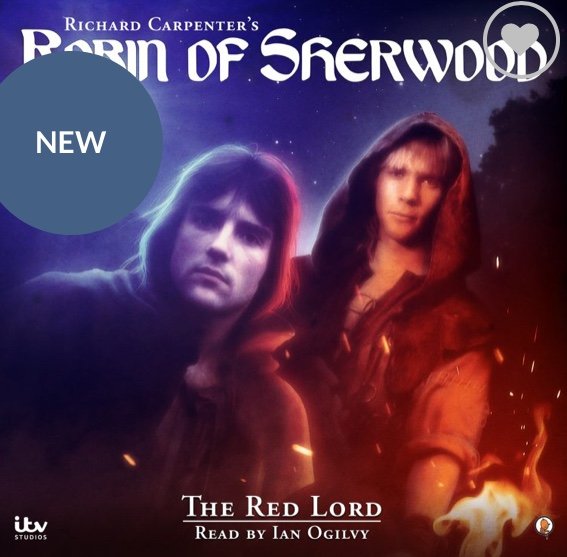
I was over the moon when the pitch was commissioned, and even more thrilled when the script itself was passed – with a few minor tweaks – by SP and ITV. It was then that Barnaby told me it was being recorded soon, narrated by none other than Ian Ogilvy. Ian had played Lord Edgar in RoS, but also another quite well known character from my childhood. My better half Marie will tell you when that news came in, I screamed: “You’ll never guess who’s doing my audio! Only the Saint!” Yes, I don’t mind admitting I am that much of a geek…

And so it’s done, is totally wonderful, and something I’m incredibly proud of. Well, I would be, having lived and breathed Robin Hood – and Robin of Sherwood – all these decades. I hope the fans like it, after all I am one too, and I like to think that somewhere Kip is smiling as well.

Does this mean that everything’s finally come full circle now? Perhaps – but who can tell what the future will bring? Not me, that’s for sure. For now, though, I just feel incredibly fortunate to have had not one but two bites of the cherry.

Thanks for reading, thank you Jen for letting me waffle on, and finally may Herne protect you all!

Buy Links

Hooded Man:
Flaming Arrow:
The Red Lord:

Paul Kane is the award-winning, bestselling author and editor of over seventy books – including the Arrowhead trilogy (gathered together in the sellout Hooded Man omnibus, revolving around a post-apocalyptic version of Robin Hood), The Butterfly Man and Other Stories, Hellbound Hearts, The Mammoth Book of Body Horror and Pain Cages (an Amazon #1 bestseller). His non-fiction books include The Hellraiser Films and Their Legacy and Voices in the Dark, and his genre journalism has appeared in the likes of SFX, Rue Morgue and DeathRay. He has been a Guest at Alt.Fiction five times, was a Guest at the first SFX Weekender, at Thought Bubble in 2011, Derbyshire Literary Festival and Off the Shelf in 2012, Monster Mash and Event Horizon in 2013, Edge-Lit in 2014, HorrorCon, HorrorFest and Grimm Up North in 2015, The Dublin Ghost Story Festival and Sledge-Lit in 2016, plus IMATS Olympia and Celluloid Screams in 2017, as well as being a panellist at FantasyCon and the World Fantasy Convention, and a fiction judge at the Sci-Fi London festival. A former British Fantasy Society Special Publications Editor, he is currently serving as co-chair for the UK chapter of The Horror Writers Association. His work has been optioned and adapted for the big and small screen, including for US network primetime television, and his audio work includes the full cast drama adaptation of The Hellbound Heart for Bafflegab, starring Tom Meeten (The Ghoul), Neve McIntosh (Doctor Who) and Alice Lowe (Prevenge), and the Robin of Sherwood adventure The Red Lord for Spiteful Puppet/ITV narrated by Ian Ogilvy (Return of the Saint). Paul’s latest novels are Lunar (set to be turned into a feature film), the Y.A. story The Rainbow Man (as P.B. Kane), the sequel to REDBlood RED – the award-winning hit Sherlock Holmes & the Servants of Hell and Before (a recent Amazon Top 5 dark fantasy bestseller). He lives in Derbyshire, UK, with his wife Marie O’Regan and his family. Find out more at his site www.shadow-writer.co.uk which has featured Guest Writers such as Stephen King, Neil Gaiman, Charlaine Harris, Robert Kirkman, Dean Koontz and Guillermo del Toro.

***

WOW- what a guest!! Thanks Paul- I am humbled by your productivity.

Many thanks for visiting today,

Jen xx
 

How research into a tricky topic creates magic on the page: Viking healing taken a step further

I’m delighted to welcome Sarah Dahl to my blog today to give us inside information on how she approaches her research.

Over to you Sara…

How research into a tricky topic creates magic on the page: Viking healing taken a step further

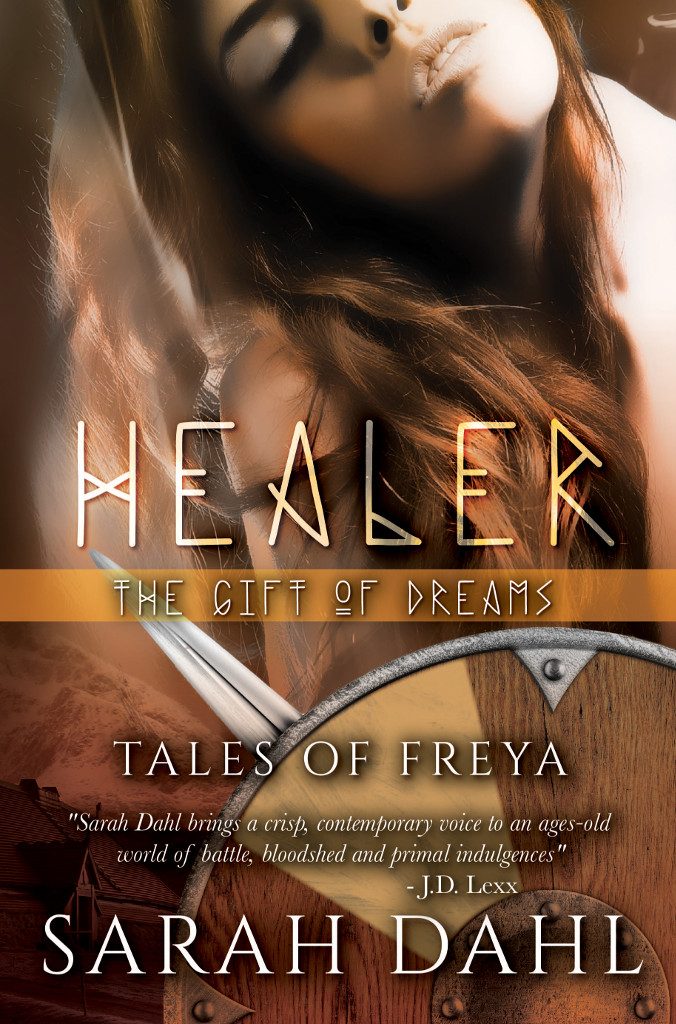
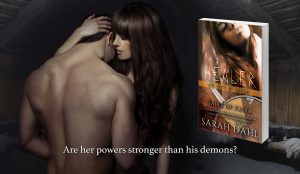
“Healer – The Gift of Dreams” is the fifth Tale in the Tales of Freya collection of sensual short stories.

Viking farmer Magnus is plagued by a demon. Since his wife’s death, the dreaded Mara tortures his body and mind. Powerless, he sends for a healer, the unexpectedly young and beautiful Audr … Are her sensual powers and his unleashed virility enough to banish the demon from his bed?

My heroes: the “simple” people

The Tales of Freya are set in the Viking age, and therefore require a lot of research into the period. I’m quite firm when it comes to the historical aspects of daily life and how people lived together then. The big politics and power play bore me. I don’t write kings and queens – my heroes are healers and housewives, warriors and monks. In every Tale I zoom into the lives of “simple people” and their desires and hopes, then give the stories a sensual and erotic twist. In the end, my characters are changed and set on a new path, which doesn’t always have to be a simple Happy Ever After.

Is there an authenticity of emotions?

Authenticity is key. I have trusted Viking age experts and re-enactors at hand to make sure the details are historically correct and events could have happened the way I write them. Even more important and harder to agree on is the psychological aspect, though: What and how did these people probably feel about certain things? What were their morals, expectations, rules of living together? What was their world view? Over time, I became more certain about what makes believable characters here. Luckily, my readers love the stories’ in-depth exploration of emotions and passions just as much as the authenticity to the period. But there is one very central aspect that so far I only touched lightly: Their spiritual world views and thinking.

Embracing the Vikings’ spiritual lives – finally

Because religion and beliefs are a very delicate and hard-to-grasp subject for today’s people (me included), I so far shied away from including too much spirituality in my stories. Yes, gifts to the spirits and gods were common and pagan rituals central to their lives, but: I didn’t want to overload my short stories with too much side-baggage and completely focus on the central plot line. And I admit to some reluctance to interpret too deeply what little we know today of the Viking spiritual lives. But then: as a self-respecting author setting her stories in the Viking age, I couldn’t avoid the topic forever. I didn’t expect it to be central to a sensual short story, though. Until I read a research piece that surprised me.

Sensuality in healing?

In one text about Viking spirituality the author hinted that, in contrast to  our modern religions and healing, Viking healing rituals might very well have included sensual aspects. That of course made me listen up. Sensuality for healing? A hands-on and personal ritual that wasn’t only comforting and physically and mentally healing – but which included sexual aspects? Unfortunately, we don’t know much more. My experts were at a loss, too. Sources are just too scarce to judge. It was just a side note.

Daring to interpret and make it my own

The topic simmered in my writer’s brain, and I came up with the idea of a female healer (most were then female) and how she could create magic … to heal a desperate young man. Born was the story of the devastated Magnus, who, after the loss of his wife and child, is mentally and physically unable to go on with life. He calls for a healer, and instead of the old woman he expected he and the readers are surprised by young and attractive Audr. She sets to work with him, in a sensual ritual that includes his body and mind. But are her powers stronger than his demons? When she is gone, he finds that the greatest gift was always right in front of him …

Research reading as source for inspiration

The inspiration for this story came, as often, from reading a research piece, and thinking it further, wondering what the historical findings said about the people’s lives in that era. The research I had to do for Audr’s healing rituals was great fun, but I had to flesh out and interpret a lot. Sources are thinly spread and much is tinted by today’s views on the world. Which in turn also means a lot of writing freedom. I created a very personal and intimate ritual for Magnus, and something ignites between him and his healer that goes beyond what I imagine would be Audr’s approach with other patients. Audr’s spell is just too strong …

Author bio:

Sarah Dahl lives on the edge of the rural German Eifel and writes historical fiction (novels and short stories) primarily set in the Viking age. She also works as an editor, translates, and coaches new writers in German and English. She is interested in everyday life in bygone centuries and the human stories that may have occurred behind the hard, historical facts. Her author page is: sarah-dahl.com

Links: mybook.to/HealerSarahDahl

Amazon.com: https://www.amazon.com/dp/B07BVWD3YD

Amazon.co.uk: https://www.amazon.co.uk/gp/product/B07BVWD3YD

Author page: sarah-dahl.com/books

***

Many thanks Sarah; great stuff.

Happy reading everyone,

Jenny x

The Hooded Man 3: A different angle

Unusually for me, when it came to writing this round up of the weekend just past, I have been puzzling over a blank page.

The reason for this is clear – I’m still in the ‘coming down from a high’ zone. I’m not alone in this. Facebook this week is full of my fellow Hooded Man Event attendees suffering from post-event blues.

If ever there was a mark of an event’s success, it’s that people feel slightly bereft when it’s over- a bereavement that is undercut with happy hope – and the reassurance that in 2 years time it will all happen again.

Anyone who follows this blog cannot have failed to notice that I am fond of anything and everything to do with Robin Hood. Again, I’m not alone- especially when it comes to folk who are devoted to the 1980’s television show, Robin of Sherwood.

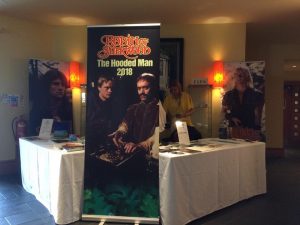
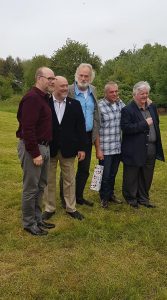
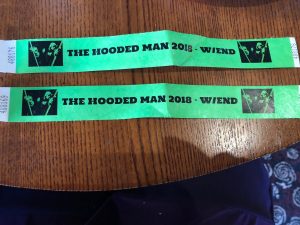
The Hooded Man 3 (HM3), was held in Gloucester this weekend just past. It was a two day celebration of Robin of Sherwood. It doesn’t matter that the show hasn’t aired for over 30 years- the loyalty of the fans is absolute- the friendship between the cast members is clear to see- and the atmosphere that buzzed around the hotel venue was 100% positive and happy.A great deal was going on- autographs were being signed, photos were taken, Bowlore performed incredible shows within their tented medieval stronghold, and talks were held….I however, can’t really tell you about these things. I saw the HM3 from a different perspective.This was my second adventure as a stall holder at a HM event. Last time was fabulous- I only had one book to sell (Romancing Robin Hood), and so had lots of time to wander around, chat to the cast, and meet lots of people.

This time…wow!!

So, let me back track a little.

In 2016 I was lucky enough to be invited to sell Romancing Robin Hood at the HM2 event by the lovely Barnaby Eaton-Jones (organiser and all round hardworking guy). As I mentioned above it was just fantastic. (The blog I wrote after the event is still available here if you want to take a peep) A week after that event I had an even bigger stroke of luck- I was invited to attend the premiere of the very first Robin of Sherwood audio revival- The Knights of the Apocalypse- in London.

I didn’t know it at the time, but this was the moment when Barnaby and fellow audio write, Iain Meadows, began to consider putting together a short series of Robin of Sherwood audio stories, to be narrated by the original cast.  It was also that moment when- again unknown to me- I was being considered as a writer for one of these stories.To cut a long story short- 2 years later, here I am having written three different Robin of Sherwood audios. The Waterford Boy (narrated by Judi Trott a.k.a Maid Marion), Mathilda’s Legacy (narrated by Michael Craig a.k.a Earl of Huntingdon), and the forthcoming The Baron’s Daughter, which will be a full cast read story.

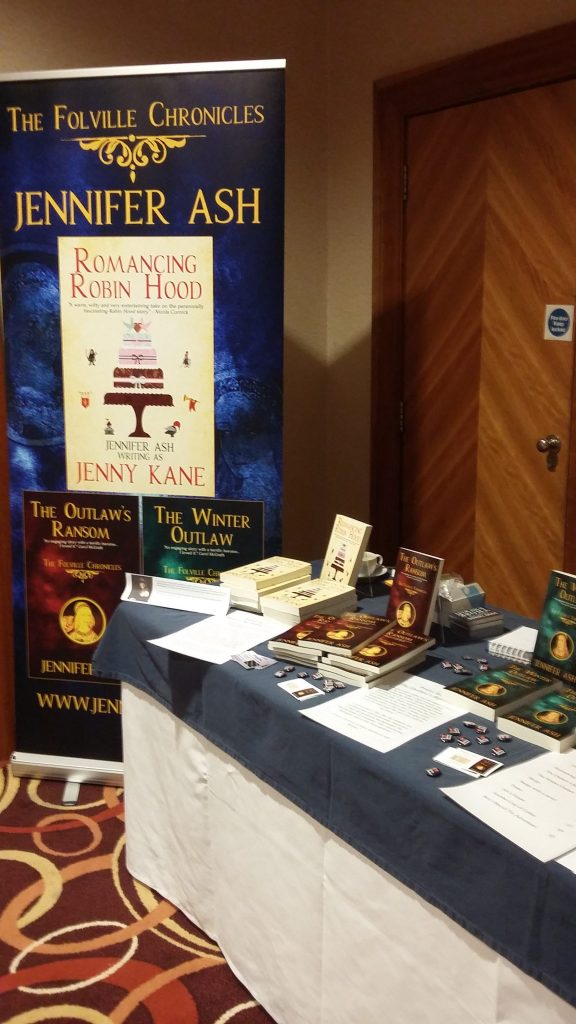
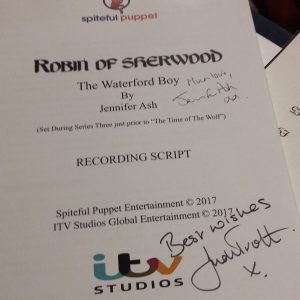
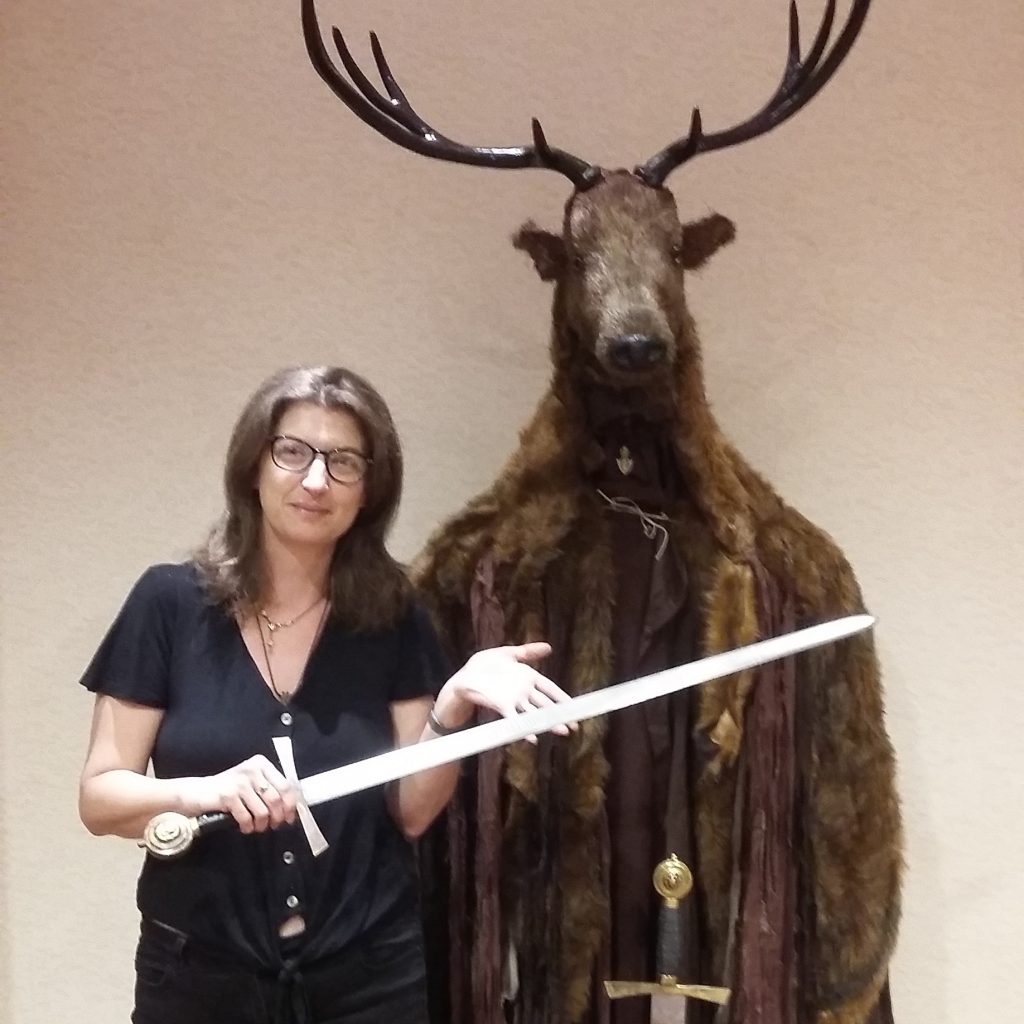
One of the highlights of HM3 was signing this script for a fan of the show, and chatting to Judi about the recording of the audio story. Judi did such a good job of reading my story, I was amazed to discover how nervous she’d been about doing it. As a writer for the show (still in shock about that to be honest) I was allowed to go into the green room with all the cast and crew, I took part in a panel, and had photographs taken with the cast. However, I was so busy on my stall that I never did get into the green room to chat to the cast between events. This is NOT a complaint. I had a ball talking to everyone as they came by my book stall to talk about Robin of Sherwood and the influence it had on my work- especially Romancing Robin Hood- and how that novel has now spun off into The Folville Chronicles series.I sold out of The Winter Outlaw on day one, and by the end of day two, my stall was more of a place to come and say hello, than a place from which to buy things! It was just wonderful.There were plenty of other things to see and buy, including the real Albion from series 2 and 3, Herne himself stood proudly over us, and RoS inspired gifts and DVD’s were available.  An auction of original Robin of Sherwood merchandise made a small fortune for charity- and the banquet and after event disco and bar chatter went onto 3am! On the Sunday- while the world was ever so slightly the worse for drink and lack of sleep- I was privileged enough to take part on a panel about the audio books. In the company of producer, Barnaby Eaton Jones, fellow writer, Tony Lees, the brilliant Alex and Verity who provided the ‘Clannad-ish’ music for the new series, and the amazing Nickolas Grace (a.k.a the Sheriff of Nottingham), we shared our thoughts and experiences of what it is like to write for a show that aired when we were children.

To sit there, in a packed room, looking at the people I was writing for- the very same people I have a horror of letting down with my words- I felt humbled to be part of something so special and so popular. When Nickolas Grace began to speak about how much the show means to the cast, and how he wanted to do as many audios as he could…the lumps in our throats grew as tears formed in the great man’s eyes. A moving moment indeed.The overriding theme for the weekend however, has to be the laughter and the smiles- of which there were many.

On a personal note I’d like to thank Lesley and Michael for being there for me- and to every single person who said kind things about my work.

Roll on HM4 – just give us all a chance to recover first- there are audio stories to make…

Happy reading- and listening!

Jennifer xxx

PS. I’d better crack on with Book 3!!!


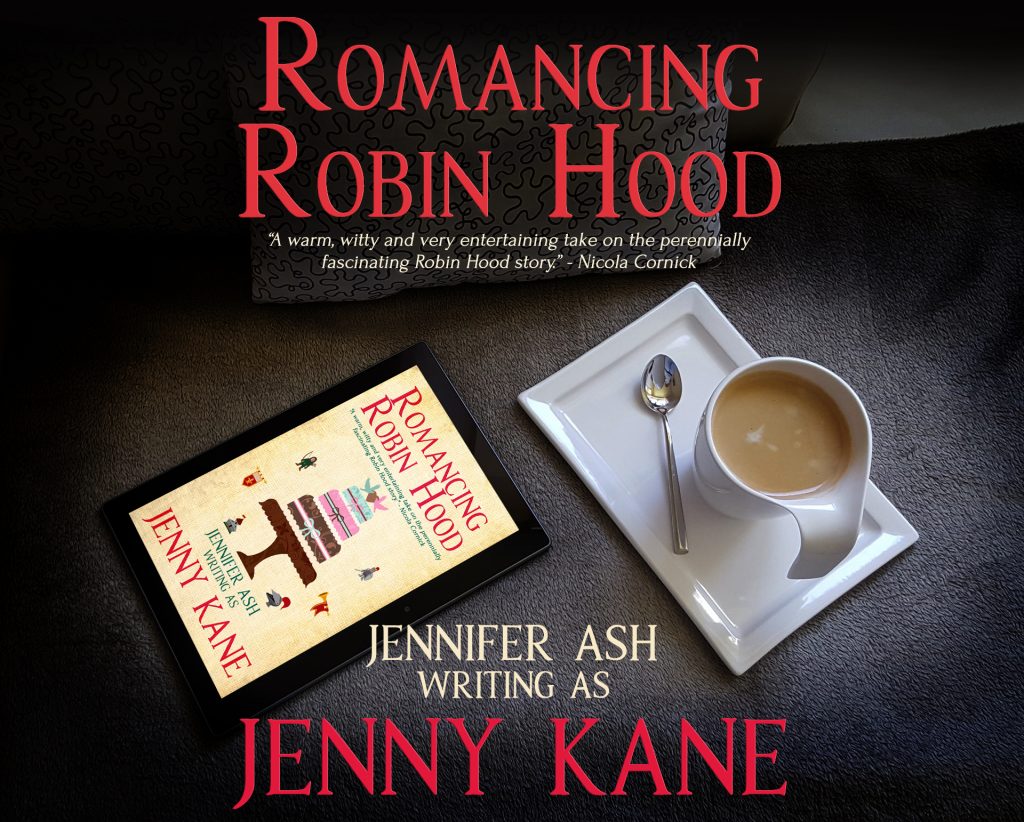
Romancing Robin Hood: A Hooded Man

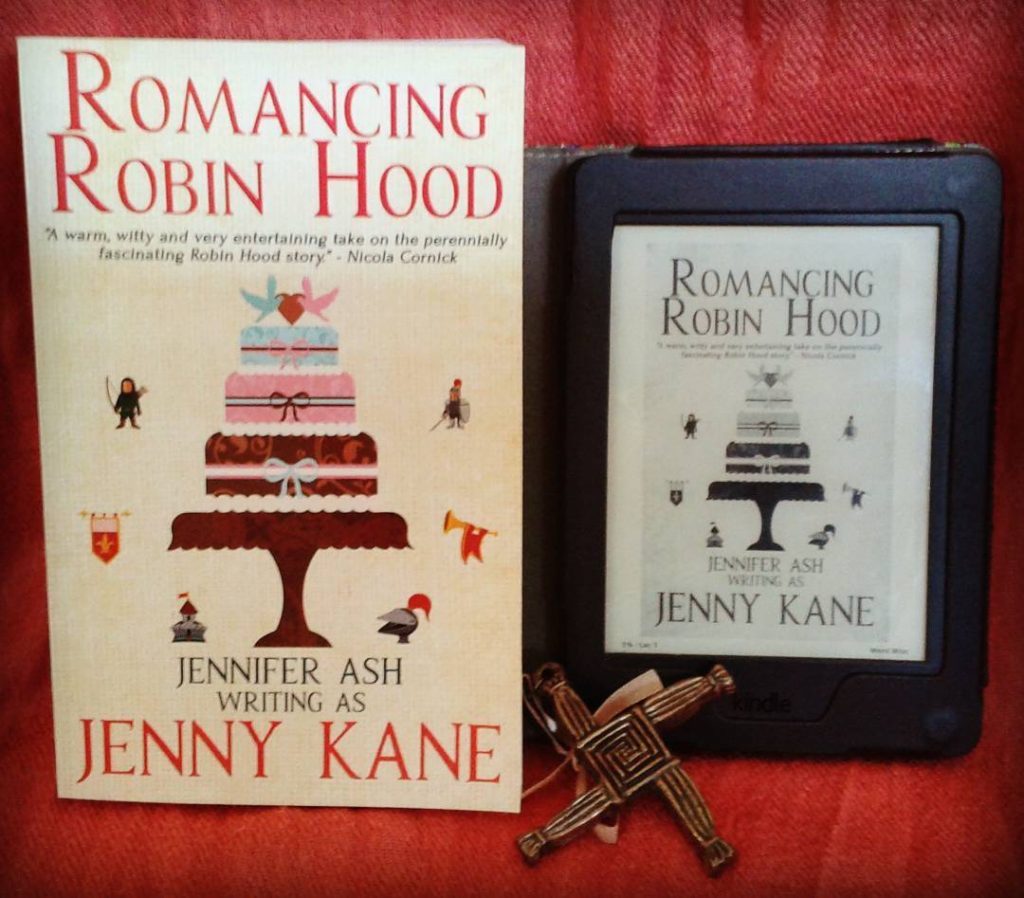
My timeslip novel, Romancing Robin Hood, has a special place in my heart for many reasons . It reflects a great deal of my own life within its many pages- it gave me by first taste of writing medieval fiction (the novel is part modern romance and part medieval mystery)- and it gave me a chance to doff my hat to all those who were involved in the recording and production of the ITV series, Robin of Sherwood- a formative part of my upbringing.

Here’s the blurb…

When you’re in love with a man of legend, how can anyone else match up?

Dr Grace Harper has loved the stories of Robin Hood ever since she first saw them on TV as a teenager. Now, with her fortieth birthday just around the corner, she’s a successful academic in Medieval History—but Grace is stuck in a rut.

Grace is supposed to be writing a textbook on a real-life medieval criminal gang—the Folvilles—but instead she is captivated by a novel she’s secretly writing. A medieval mystery which entwines the story of Folvilles with her long-time love of Robin Hood—and a feisty young woman named Mathilda of Twyford.

Just as she is trying to work out how Mathilda can survive being kidnapped by the Folvilles, Grace’s best friend Daisy announces she is getting married. After a whirlwind romance with a man she loves as much as the creatures in her animal shelter, Daisy has press-ganged Grace into being her bridesmaid.

Witnessing Daisy’s new-found happiness, Grace starts to re-evaluate her own life. Is her devotion to a man who may or may not have lived hundreds of years ago really a substitute for a real-life hero of her own? Grace’s life doesn’t get any easier when she meets Dr Robert Franks—a rival academic who she is determined to dislike but finds herself being increasingly drawn to… If only he didn’t know quite so much about Robin Hood.

Suddenly, spending more time living in the past than the present doesn’t seem such a good idea..


Little did I know when I wrote Romancing Robin Hood that the book itself would give me a chance to thank the actors and behind the scenes team who worked on the show over 30 years ago- in person.

This weekend I am attending my second Hooded Man Event – this gathering (evey 2 yeaars) brings fans of Robin of Sherwood together- along with the stars themselves- to talk all things RH and medieval. It is a lot of fun and one of the friendliest events I have ever attended.

Last time I went- thanks to my novel-  to sell books from a stand in the corner of the room. I stood and watched the world go by in a sort of RH heaven.

This year however, I am selling 3 books- Romancing Robin Hood, The Outlaw’s Ransom and The Winter Outlaw. The latter 2 books are the direct result of comments made to me at the last event by kind readers.

I will not be staying behind the safety of my book  year – on Sunday afternoon I will be up on the main stage with  fellow writer, Tony Lees, talking about writing audio scripts for Robin of Sherwood. I am still not sure I can quite get my head around that I do that- but I do!!

And all because- four years ago- I wrote a novel called Romancing Robin Hood… I owe that novel BIG time!!

***

If you would like to read Grace’s adventure- not to mention discover what Mathilda of Twyford gets up to in fourteenth century Leicestershire- then you can buy the new look Romancing Robin Hood from all good retailers, including…

Paperback

Amazon UK – https://www.amazon.co.uk/Romancing-Robin-Hood-Jenny-Kane/dp/1999855248/ref=sr_1_2?s=books&ie=UTF8&qid=1517319761&sr=1-2&keywords=romancing+robin+hood+Jenny+Kane

Amazon.com – https://www.amazon.com/Romancing-Robin-Hood-Jenny-Kane/dp/1999855248/ref=sr_1_1?s=books&ie=UTF8&qid=1517404290&sr=1-1&keywords=Romancing+Robin+Hood+Jenny+Kane  

Kindle

So why not treat yourself to a little something to read this weekend while I am away talking to the merry men- and a couple of Robins!

Happy reading,

Jenny and Jennifer xx

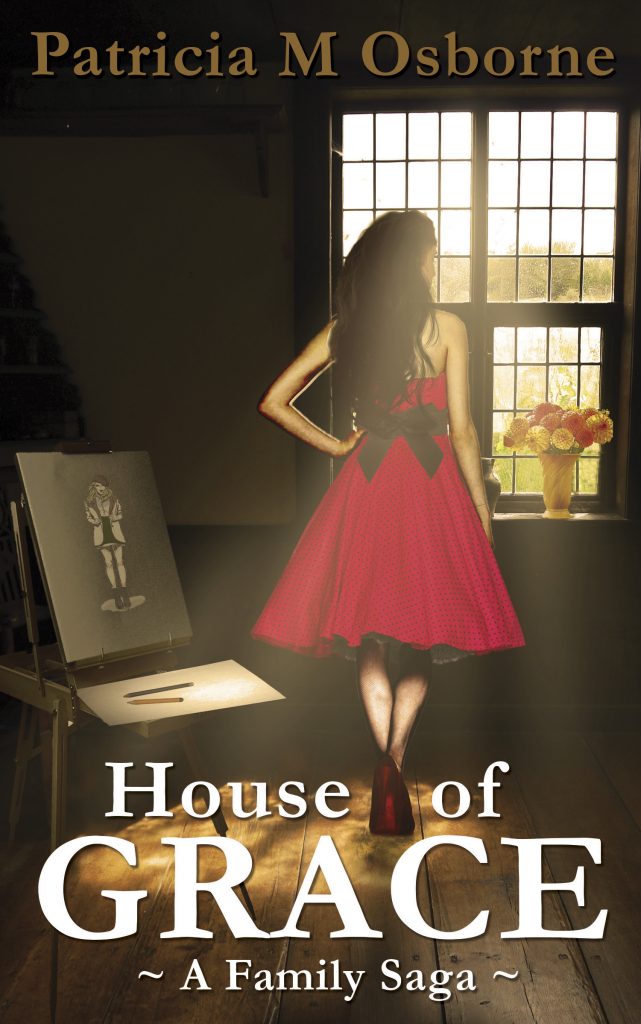
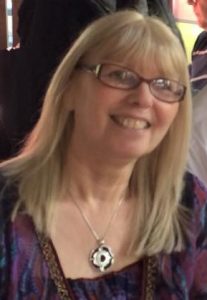
Interview with Patricia M Osborne: House of Grace

It’s interview time! So go and pop that kettle on, cut a slice of cake – and join myself and Patricia M Osborne as we chat about her latest novel, House of Grace.

What inspired you to write your book?

House of Grace, began as a screenplay for my BA dissertation. It was on completion of this project that I discovered my story had the potential to be developed further as a novel. Inspiration was derived from George Orwell’s Road to Wigan Pier and television dramas Mr Selfridge, and House of Elliott.

Which Point of View do you prefer to write in and why?

I prefer to write in first person. I’ve experimented in third but I feel too detached. In first person I feel everything that my character is feeling, I am my character.

Do you prefer to plot your story or just go with the flow?

I do plot in so much as I need to know the beginning, middle and end of my story but these are often subject to change.

What is your writing regime?

Mornings are for marketing, critique/editing and research. My muse tends to hit me late afternoon/evening and this is when I do the most of my writing. I never target myself to a specific number of words but I like to write every day in some form or other, whether that’s novel writing, a short story, poetry or re-working old pieces.

What excites you the most about your book?

I get very excited that readers are loving my book. I still haven’t quite got a handle on that. Regarding writing the book, stepping back in time and reliving memories that I can use to write my fiction.

Anything else you’d like to share with us?

I spent last year as Poet in Residence at my local Victorian park as part of my MA Creative Writing course. Researching the park’s past life inspired me to compile a fictional poetry anthology, titled In a Delightful Country, which will be published later this year.

Links:

patriciamosbornewriter.wordpress.com

Facebook: Patricia M Osborne, Writer

Twitter: PMOsborneWriter

Bio:

Patricia M Osborne is married with grown-up children and grandchildren. She was born in Liverpool and spent time in Bolton as a child and now lives in West Sussex. Patricia is a novelist, she also writes poetry and short fiction. Many of her poems and short stories have been published in various literary magazines and anthologies. She is studying for an MA in Creative Writing with University of Brighton. Her debut novel, House of Grace, A Family Saga, set in the 1950s/60s was released in March 2017.

***

Blurb

Blurb for House of Grace by Patricia M Osborne

It’s 1950 and all sixteen-year-old Grace Granville has ever wanted is to become a successful dress designer. She dreams of owning her own fashion house and spends her spare time sketching outfits. Her father, Lord Granville, sees this frivolous activity as nonsense and wants to groom her into a good wife for someone of his choosing…

Grace is about to leave Greenemere, a boarding school in Brighton. She’s blissfully unaware of her father’s plans when she embarks on a new adventure. The quest includes a trip to Bolton’s Palais where she meets coal miner, Jack Gilmore. Grace’s life is never the same again.

Travel with Grace through two decades as she struggles with family conflict, poverty and tragedy. Is Grace strong enough to defy Lord Granville’s wishes and find true love? Will she become a successful fashion designer? Where will she turn for help?

House of Grace, A Family Saga is available to order in paperback and kindle versions via Amazon:

http://mybook.to/HouseofGrace

***

Extract

House of Grace

Part 1

Chapter 1


I closed my sketchpad and crossed the room to the window. Seagulls flocked on the rocks, waves splashed high. I’d miss Greenemere but I was now a talented dress designer and full of dreams. One day, Grace Granville would change Britain’s vision of fashion.

The door creaked. Katy, my roommate, strolled back in. ‘Well?’

I turned around, mulling over her earlier words.

‘Well don’t just gawp.’

‘I don’t know.’

‘Come on Gracie, it’ll be fun. You can see how the other half lives.’

‘Wigan though.’ I twiddled my hair around my finger. ‘Father isn’t going to like it.’

‘It’s nineteen fifty, not the nineteen-hundreds, you know?’ She huffed. ‘Does he need to know about Wigan? It’s only for the dance. Just tell him you’re going to Bolton and that my Dad owns a cotton mill there.’

‘Maybe.’

‘Surely that should be respectable enough, even for your parents.’

It did sound thrilling. Would Father let me go? Katy was right, I didn’t need to tell him about Wigan or the dance.

‘Your parents are such snobs Gracie, best not mention Dad started off in a two-room terrace. Or that Mum was in service before she got married.’

After I finally agreed to phone my parents, Katy jumped off the bed, grabbed a small purse and waltzed into the bathroom.

‘What are you doing in there?’ I called.

‘Lippie.’

By that I assumed she meant lipstick. I’d never worn any. Would I need to? Should I be buying some? Maybe Katy would help me choose? I’d no idea what colour to get. I picked up a magazine with Bette Davis on the front cover. She was wearing bright red. Katy and I had seen her earlier in the year in All about Eve.

If we were going to a dance I needed to buy material to make a dress. I could see it now, a full skirt, fitted waist and belt, showing off my slim figure.

The door slammed shut as a new Katy rushed back in. What a metamorphosis. I wondered if I could change like that.

‘Dad said he’ll send his driver with the Rolls to collect us. Forgot to say, my cousin Jack can’t wait to meet you.’

Golly, she’d never mentioned him before. Better not mention Jack to Father. I wondered what Jack was like. Probably a spotty faced, lanky lad. He’d be no threat to my chastity…

***

 Many thanks for visiting today Patricia- wonderful interview.

Happy reading everyone,

Jenny xx

Interview with Terry Lynn Thomas

I’m delighted to be joined by the lovely Terry Lynn Thomas, today.

So, go and grab a cuppa- maybe some cake- and come and put your feet up for a few minutes and join us for a chat.

What inspired you to write your book?

My dad fought in the Navy during the World War II. (I know, dating myself.) And he regaled me with stories of his time in the Pacific theater, stories of bravery and courage in the collected effort of the military and civilians to overcome the axis powers. His stories inspired me to memorialize this period of history lest we never forget this global war. As I dug into the research of the Sierra I quickly became captivated by the events which led up to the war, and the state of the world at that time. In light of the divisive times we live in now, it struck me how United help the people were in their efforts to support the war. People made sacrifices in their everyday life, selflessly committed to those who experienced battle firsthand. The bravery encourage of the people who fought in the war and lived through its difficulties inspired me to write mystery set in this time. As a writer of historical fiction, my goal is to transport my readers into my story and stay out of their way, so they can experience what it felt like to live in the world at this particular point in time.

I have always loved mysteries, especially those written during early- to mid-twentieth century. (Think Agatha Christie and Patricia Wentworth.) So writing a mystery series set in the United Kingdom during the time leading up to World War II was a natural fit. The Silent Woman is set in June 1937. King Edward has abdicated the throne to Mary Wallis Simpson, and the country is in coronation fever as King George takes the crown. While in Germany, Adolf Hitler is conscripting an army and building planes in violation of the Treaty of Versailles. England is headed to war, but her citizens do not know it. I couldn’t ask for a more dramatic backdrop for story. (True confession: I also really like hanging out in an era where people aren’t so connected via its cell phones and computers. I am hoping that young readers will visualize what the world was like without this technology when they read my books.)

What type of research did you have to do for your book?

My favourite topic! When I set out to write a new book, the first thing I do is pick a specific time set for the arc of the story. Once I have a specific date, I read the newspapers during that period of time, paying attention to the small details of day-to-day living. (Sidebar: the personal columns were the equivalent of social media. I’ve come across ads such as this, “Will the woman with the Green Beret please meet me under the old maple tree.” I can’t help but wonder if she met this person, and what they said.)

I also research the socio-political climate at the time read proper novels, and watch movies that were playing at the cinema. The National Archives provides a cornucopia of diaries and papers, so I spent some time researching there as well, and usually budget four weeks for this type of effort. By the time I’m finished with this research, I’m well versed on the world my characters inhabit. Then I step away. It’s important to remember that only a fraction of this information will make it into the book. A light touch is needed, as I don’t want to bore my readers with an info dump.


Which Point of View do you prefer to write in and why?

I wrote the Sarah Bennett Mysteries in first person, and loved the immediacy in the way I could crawl inside Sarah’s head and show her thoughts and motivations to my readers. I changed point of view with the Cat Carlisle series and now write in third person. The switch has set me free! Third person allows me to let my story unfold from the viewpoint of different characters and-in my opinion-allows me to flex my “deep” point of view writing muscle – I hope my readers are able to bond and empathize with my characters and become emotionally invested in what happens to them in my third person writing. My job as a writer is to write in such a fashion that I get out of the reader’s way and let them sink into the story. I am a third person point of view writer now and I love it!

Do you prefer to plot your story or just go with the flow?

I am a confirmed plotter and have been known to spend as much time working on my treatment as I spend writing a novel. The treatment includes detailed character sketches, scene development, and the most time consuming a detailed plot outline I use the outline as a map, and often compare writing a book to a sea voyage. When I push away from the dock and lose sight of the shore, it’s nice to know where I’m going. Having said that, my outline is never set in stone. More often than not, my story takes an entirely different direction. If that happens — and it often does — all stop and re-outline. I use my outline is a way to track arcs and tie up all the loose ends.

What is your writing regime?

Mornings are best! I like to get up around 4:30 AM, drink a giant (think soup bowl) cup of very strong coffee, and plug away until 7 AM or so. I set a word count (usually 1500 to 2000 words) and try to hit that five days a week. I think it’s important to step away from story a little bit and let things gel. Sundays are my day to spend with my husband and animals. It seems at times that the biggest challenge is to get my you-know-what in the chair. But I do love this job, and I’m grateful that I’m able to entertain readers with my stories.

Links

http://Terrylynnthomas.com

https://www.harpercollins.com/9780008271596/the-silent-woman

https://twitter.com/TLThomasBooks

Bio

Terry Lynn Thomas grew up in the San Francisco Bay Area, which explains her love of foggy beaches, windy dunes, and Gothic mysteries. When her husband promised to buy Terry a horse and the time to write if she moved to Mississippi with him, she jumped at the chance. Although she had written several novels and screenplays prior to 2006, after she relocated to the South she set out to write in earnest and has never looked back.

Terry Lynn writes the Sarah Bennett Mysteries, set on the California coast during the 1940s, which feature a misunderstood medium in love with a spy. Neptune’ Daughter is a recipient of the IndieBRAG Medallion. She also writes the Cat Carlisle Mysteries, set in Britain during World War II. The first book in this series, The Silent Woman, is slated to release in April 2018.  When she’s not writing, you can find Terry Lynn riding her horse, walking in the woods with her dogs, or visiting old cemeteries in search of story ideas.

 ***

Fantastic interview. Thank you so much for coming along today Terry. 

Your mysteries sound wonderful.

Happy reading everyone.

Jenny xx


In Search of King Arthur: Tim Walker

I’m delighted to welcome Tim Walker back to my site today. On this visit he is sharing a little of his search for King Arthur.

Over to you Tim…

The search for a tangible King Arthur remains as inconclusive as ever due to lack of compelling, physical evidence, although some continue to try and convince us otherwise. There are many places in Britain that lay claim to have connections to a ‘real’ Arthur – Tintagel where he was said to have been conceived; Camalat (South Cadbury in Somerset), an impressive iron age citadel; Glastonbury Abbey where monks in 1190 claimed to have found his grave; Camelford – a village in Cornwall that claims to be the site of the Battle of Camlann, where Arthur was mortally wounded around the year 515 AD (a date arrived at through research by historian John Morris). Avalon, or The Island of Apples, where Arthur’s body was taken, is thought to be near Glastonbury – its proximity to Camelford lending support to the claims of this patch of the West country. There are other ‘Arthurian’ sites at various locations in Wales, at Birdoswald on Hadrian’s Wall, and north of the wall at Caledonian Wood.

At the visitor centre near Camelford at the aptly-named Slaughterbridge, I followed a path to a low cliff above the River Camel and look across to the meadow on which Arthur is said to have fought his last battle. On the muddy riverbank below lies The Arthur Stone – a granite tombstone dated to 540 AD engraved with Celtic runes that have been interpreted as stating ‘here lies the son of Arthur’, throwing up the intriguing possibility that it was not Arthur but his heir who fought and died on this spot some years after his illustrious father (or that both father and son fought battles there, as the keepers of the visitor centre would like us to believe). Legend has it that the victorious Saxons desecrated his burial site and rolled the tombstone down to the riverbank where it remains to this day. Hold on a minute, did King Arthur have a son? In Geoffrey of Monmouth’s account, Arthur is succeeded by his cousin, Constantine of Cornwall.

In the absence of something more substantial from historians and archaeologists, these remain theories in the realm of legend. One theory is that Arthur may not have been a king at all, but a ‘leader of battles’ a ‘Dux Bellorum’ or a hired sword, working for a group of tribal leaders, in the immediate post-Roman era. Bernard Cornwell’s excellent novel, The Winter King, adopts this point of view.

Another perspective is offered by historical fiction author Chris Flynn (The Bear, The Dragon and The Wolf) who argues the case for a Northern Arthur who is a cavalry commander, possibly drawing on the influence of Sarmatian cavalry units once garrisoned at Hadrian’s Wall, who organises resistance to the spread of Anglo-Saxons in the north-east (www. botrbooks.com/blog). Also in this corner is Alistair Moffat, who puts forward the case for Arthur being a warlord based in the Scottish borderlands north of Hadrian’s Wall in the years after Roman evacuation, in his book, Arthur and the Lost Kingdoms. His book builds a case based on literary sources, historical documents and interpretations of place names to build a compelling and intriguing case for a Scottish Arthur. Add this to the Welsh chroniclers’ Arthur, and you have a folk hero claimed by three home nations.

Clearly, it was a troubled time for the Britons, left exposed by the removal of Roman protection. However, there is no physical or archaeological evidence for who the leaders were, where battles took place and when. It has been suggested that the legend of King Arthur is a composite of the feats of a number of Briton leaders over a broad period stretching from the mid-fifth to the mid-sixth centuries, embellished by bards over the years until written down in 1136 AD by Geoffrey of Monmouth in his book, The History of the Kings of Britain.

Victories in as many as seventeen battles on British soil have been attributed to Arthur, plus his overseas adventures, giving credence to the notion that this was not the work of one leader but of several – collapsed together for the purposes of engaging storytelling by bards to make one great heroic figure who battled to preserve a Romano-Briton way of life.

Contemporary historian, Miles Russell (writing in History Revealed magazine), has re-examined Geoffrey’s claim that the inspiration for his work was based on an ancient book ‘in the British tongue’ and found that it may have some credence (despite the source text never having been found or mentioned by any other). To support his theory he uses as an example Geoffrey’s telling of the coming of Julius Caesar in 55 and 54 BC – an account that has similarities to the ‘official’ Roman version but differs in some details and is told from a British point of view. Geoffrey certainly did his homework, poring over source material as diverse as folklore, chronicles, church manuscripts, king-lists, dynastic tables, oral tales and bardic praise poems.

In Geoffrey of Monmouth’s ‘history’ we get a compelling story of a time of desperate struggle following the end of Roman Britain. He gives us a linage of Fifth Century kings – Constantine, Vortigern, Ambrosius Aurelianus, Uther Pendragon and then King Arthur.

Arthur becomes king at the age of fifteen and marries Ganhumara (‘Guinevere’) who is from a noble Romano-Briton family. Arthur forms an alliance with his nephew, King Hoel of Brittany, and they inflict defeats on the Saxons at Lincoln and Bath before crushing a combined force of Picts (Scots) and Hibernian (Irish) tribes at Loch Lomond. They then attacks Ireland, the Orkneys, Iceland, Norway, Sweden and parts of Gaul (France), forcing the people to pay them homage. He lays waste to fields, slaughters the population of these places and burns down their towns – the exact opposite of a chivalric king. Geoffrey’s Arthur is an arrogant, aggressive and brutal warlord who kills and takes what he wants.

But Geoffrey’s story does not end there – Arthur is summoned by the Roman Emperor to face charges of war crimes and responds by raising a large army, sailing to Gaul, and meeting the Roman army in battle, defeating and killing the emperor. Arthur’s mind is set on capturing Rome, but he is forced to return home at news that his nephew Mordred has taken his queen, Ganhumara, and seized the kingdom. In a bloody civil war in which thousands die, both Mordred and Arthur fall in battle – Arthur’s body is taken to the Isle of Avalon and he is succeeded by his cousin, Constantine of Cornwall.

This is a summary of Geoffrey’s account in his Historia, and it is an intriguing thought that he MAY have taken it from a lost manuscript. Later generations lightened the blood-soaked narrative, adding more sorcery, the romance of Camelot, chivalric heroes (the knights of the round table), the quest for the Holy Grail, an evil foe in Morgana, and a doomed love triangle involving Arthur, Guinevere and Lancelot.

Despite the fanciful tale of Arthur taking on the might of the Roman Empire, there is still the possibility that Geoffrey’s account was largely based on genuine source material that offers a glimpse of native Briton resistance to foreign invaders in the fifth and sixth centuries. Geoffrey’s King Arthur could not possibly have done all those things – he is most certainly a composite of several characters, including Ambrosius Aurelianus, who perhaps has better credentials as a noble leader who led the Britons to early victories over the Saxons.

Clearly, there was organised resistance to invaders, and tales of bravery told by chroniclers and bards from the Briton resistance point of view – and perhaps missing texts. Arthur is the embodiment of this oral tradition from the fifth and sixth centuries, offering us intangible glimpses of deeds in a period wedged between the gloating records of Roman and Anglo-Saxon conquerors.

*****

Uther’s Destiny – Blurb

In the year 467 AD Britannia is in shock at the murder of charismatic High King, Ambrosius Aurelianus, and looks to his brother and successor, Uther, to continue his work in leading the resistance to barbarian invaders. Uther’s destiny as a warrior king seems set until his world is turned on its head when his burning desire to possess the beautiful Ygerne leads to conflict. Could the fate of his kingdom hang in the balance as a consequence?

Court healer and schemer, Merlyn, sees an opportunity in Uther’s lustful obsession to fulfil the prophetic visions that guide him. He is encouraged on his mission by druids who align their desire for a return to ancient ways with his urge to protect the one destined to save the Britons from invaders and lead them to a time of peace and prosperity. Merlyn must use his wisdom and guile to thwart the machinations of an enemy intent on foiling his plans.

Meanwhile, Saxon chiefs Octa and Ælla have their own plans for seizing the island of Britannia and forging a new colony of Germanic tribes. Can Uther rise above his family problems and raise an army to oppose them?

Book three in A Light in the Dark Ages series, Uther’s Destiny is an historical fiction novel set in the Fifth Century – a time of myths and legends that builds to the greatest legend of all – King Arthur and his knights.

***

In my historical book series, A Light in the Dark Ages, I have attempted my own alternative history of the period starting with the departure of the Romans and building to the coming of King Arthur, putting flesh on the mythical bones of early kings Vortigern, Ambrosius Aurelianus and Uther Pendragon – lighting the way for the coming of King Arthur.

Book one – Abandoned! – http://myBook.to/Abandoned

Book two – Ambrosius: Last of the Romans – http://myBook.to/Ambrosius

Book three – Uther’s Destiny – http://myBook.to/Uther

Author website: http://timwalkerwrites.co.uk 

***


Great blog- thanks Tim.

Happy reading everyone,

Jenny x


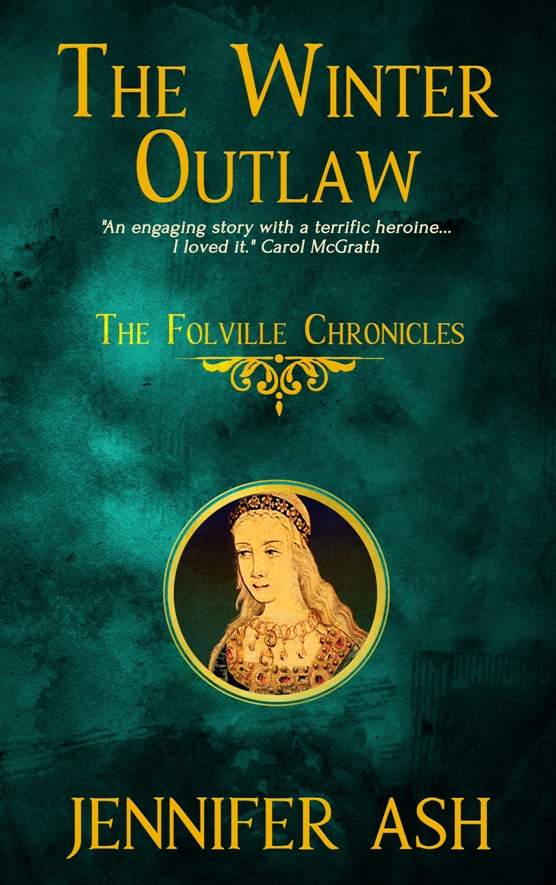
OUT NOW: The Winter Outlaw

I can’t quite believe it. This really is a dream come true. My very own series of medieval crime novels is becoming a reality!

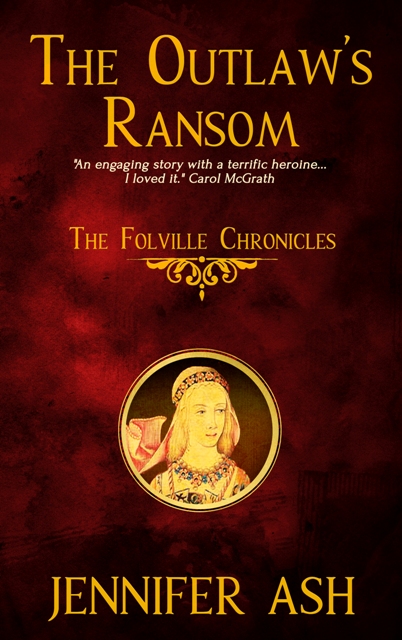
Only a few weeks ago I proudly announced the publication of Book One in The Folville Chronicles- The Outlaw’s Ransom. Today I can announce the arrival of Book Two!

The Winter Outlaw is OUT NOW!!


Blurb

1329:  It is the dead of winter. The notorious Folville brothers are on edge. There are rumours of an unknown outlaw terrorising the Leicestershire countryside—a man who has designs on the Folville family’s criminal connections.

Determined to stop this usurper in his tracks, Robert Folville unearths a man hiding in one of Ashby-Folville’s sheep shelters. A steward from far-off West Markham in Nottinghamshire, the cold, hungry Adam Calvin claims he knows nothing of any threat to the Folville family. He has troubles of his own, for he is being pursued by vengeful sheriff, Edmund de Cressy, for a crime he did not commit.

Mathilda of Twyford, newly betrothed to Robert de Folville, believes Adam’s story, but with rumours about a vendetta against the family growing, the Folville brothers are suspicious of every stranger.

***

Ever since I did my PhD (on medieval crime and its portrayal in the ballad literature of the fourteenth century), I have wanted to use what I learnt to tell a series of stories. Although I’ve written all sorts of things between 1999, when my PhD finished, and now – I still wasn’t sure it would ever happen.  Yet, here I am! The first two novels – one short – one long – are out in the world!

Book Three of The Folville Chronicles, ‘Edward’s Outlaw’, is well underway. It should be published this coming winter.

In the meantime, I would love it if you took a peep at The Outlaw’s Ransom and the brand new, The Winter Outlaw.

“If you like medieval crime, a hint of romance, and fast paced adventure stories, then this series is for you.”

Buy Links –

You can buy The Winter Outlaw from Amazon and all good book retailers-

UK: http://ow.ly/RsKq30j0jev 
US: http://ow.ly/EvyF30j0jfk  

To help me celebrate my book launch I have a blog tour running from today- 2nd April.

AND

I am holding a triple book launch at the beautiful Liznojan Bookshop in Tiverton, Devon. If you are in the region, it would be great to see you there.

Happy reading,

Jen xx

PRE-ORDER AVAILABLE: The Winter Outlaw

The Kindle edition of ‘The Winter Outlaw

(Book 2 of The Folville Chronicles)

Available for pre-order.

The Winter Outlaw

Blurb

1329: It is the dead of winter and the notorious Folville brothers are on edge. There are rumours of an unknown outlaw terrorising the Leicestershire countryside. Could this man be Adam Calvin, who is being pursued for a crime he did not commit?
Mathilda of Twyford, newly betrothed to Robert de Folville, believes Adam’s story. But after
an attack on the household’s trusted housekeeper, it falls to Mathilda to work out who can be trusted and who can’t… With the Folvilles’ past about to trip them up, it’s going to take a level head and extreme bravery if Mathilda and Robert are ever going to make it to their Winter Solstice wedding.

The Winter Outlaw is the sequel to The Outlaw’s Ransom.

***

Pre-order links-

UK-
US –

I hope you enjoy the second of Mathilda of Twyford’s adventures!

Happy reading,

Jen x

The Winter Outlaw

Page 14 of 25

Powered by WordPress & Theme by Anders Norén