Jenny Kane: Coffee, cupcakes, chocolate and contemporary fiction / Jennifer Ash: Medieval crime with hints of Ellis Peters and Robin Hood

Category: Fiction Page 36 of 72

Opening Lines: Helen Pollard’s The Little French Guesthouse

It’s that time again! I must confess I look forward to my Thursday ‘Opening Lines’ blog spot more and more each week. 

Today, I’m delighted to be joined by Helen Pollard, who has the first 500 words (exactly) from The Little French Guesthouse to share. with us

Over to you Helen…

The Little French Guesthouse tells the story of Emmy, whose relationship with her boyfriend is getting stale. She decides on a quiet holiday in France so they can reconnect … but it doesn’t turn out as she had planned. Emmy handles it all with humour and rediscovered inner strength, and what starts out as a holiday becomes a journey of self-discovery, with mishaps, hope, friendship and down-to-earth humour all playing a part along the way.

I’d had the opening scene for The Little French Guesthouse in my mind for years, but I wasn’t writing at the time. Then, one summer, we were on holiday in a gîte in France, and I suddenly thought, ‘This is it! This is where that scene takes place!’ Once I could picture the setting in my mind, I just had to get that opening scene down on paper, so I started writing again . . . and the creative floodgates reopened. In my imagination, I developed the setting into a guesthouse with gîtes and gardens, and the imaginary local town in the book, Pierre-la-Fontaine, is loosely based on a real town that we visited several times and loved.

The fact that the publisher wanted the book to become a series was a wonderful opportunity for me to follow Emmy’s ups and downs further. It also allowed me to explore some of the secondary characters in more detail, and it meant that Emmy and thereby the reader could discover even more lovely places in the Loire region of France!

Opening Lines: The Little French Guesthouse by Helen Pollard

I wish I could tell you it happened like it does in the movies. You know the kind of thing. The heroine standing proud, oozing restrained fury. The audience’s satisfaction as she delivers a reverberating slap across her lover’s face. Her dramatic but dignified exit from the screen.

Believe me, there was nothing dignified about it. All I did was stand there shaking, rage and adrenalin coursing through my body like rabid greyhounds, my mouth flapping open and shut as I tried to find the words. Any words. Even a simple sound of outrage would have sufficed, but all I managed was a pathetic squeak.

‘Emmy, it’s not what it looks like,’ Nathan spluttered, but of course it couldn’t be anything other than what it looked like. My view as I stumbled through the door had been graphically explicit. Even he must have known how lame he sounded. Grappling for dignity and his belt, he tried again. ‘We were… I mean, I didn’t expect you to…’

I launched into a wronged-woman tirade as though someone had handed me a bad soap script.

‘No, I bet you didn’t expect me to…’ An alarm bell clanged dimly at the back of my brain, but I ignored it. ‘How could you? You cheating bastard! I can’t believe you…’ The clanging grew louder and more insistent, moving to the front of my consciousness. ‘Shit!’ With a guilty jolt, I remembered why I’d come all the way up here in the first place. ‘Gloria, you need to call an ambulance. I think Rupert’s having a heart attack.’

‘What?’ Adjusting her dress, Gloria greeted this sudden change of subject with bewilderment.

‘Rupert. Your husband, remember? Heart attack. Ambulance.’ I gave her bangled arm a nudge to see if her brain was still functioning or whether sex with my boyfriend was more spectacular than I gave him credit for.

‘Ohmygod. Ohmygod.’ The message finally got through to her lust-addled brain cells. ‘Where is he?’

‘Kitchen.’ I headed for the stairs, my mind thankfully back on the emergency at hand and pushing visions of Nathan and Gloria romping on the roof terrace to the rear of my consciousness. For now, remarkably, there were more important things to worry about.

‘What do you mean, a heart attack?’ Gloria shouted after me. ‘Why the hell didn’t you call an ambulance?’

‘I tried, but then I realised I didn’t know the number, and besides, my French isn’t good enough,’ I called over my shoulder. ‘I thought it would be quicker to get you to do it. I had no idea you’d be so busy.’

‘Ohmygod, Emmy. He could be dead by now!’

She was right – he could be dead by now – but when we reached the kitchen, to my immense relief, Rupert was still conscious and sitting propped against the wall the way I’d left him. I’d done my best, but I hadn’t expected to lose precious moments with the melodrama upstairs. I couldn’t imagine how I would have felt if…

***

Blurb:

Sun, croissants and fine wine. Nothing can spoil the perfect holiday. Or can it?

When Emmy Jamieson arrives at La Cour des Roses, a beautiful guesthouse in the French countryside, she can’t wait to spend two weeks relaxing with boyfriend Nathan. Their relationship needs a little TLC and Emmy is certain this holiday will do the trick. But they’ve barely unpacked before he scarpers with Gloria, the guesthouse owner’s cougar wife.

Rupert, the ailing guesthouse owner, is shell-shocked. Feeling somewhat responsible, and rather generous after a bottle (or so) of wine, heartbroken Emmy offers to help. Changing sheets in the gîtes will help keep her mind off her misery.

Thrust into the heart of the local community, Emmy suddenly finds herself surrounded by new friends. And with sizzling hot gardener Ryan and the infuriating (if gorgeous) accountant Alain providing welcome distractions, Nathan is fast becoming a distant memory.

Fresh coffee and croissants for breakfast, feeding the hens in the warm evening light; Emmy starts to feel quite at home. But it would be madness to walk away from her friends, family, and everything she’s ever worked for, to take a chance on a place she fell for on holiday – wouldn’t it?

Buy links:

Amazon UK: http://amzn.to/1Lcc8U4

Amazon US:  http://amzn.to/1T1m7BO

iBooks:          https://geo.itunes.apple.com/us/book/the-little-french-guesthouse/id1095841746?mt=11

Author bio:

As a child, Helen had a vivid imagination fuelled by her love of reading, so she started to create her own stories in a notebook.

She still prefers fictional worlds to real life, believes characterisation is the key to a successful book, and enjoys infusing her writing with humour and heart.

Helen is a member of the Romantic Novelists’ Association and the Society of Authors.

Find Helen at:

 Website & blog:  http://helenpollardwrites.wordpress.com

Facebook:  http://facebook.com/HelenPollardWrites

Twitter:  http://twitter.com/helenpollard147

***

Many thanks Helen- great stuff.

Don’t forget to come back next week for more opening lines!

Happy reading, 

Jenny xx

Interview with Patricia M Osborne: House of Grace

It’s interview time! So go and pop that kettle on, cut a slice of cake – and join myself and Patricia M Osborne as we chat about her latest novel, House of Grace.

What inspired you to write your book?

House of Grace, began as a screenplay for my BA dissertation. It was on completion of this project that I discovered my story had the potential to be developed further as a novel. Inspiration was derived from George Orwell’s Road to Wigan Pier and television dramas Mr Selfridge, and House of Elliott.

Which Point of View do you prefer to write in and why?

I prefer to write in first person. I’ve experimented in third but I feel too detached. In first person I feel everything that my character is feeling, I am my character.

Do you prefer to plot your story or just go with the flow?

I do plot in so much as I need to know the beginning, middle and end of my story but these are often subject to change.

What is your writing regime?

Mornings are for marketing, critique/editing and research. My muse tends to hit me late afternoon/evening and this is when I do the most of my writing. I never target myself to a specific number of words but I like to write every day in some form or other, whether that’s novel writing, a short story, poetry or re-working old pieces.

What excites you the most about your book?

I get very excited that readers are loving my book. I still haven’t quite got a handle on that. Regarding writing the book, stepping back in time and reliving memories that I can use to write my fiction.

Anything else you’d like to share with us?

I spent last year as Poet in Residence at my local Victorian park as part of my MA Creative Writing course. Researching the park’s past life inspired me to compile a fictional poetry anthology, titled In a Delightful Country, which will be published later this year.

Links:

patriciamosbornewriter.wordpress.com

Facebook: Patricia M Osborne, Writer

Twitter: PMOsborneWriter

Bio:

Patricia M Osborne is married with grown-up children and grandchildren. She was born in Liverpool and spent time in Bolton as a child and now lives in West Sussex. Patricia is a novelist, she also writes poetry and short fiction. Many of her poems and short stories have been published in various literary magazines and anthologies. She is studying for an MA in Creative Writing with University of Brighton. Her debut novel, House of Grace, A Family Saga, set in the 1950s/60s was released in March 2017.

***

Blurb

Blurb for House of Grace by Patricia M Osborne

It’s 1950 and all sixteen-year-old Grace Granville has ever wanted is to become a successful dress designer. She dreams of owning her own fashion house and spends her spare time sketching outfits. Her father, Lord Granville, sees this frivolous activity as nonsense and wants to groom her into a good wife for someone of his choosing…

Grace is about to leave Greenemere, a boarding school in Brighton. She’s blissfully unaware of her father’s plans when she embarks on a new adventure. The quest includes a trip to Bolton’s Palais where she meets coal miner, Jack Gilmore. Grace’s life is never the same again.

Travel with Grace through two decades as she struggles with family conflict, poverty and tragedy. Is Grace strong enough to defy Lord Granville’s wishes and find true love? Will she become a successful fashion designer? Where will she turn for help?

House of Grace, A Family Saga is available to order in paperback and kindle versions via Amazon:

http://mybook.to/HouseofGrace

***

Extract

House of Grace

Part 1

Chapter 1


I closed my sketchpad and crossed the room to the window. Seagulls flocked on the rocks, waves splashed high. I’d miss Greenemere but I was now a talented dress designer and full of dreams. One day, Grace Granville would change Britain’s vision of fashion.

The door creaked. Katy, my roommate, strolled back in. ‘Well?’

I turned around, mulling over her earlier words.

‘Well don’t just gawp.’

‘I don’t know.’

‘Come on Gracie, it’ll be fun. You can see how the other half lives.’

‘Wigan though.’ I twiddled my hair around my finger. ‘Father isn’t going to like it.’

‘It’s nineteen fifty, not the nineteen-hundreds, you know?’ She huffed. ‘Does he need to know about Wigan? It’s only for the dance. Just tell him you’re going to Bolton and that my Dad owns a cotton mill there.’

‘Maybe.’

‘Surely that should be respectable enough, even for your parents.’

It did sound thrilling. Would Father let me go? Katy was right, I didn’t need to tell him about Wigan or the dance.

‘Your parents are such snobs Gracie, best not mention Dad started off in a two-room terrace. Or that Mum was in service before she got married.’

After I finally agreed to phone my parents, Katy jumped off the bed, grabbed a small purse and waltzed into the bathroom.

‘What are you doing in there?’ I called.

‘Lippie.’

By that I assumed she meant lipstick. I’d never worn any. Would I need to? Should I be buying some? Maybe Katy would help me choose? I’d no idea what colour to get. I picked up a magazine with Bette Davis on the front cover. She was wearing bright red. Katy and I had seen her earlier in the year in All about Eve.

If we were going to a dance I needed to buy material to make a dress. I could see it now, a full skirt, fitted waist and belt, showing off my slim figure.

The door slammed shut as a new Katy rushed back in. What a metamorphosis. I wondered if I could change like that.

‘Dad said he’ll send his driver with the Rolls to collect us. Forgot to say, my cousin Jack can’t wait to meet you.’

Golly, she’d never mentioned him before. Better not mention Jack to Father. I wondered what Jack was like. Probably a spotty faced, lanky lad. He’d be no threat to my chastity…

***

 Many thanks for visiting today Patricia- wonderful interview.

Happy reading everyone,

Jenny xx

Opening Lines: Briguella by Vicki FitzGerald

It’s Thursday – so it’s ‘Opening Lines’ blog day!

Today we are in the world of crime with Vicki Fitzgerald…and a book based loosely on reality!

Over to you Vicki… 

Briguella is a crime thriller based loosely on real events and a serial investigation that I covered as a journalist.

Blurb

After seven women fall victim to a serial killer, journalist Kate Rivendale becomes embroiled in the manhunt. The authorities have no suspect, only one forensic link dating way back to the 1930s.

Detective Chief Inspector William Beckley needs to salvage his career; he has too many deaths on his conscience. Beckley entices Kate to go undercover, a decision which backfires with devastating consequences.


While DCI Beckley reaches a horrifying conclusion about the murderer Kate enters a desperate fight for her life… while battling to keep her own secrets buried.
500 words…

***

The first 500 words!!

Chapter One – DCI Beckley

Monday 14 December 2015

Death lingers like fog weaving through frosted branches across the ashen sky. The mangled doll-like corpse forms a stark silhouette against the estate; limbs sprawled gracelessly and bathing in blood stolen from her veins. The stench of rotting flesh blankets the air with a suffocating abattoir aroma. Crimson streaks solidify, congealing on her mottled skin and seeping beneath her between pavement cracks. No one can save her; the deathlike pallor of her face indicates she’s long been devoid of life. Her previous beauty marred by violence; nose shattered and plugged by crisp obsidian blood. It has been ten days since the last victim. This is not the end of his killing spree – it’s only just begun.

Her blanched hand reaches out; four fingertips severed and taken as trophies to add to his growing collection. The calloused finger remains point, as if offering a clue to her murder. She stares at me with haunted eyes; panic and defiance locked in her pupils. This girl didn’t die without a struggle. Her beaten body is partially frozen by the -4 degree temperature. Ice shards cling to her bruised lips like sugar granules, her breath forever gone. She has been dead for several hours; left rotting proudly on display like contemporary art to be admired.

The scene projects into my mind, one I’ll never be able to erase. It adds to the ghouls already lurking in my head. I don’t remember the last time that I felt angst; it is clawing through my body torturing my guts in tense cramps. I thought the first victim was an isolated incident; I was wrong. My eyes slam and see her bluish lips hung wide open begging for mercy. Her cries echo in my ears. I want to vomit, bile is already seeping into my dry mouth thinking about the fear they encountered in their final moments.

The stunned faces rubbernecking and capturing the gore with their iPhones are as unwelcome as the blade that pierced her heart and severed her fingers. It’s his signature move; mutilation for his own gratification. We are clueless as to his identity and can only surmise that a serial killer has darkened our door. A warped monster is lurking on the streets, blade clutched in his bloody hand ready to butcher his next victim. The thought instils anger and dread; I’m dealing with a ticking time bomb and the countdown to his next kill has already begun.

Press helicopter rotor blades slash the layered candyfloss clouds breaking the eerie stillness to film the morbid scene from above. Erratic camera flashes encroach the boundary as satellite trucks arrive in droves. Reporters are drawn to the police tape like maggots to flesh. My heart contorts, panicked and afraid by the intrusion in to her privacy. I turn my back on the media glare eyeing her snapped stilettos resting on the silvery glass blades. I imagine how the attack ensued, the killer smashing her skull…

***

Book link https://mybook.to/Briguella

Vicki FitzGerald is a crime thriller author of debut novel, Briguella. A former newspaper reporter across all sectors including crime at the Bristol Post, Weston & Worle News, FitzGerald covered numerous notable stories and was selected as a finalist in the Press Gazette Scoop of the Year Awards (2008). Her past experiences in journalism helped to ignite her writing career. FitzGerald is passionate about writing and reading. She encourages everyone to pick up a book and try a new genre. She writes full-time and lives in the West Country, UK, with her husband, two children and her Bichon Frise. Learn more: https://www.creativia.org/author-vicki-fitzgerald.html

Follow her:

Facebook https://www.facebook.com/vickifitzgeraldauthor/

Twitter https://twitter.com/AuthorVickiFitz

Instagram https://www.instagram.com/authorvickifitzgerald/

Pinterest: https://www.pinterest.co.uk/vickifitzgeraldauthor/ 

***

Many thanks Vicki- another wonderful ‘Opening Lines’

Happy reading everyone,

Jenny

PS. Next week join me to enjoy the first 500 words from Helen Pollard

Interview with Terry Lynn Thomas

I’m delighted to be joined by the lovely Terry Lynn Thomas, today.

So, go and grab a cuppa- maybe some cake- and come and put your feet up for a few minutes and join us for a chat.

What inspired you to write your book?

My dad fought in the Navy during the World War II. (I know, dating myself.) And he regaled me with stories of his time in the Pacific theater, stories of bravery and courage in the collected effort of the military and civilians to overcome the axis powers. His stories inspired me to memorialize this period of history lest we never forget this global war. As I dug into the research of the Sierra I quickly became captivated by the events which led up to the war, and the state of the world at that time. In light of the divisive times we live in now, it struck me how United help the people were in their efforts to support the war. People made sacrifices in their everyday life, selflessly committed to those who experienced battle firsthand. The bravery encourage of the people who fought in the war and lived through its difficulties inspired me to write mystery set in this time. As a writer of historical fiction, my goal is to transport my readers into my story and stay out of their way, so they can experience what it felt like to live in the world at this particular point in time.

I have always loved mysteries, especially those written during early- to mid-twentieth century. (Think Agatha Christie and Patricia Wentworth.) So writing a mystery series set in the United Kingdom during the time leading up to World War II was a natural fit. The Silent Woman is set in June 1937. King Edward has abdicated the throne to Mary Wallis Simpson, and the country is in coronation fever as King George takes the crown. While in Germany, Adolf Hitler is conscripting an army and building planes in violation of the Treaty of Versailles. England is headed to war, but her citizens do not know it. I couldn’t ask for a more dramatic backdrop for story. (True confession: I also really like hanging out in an era where people aren’t so connected via its cell phones and computers. I am hoping that young readers will visualize what the world was like without this technology when they read my books.)

What type of research did you have to do for your book?

My favourite topic! When I set out to write a new book, the first thing I do is pick a specific time set for the arc of the story. Once I have a specific date, I read the newspapers during that period of time, paying attention to the small details of day-to-day living. (Sidebar: the personal columns were the equivalent of social media. I’ve come across ads such as this, “Will the woman with the Green Beret please meet me under the old maple tree.” I can’t help but wonder if she met this person, and what they said.)

I also research the socio-political climate at the time read proper novels, and watch movies that were playing at the cinema. The National Archives provides a cornucopia of diaries and papers, so I spent some time researching there as well, and usually budget four weeks for this type of effort. By the time I’m finished with this research, I’m well versed on the world my characters inhabit. Then I step away. It’s important to remember that only a fraction of this information will make it into the book. A light touch is needed, as I don’t want to bore my readers with an info dump.


Which Point of View do you prefer to write in and why?

I wrote the Sarah Bennett Mysteries in first person, and loved the immediacy in the way I could crawl inside Sarah’s head and show her thoughts and motivations to my readers. I changed point of view with the Cat Carlisle series and now write in third person. The switch has set me free! Third person allows me to let my story unfold from the viewpoint of different characters and-in my opinion-allows me to flex my “deep” point of view writing muscle – I hope my readers are able to bond and empathize with my characters and become emotionally invested in what happens to them in my third person writing. My job as a writer is to write in such a fashion that I get out of the reader’s way and let them sink into the story. I am a third person point of view writer now and I love it!

Do you prefer to plot your story or just go with the flow?

I am a confirmed plotter and have been known to spend as much time working on my treatment as I spend writing a novel. The treatment includes detailed character sketches, scene development, and the most time consuming a detailed plot outline I use the outline as a map, and often compare writing a book to a sea voyage. When I push away from the dock and lose sight of the shore, it’s nice to know where I’m going. Having said that, my outline is never set in stone. More often than not, my story takes an entirely different direction. If that happens — and it often does — all stop and re-outline. I use my outline is a way to track arcs and tie up all the loose ends.

What is your writing regime?

Mornings are best! I like to get up around 4:30 AM, drink a giant (think soup bowl) cup of very strong coffee, and plug away until 7 AM or so. I set a word count (usually 1500 to 2000 words) and try to hit that five days a week. I think it’s important to step away from story a little bit and let things gel. Sundays are my day to spend with my husband and animals. It seems at times that the biggest challenge is to get my you-know-what in the chair. But I do love this job, and I’m grateful that I’m able to entertain readers with my stories.

Links

http://Terrylynnthomas.com

https://www.harpercollins.com/9780008271596/the-silent-woman

https://twitter.com/TLThomasBooks

Bio

Terry Lynn Thomas grew up in the San Francisco Bay Area, which explains her love of foggy beaches, windy dunes, and Gothic mysteries. When her husband promised to buy Terry a horse and the time to write if she moved to Mississippi with him, she jumped at the chance. Although she had written several novels and screenplays prior to 2006, after she relocated to the South she set out to write in earnest and has never looked back.

Terry Lynn writes the Sarah Bennett Mysteries, set on the California coast during the 1940s, which feature a misunderstood medium in love with a spy. Neptune’ Daughter is a recipient of the IndieBRAG Medallion. She also writes the Cat Carlisle Mysteries, set in Britain during World War II. The first book in this series, The Silent Woman, is slated to release in April 2018.  When she’s not writing, you can find Terry Lynn riding her horse, walking in the woods with her dogs, or visiting old cemeteries in search of story ideas.

 ***

Fantastic interview. Thank you so much for coming along today Terry. 

Your mysteries sound wonderful.

Happy reading everyone.

Jenny xx


A day in the life of a romcom writer – by Nicola May

I’m delighted to welcome Nicola May to my site today as part of her ‘The Corner Shop in Cockleberry Bay’ blog tour.

A day in the life of a romcom writer – by Nicola May

I would love to tell all you lovely blog readers that I get up at ten, and after a hearty breakfast cooked by my private chef, I then lay on my velvet chaise. This is then where I’m then fanned and fed grapes by a scantily clad toy boy whilst reciting my next masterpiece into a Dictaphone.

However, the reality of being a romcom author is sadly not quite so romantic. Especially as I still also work as an Events Manager.

No two days are the same, but this is my general routine on a writing day –

0600 – my alarm catapults me into reality. I crawl to the kitchen, make a strong cup of tea (always PG Tips) and get back into bed to catch up on the news on TV and spend a bit of time with my wonderful RSPCA cat Stanley. That’s if he’s not waiting at the door with some form of livestock. Little shrews are his favourite at the moment.

0645 -After vowing I won’t eat bread all week, I then wolf down two slices of toast with real butter. Before the last mouthful is down, I don exercise gear and head to Ascot Racecourse. Walking is my time to think about plot lines, characters etc. Sometimes I have a mad Eureka moment when I see where a new story can go and it really excites me. Yes, I am that mad woman shouting ‘Yes’ out loud when a new idea forms in my mind!

0745 – Back home, I shower, drink more tea and then the laptop is opened. I check my emails, then on to social media to try and put up a witty or interesting post on Twitter and Facebook.  I try not to get too side-tracked or I would never get any writing done.

0930 – Generally, I aim to start writing around 0930, but with The Corner Shop in Cockleberry Bay launching on April 9th, I’ve been in a whirl of writing blog posts, and making video clips. As I am choosing to self-publish again, I am also working very hard to secure as many PR opportunities as I can.

When I’m fully focused on writing, the rest of my day just flies. I tend to be relentless, only stopping when my stomach rumbles its disapproval. Occasionally, I have been known to write into the early hours and have previously been known to lose whole weekends.

The one guarantee at the end of the day is that wine is quite often taken!

Nicola May lives in the UK, five miles from the Queen’s castle in Windsor, with her black-and-white rescue cat, Stan. Her hobbies include watching films that involve a lot of swooning, crabbing in South Devon, eating flapjacks – and, naturally, enjoying a flutter on the horses.


***

Praise for Nicola May’s books

‘This book will twang your funny bone & your heartstrings’ – Milly Johnson

‘A fun and flighty read’ the Sun

‘A funny and fast-paced romp – thoroughly enjoyable!’  WOMAN Magazine

*

Rosa Larkin is down on her luck in London, so when she inherits a near-derelict corner shop in a quaint Devon village, her first thought is to sell it for cash and sort out her life. But nothing is straightforward about this legacy.  While the identity of her benefactor remains a mystery, he – or she – has left one important legal proviso: that the shop cannot be sold, only passed on to somebody who really deserves it.

Rosa makes up her mind to give it a go: to put everything she has into getting the shop up and running again in the small seaside community of Cockleberry Bay. But can she do it all on her own? And if not, who will help her succeed – and who among the following will work secretly to see her fail?

There is a handsome rugby player, a sexy plumber, a charlatan reporter and a selection of meddling locals. Add in a hit and run incident and the disappearance of a valuable engraved necklace – and what you get is a journey of self-discovery and unpredictable events.

With surprising and heartfelt results, Rosa, accompanied at all times by her little sausage dog Hot, will slowly unravel the shadowy secrets of the inheritance, and also bring her own, long-hidden heritage into the light.

Purchase from –

Amazon US – https://www.amazon.com/dp/B07B8KML35/

Amazon UK – https://www.amazon.co.uk/dp/B07B8KML35/

Amazon CA – https://www.amazon.ca/dp/B07B8KML35/

Amazon AU – https://www.amazon.com.au/dp/B07B8KML35/


About Nicola May

She won Best Author Read at the Festival of Romance for The School Gates and Christmas Evie, in 2012 and 2014 respectively.

She classes her novels as ‘chicklit with a kick,’ writing about love, life and friendships in a real, not fluffy kind of way. She likes burgers, mince pies, clocks, birds, bubble baths and facials – but is not so keen on aubergines.

Nicola’s website is www.nicolamay.com. She is on Twitter @nicolamay1, Instagram as author_nicola and has a Facebook page (just google Book Page of Nicola May).

Details of The Corner Shop in Cockleberry Bay  – Published on April 9 can be found here (add link)

You can learn more about Nicola and her other books here:

https://www.amazon.co.uk/Nicola-May/e/B004QUBKWW

Follow Nicola May

Website – www.nicolamay.com

Facebook – https://www.facebook.com/NicolaMayAuthor

Twitter – https://twitter.com/nicolamay1

Instagram – https://www.instagram.com/author_nicola/

Giveaway – Win x 3 Paperback copies of The Corner Shop in Cockleberry Bay (Open Internationally)

*Terms and Conditions –Worldwide entries welcome.  Please enter using the Rafflecopter box below.  The winner will be selected at random via Rafflecopter from all valid entries and will be notified by Twitter and/or email. If no response is received within 7 days then I reserve the right to select an alternative winner. Open to all entrants aged 18 or over.  Any personal data given as part of the competition entry is used for this purpose only and will not be shared with third parties, with the exception of the winners’ information. This will passed to the giveaway organiser and used only for fulfilment of the prize, after which time I will delete the data.  I am not responsible for despatch or delivery of the prize.

ENTER HERE-  http://www.rafflecopter.com/rafl/display/33c6949475/?

Many thanks for coming by today Nicola!

Don’t forget to visit all of the other blogs on the tour. 

Good luck with the giveaway!

Jenny xx


Interview with Karen King: Rise of the Soul Catchers

It’s interview time!

Today my lovely friend Karen King is dropping by for a chat. Why not grab a cuppa and come and join us?

What inspired you to write your book?

Rise of the Soul Catchers is a mixture of my favourite genres, fantasy and romance. It’ s inspired by my belief that love is eternal and that we meet our loved ones again when we die.  The two main characters, teenagers Sapphire and Will, are killed in the first chapter and separated. They discover that the afterworld is split into seven zones, each named after a colour of the rainbow. They each believe the other one to have been taken by the Soul Catchers to Red, a zone where all your nightmares come true. They love each other so much that they go to Red to find each other. The story is written from both their viewpoints, so for some of the story we follow their individual journey separately. It was first published as Sapphire Blue but has now been republished and rebranded, by Littwitz Press.

Do you model any of your characters after people you know? If so, do these people see themselves in your characters?

I never base any of my characters on an existing person but I do take bits from people I  know or meet, things they say or do, certain mannerisms they have, so it’s very likely that some traits, actions or incidents will appear in one of my books. My daughters often say to me ‘you got that off me!’ or that they can think one of their characters is based on something one of their sisters did. And I confess in my acknowledgements that they are a constant inspiration for me

What type of research did you have to do for your book?

None! As it’s set in the afterlife I could make the world and characters however I wanted them to be!

Which Point of View do you prefer to write in and why?

I don’t have a preference it depends on the character and the story. Rise of the Soul Catchers is written in the present tense, using first person viewpoint for Sapphire and third person for Will.  It was the way the story came to me, so I went with it. I chose different viewpoints for Sapphire and Will so that it would be immediately clear which character viewpoint we’re in. So far, I’ve used third person past tense for all my romance novels, but first person past for my other YA, Perfect Summer. The YA I’m now working on is written in first person too, so maybe it’s a YA thing!

Do you prefer to plot your story or just go with the flow?

A bit of both. I always work out my main characters and story plot before I start so I have a base to work from then I just write the first draft as it comes. The characters often do things I hadn’t planned, and the plot might go off at an unexpected tangent, but I go with it. Once I’ve finished the first draft I start rereading and revising, deleting anything I don’t think works.

Anything else you want to tell us?

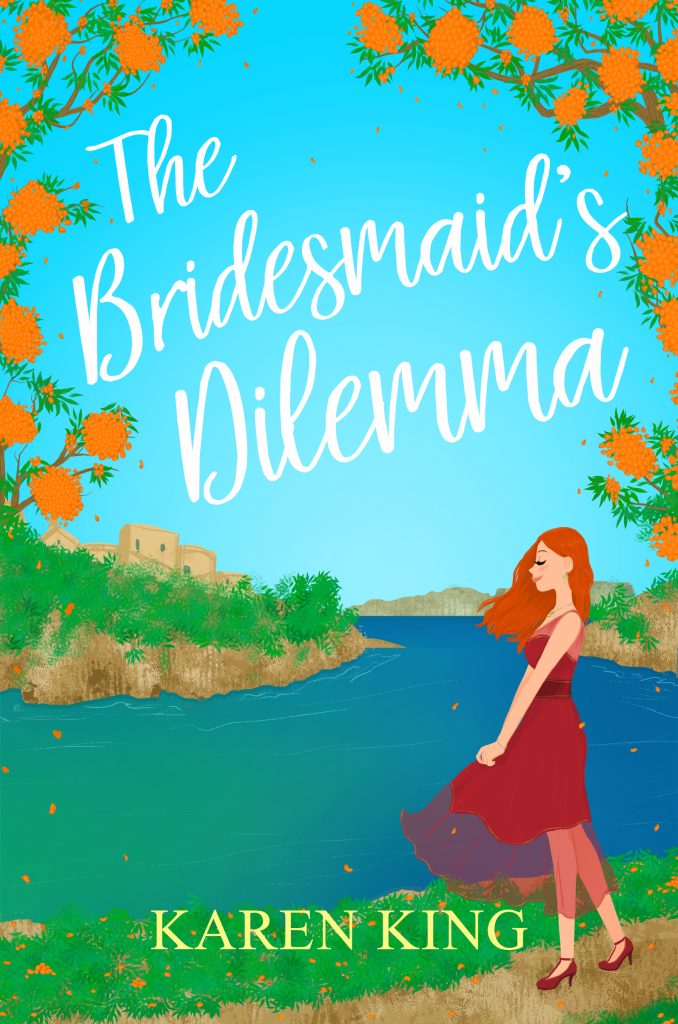
Yes, can I give a shout out for my romcom, The Bridesmaid’s Dilemma, which is now on pre-order  and will be published by Accent Press on 7 June.

***

Blurb- Rise of the Soul Catchers

Can love survive anything – even death?

Sapphire and Will vow to love each other forever. But when a car crash ends that dream all too soon, they find themselves separated in an afterlife with zones named after the colours of the rainbow. Determined to find each other, they start an adventurous journey alongside a cast of characters they don’t know whether to trust. They finally meet again in the terror-fuelled Red Zone where the dreaded Soul Catchers are planning on taking over the entire afterworld and are plunged into a dangerous battle. Is their love strong enough to survive against the odds?

 (Previously published as Sapphire Blue)

***

Here’s a great extract for you…

Rise of the Soul Catchers extract. Sapphire’s Viewpoint

Chapter Two 

I am alive.

I lie still, keeping my eyes closed, trying to feel if I’m hurt, if anything is broken. I flex my fingers, my toes, move my head real slow from side to side. Everything seems fine.

Oh God, Will! Is Will okay?  I snap open my eyes, sit up, look over at the passenger seat praying that Will is alive too. Only there’s no passenger seat. No car. No Will.

What the hell has happened? Did I dream it?

I couldn’t have dreamt it. I remember it all so vividly. Will driving along, singing, the container in the middle of the road, the tree zooming toward us, the crash. Besides I’m not in bed. I’m…

I look around. Everywhere is covered by a thick, white mist and it’s eerily quiet. Where am I?

“Sapphire!”

Grandpa?  Surprised, I swing around and stare at my grandpa walking through the mist toward me, waving with a big smile on his face. Now I know I’m dreaming. Grandpa died two years ago.

“Sapphire!” Grandpa’s right in front of me. He holds out his arms for me to run into them, like I used to when I was little, but I can’t move. My feet are glued to the ground as I gape at him. “Grandpa?” I whisper

. “It’s me,” he says. “It’s really me.” He reaches out and envelopes me in a big hug. I feel his arms wrap around me, smell the familiar musky-scent and relax a little, allow myself to sink into the warmth and comfort of his embrace. “Don’t be frightened, I’ll look after you.” Grandpa’s voice is soft, gentle and I’m so glad to see him again that I nestle in closer and rest my head on his shoulder just like I used to do when I was little.

“I’ve missed you, Grandpa,” I mumble.

“I’ve missed you too, sweetie. It’s so lovely to see you again, but not like this. Not so soon. You’re too young.” His eyes are shining with tears.

Too young for what? Suddenly I’m jolted back to the present. What’s happening? What’s Grandpa doing here? I want to wake up. I don’t like this dream. I focus on waking, imagine myself opening my eyes, finding myself in my comfy bed with its bright, daisy-flowered duvet cover, snuggling up to the big, yellow Miss Sunshine cushion Will bought. That’s what he calls me. His Little Miss Sunshine. He says I brighten up his life.

Will.

Where’s Will? “Wake up,” I whisper to myself. “Wake up.”

“This isn’t a dream, love,” Grandpa tells me as he strokes my hair. “I know it’s a lot to take in and it will seem strange at first, but you’ll get used to it. There’s lots of family waiting to meet you, aunts and uncle and your great-grandparents. We’ll all look after you.”

His words freak me out. I try to pull away from him. “They’re all dead!” I scream. “And, so are you. You’re dead!” I pinch my arm. Hard. Squeeze my eyes shut. This is a dream. It must be a dream.

Wake up! Wake up! Wake up! …

***

Buy Links

Rise of the Soul Catchers is available for pre-order from Amazon and will be published on 25th April.

Amazon: http://ow.ly/Fz1L30j0hqh


Author bio

Karen King writes edgy YA with a heart and sassy, heart-warming romance. Her first YA, Perfect Summer, was runner up in the Red Telephone Books 2011 YA Novel Competition and her second YA, Sapphire Blue, now republished as Rise of the Soul Catchers by Littwitz Press, was called ‘the best YA book out there right now’ by a reviewer for Ind’Tale magazine.

Karen has four romcoms published by Accent Press, and a fifth one is due out in June this year, Her latest romcom, The Cornish Hotel by the Sea, was #3 in the Amazon bestseller holiday reads.  She has recently signed a two book-contract with Bookouture for more romance novels.

Karen has also written several short stories for women’s magazine and had 120 children’s books published.

When she isn’t writing, Karen likes travelling, watching the ‘soaps’ and reading. Give her a good book and a box of chocolates and she thinks she’s in Heaven.

Author links

Website: http://www.karenking.net/

Twitter: @karen_king

Karen King Young Adult Books Facebook Page

Karen King Romance Author Facebook Page

Pinterest: https://uk.pinterest.com/karenkingauthor/ 

***

Many thanks Karen. Great interview.

I happen to know this is a fabulous book- so happy reading folks,

Jenny xx

Opening Lines: The Man in the Needlecord Jacket by Linda MacDonald

It’s time for another in the popular blog series “Opening Lines.”

This week I’m delighted to welcome Linda MacDonald to my site to share the first 500 words (precisely) of her novel, The Man in the Needlecord Jacket.

Over to you Linda…

The Man in the Needlecord Jacket is told from the perspectives of two women who are each struggling to let go of a long-term destructive partnership.

When Felicity meets Coll, a charismatic artist, she has high hopes of being distracted from her failed marriage. What she doesn’t know is that he has a partner, Sarah, with whom he has planned a future. Sarah is deeply in love with Coll, but his controlling behaviour and associations with other women have always made her life difficult. When he becomes obsessed with Felicity, Sarah’s world collapses and a series of events is set in motion that will challenge the integrity of all the characters involved.

I was inspired to explore the issue of mental abuse in partnerships and the grey area of an infidelity that is emotional, not physical.  Here are the first 500 words …

Sarah’s Story – July 2013

In early December last year, my life took an ominous turn. It was a time of grey skies and drizzle-filled days and when Coll came over to my place for a midweek supper. I had finished decorating the small Christmas tree, tidied leftover tinsel and trinkets into a carrier bag and was sitting at my dining table putting stamps on my cards ready for posting. He arrived with a local Exeter paper in his hand and he waved it at me with a flourish before plonking it down in front of me, scattering my neat pile of cards.

No hello or how are you? I could tell he was on one of his missions. I would have to listen before I spoke, and then perhaps feign enthusiasm for yet another wild scheme which would take a good half hour in the telling. His eyes were excited and there was a smear of green paint on the back of his left hand. It’s interesting how one remembers trivial details surrounding major events.

He said, ‘I want to find an outlet for my paintings and try to seize some of the Christmas present-buying market. There’s a new restaurant opened this side of Pinhoe. I might try there, if someone hasn’t already beaten me to it. Look, it says “locally sourced produce”.’ And he jabbed a finger on the advert in question, demanding my scrutiny. ‘The clientele might appreciate local art too. Can’t get much more local than me. I’ll go and have a meal there on Friday and see what it’s like.’

I noticed he said ‘I’ll go and have a meal.’ Not ‘we.’ He saw my narrowed eyes.

‘You won’t want to be hanging around while I talk pictures,’ he said.

It would have been nice to have been asked. He was always inclined to do what he wanted without considering my feelings. A man of impulses. Highly annoying but also part of the attraction because when the impulses included me – which they did often at the start of our relationship – life was sublime.

‘Good idea,’ I said. I thought it was. I had no inkling that it was going to be the worst idea in the world.

Felicity – Early December 2012

My new restaurant has barely been open a week when I am hovering near the entrance lobby and a table for one is requested by an attractive middle-aged man. I assume he is on business, but as we are outside the centre of Exeter on the edge of a small village, this is unusual. Also, he is clad

like a rock-star in faded denim and a dark grey needlecord jacket. Not the favoured garb of my clientele who are usually besuited or, that most broadly interpreted of phrases, smart-casual.

I show him to a small table by the window and give him a menu. He requests a glass of house white in a voice of liquid gold. In my mind, I begin to elaborate on…

***

You can find out what happens next by purchasing The Man in the Needlecord Jacket from – Amazon: https://www.amazon.co.uk/Man-Needlecord-Jacket-Linda-MacDonald/dp/1788037111/ref=tmm_pap_swatch_0?_encoding=UTF8&qid=&sr=

About the Author

Linda MacDonald is the author of four independently published novels: Meeting Lydia and the stand-alone sequels, A Meeting of a Different Kind, The Alone Alternative and The Man in the Needlecord Jacket. They are all contemporary adult fiction, multi-themed, but with a focus on relationship issues.

After studying psychology at Goldsmiths’, Linda trained as a secondary science and biology teacher. She taught these subjects for several years before moving to a sixth-form college to teach psychology. In 2012, she gave up teaching to focus fully on writing.

Linda was born and brought up in Cockermouth, Cumbria and now lives in Beckenham, Kent.

Twitter: @LindaMac1

Facebook: https://www.facebook.com/LindaMacDonaldAuthor/

***

Many thanks Linda. Great extract.

Come back next week to read the first 500 words from Liz Mistry.

Happy reading,

Jenny x

Interview with Rachel Sargeant: The Perfect Neighbours

It’s interview time! Why not get the kettle boiling, make a cuppa, grab some cake and settle down to see what I’ve been talking about with author, Rachel Sargeant…

Hello, Jenny. Thank you for inviting me onto your blog and for giving me these fun questions to answer.

What inspired you to write your book?

My latest book, The Perfect Neighbours, came out of two ideas. I lived for ten years in a British expat community in Germany. It is an unusual, close-knit environment that I’ve always felt would make a great setting for a novel if I could find the right project. When I moved back to England, I read a newspaper report about a criminal case that was going through the courts at that time. The crime was so bizarre and audacious that many people thought it was a spoof. I did some research and discovered that the case was by no means unique. This kind of crime has sadly claimed many victims over the years. This made me wonder whether a similar crime could occur in a small community where everyone knows everyone’s business, or thinks they do. I found the right story for my expat setting.


Do you model any of your characters after people you know? If so, do these people see themselves in your characters?

My characters are completely made up. Apart from the dubious ethics of using real people, I don’t think I could mould real people to do and say what I want. My latest novel features a dark mix of secretive and menacing neighbours. Thankfully all my real neighbours, past and present, are nothing like them.

What type of research did you have to do for your book?

This book started life as a portfolio piece for my M.A. in Creative Writing and required a lot of research for the accompanying academic essay. I researched a number of topics including hospitality and friendship. (There were other major topics too which I can’t mention without giving away the plot.) By the time I finished working with my editor at HarperCollins, the novel became more commercial and these topics provided only a light touch.

Which Point of View do you prefer to write in and why?

I tend to write in the third person, possibly because I like to feature several characters’ viewpoints in the story.

Do you prefer to plot your story or just go with the flow?

I have to plot. In life, I’m a planner and list maker. The same holds true for my writing.

What is your writing regime?

I get home from my job as a school librarian at 4pm, check social media and then write until 7pm. I also put in a few hours at the weekend. Most of this writing will be editing previous drafts as I tend to write first drafts in school holidays.

What excites you the most about your book?

The most overwhelming thing is seeing the reviews on Amazon and GoodReads from real readers who’ve bought my book, read it and written about it. It’s very humbling.

About the author

Rachel Sargeant grew up in Lincolnshire. The Perfect Neighbours is her third novel. She is a previous winner of Writing Magazine’s Crime Short Story competition and has been placed or shortlisted in various competitions, including the Bristol Short Story Prize. Her stories have appeared in My Weekly and the Accent Press Saucy Shorts series. Rachel has a degree in German and Librarianship from Aberystwyth University and a Masters in Creative Writing from Lancaster University. She spent several years living in Germany where she taught English and she now lives in Gloucestershire with her husband and children.

Website: http://www.rachelsargeant.co.uk/

Twitter: https://twitter.com/RachelSargeant3


About The Perfect Neighbours

The Perfect Neighbours is a Kindle Top Ten bestseller published by HarperCollins Killer Reads.

“An original, gripping thriller that is both unnerving and shocking in equal measure. I was immediately drawn into the strange, claustrophobic neighbourhood and Rachel Sargeant creates a thrilling sense of foreboding throughout.” Phoebe Morgan, author of The Doll House

The perfect neighbours tell the perfect lies… When Helen moves to Germany with her loving husband Gary, she can’t wait to join the expat community of teachers from the local International School. But her new start is about to become her worst nightmare.

Behind the shutters lies a devastating secret… As soon as the charming family across the way welcome Helen into their home, she begins to suspect that all is not as it seems. Then Gary starts to behave strangely and a child goes missing, vanished without a trace.

When violence and tragedy strike, cracks appear in the neighbourhood, and Helen realises her perfect neighbours are capable of almost anything.

Available from Amazon:

https://www.amazon.co.uk/Perfect-Neighbours-Rachel-Sargeant-ebook/dp/B074M2VJ3P/ref=sr_1_1?s=digital-text&ie=UTF8&qid=1507722593&sr=1-1&keywords=the+perfect+neighbours

Or HarperCollins website:

https://www.harpercollins.co.uk/9780008276737

***

Extract from The Perfect Neighbours

Gary squeezed Helen’s hand. “Excited?”

She said nothing. Was she excited? New start in a new country. As a full-time wife. She managed a smile and nodded.

They drove off the A road – the Landstrasse as Gary called it – into a grey, built-up area. She thought of the coach trip she’d made with a Year 10 class to Bulgaria; Communist-built apartment blocks on the outskirts of Sofia.

Gary pulled up at traffic lights and pointed. “And behind there is the Niers International School.”

Through the spike-topped metal fence on the right she made out rows of full bicycle stands. It looked like a provincial railway station.

“But you can’t see it properly from here,” he added.

A pot-bellied man in a dark uniform was standing by a sentry hut, the wooden roof scabby and cracked.

“You have guards?” she asked.

“Don’t mind Klaus. We have two full-time security men to patrol the site. The parents like it. Except our guys spend most of the time playing toy soldiers in their little house.”

Helen laughed until she noticed Ausländer Raus spray-painted on a bus shelter. “Does that mean what I think it means?”

The light went green, and they turned left.

“Foreigners Out – but you hardly ever see that stuff. Most of the Germans love the international school,” he said. “Lots of locals work here in support roles, and the parents spend good money in the town.”

He’d told her about the parents before. Most worked for big international companies in Düsseldorf, and others were rich locals prepared to pay for an English-speaking education. And some were teachers.

“Think about it, Helen,” Gary had said when they sat down with their pros and cons sheet on one of his weekend visits, agonizing over where to live. “Not yet, but in a few years, if we have children, it could be their school. There are so many perks, as well as the salary.”

That had been the clincher: Gary could earn more staying out here than the two of them put together in the UK. Helen had stopped being stubborn in light of the cold hard figures. She quit her job and put her house up for rent.

He went over a speed bump, and she felt the seatbelt rub against her collarbone.

“Have you noticed the street names?” He pointed at one, multisyllabic, a jumble of Ls and Es. “Can you read them?”

She shook her head. They had been driving non-stop since Calais. The traffic signs after the border into Germany had become a strident Teutonic yellow. Here the street names were in white, more like British ones, but they were unpronounceable.

Gary crawled along at 20 mph and seemed unfazed by the need to slalom his way around parked cars, playing children, and speed bumps. She glanced at his profile – round cheekbones, smooth jaw, patient eyes. Who would have thought affability could be so magnetic? Her stomach settled.

***

Many thanks Rachel. Great interview and wonderful extract.

Happy reading everyone,

Jenny x

Opening Lines: The Allotment Girls by Kate Thompson

It’s time for this weeks “Opening Lines” blog!

This week I’m delighted to welcome Kate Thompson to my site to share the first 500 words (precisely) of The Allotment Girls…

During the Second World War, life in the iconic Bryant & May match factory is grimy and tough. Annie, Rose, Pearl and Millie carry on making matches for the British Army, with bombs raining down around them.

Inspired by the Dig for Victory campaign, Annie persuades the owners to start Bryant & May allotment in the factory grounds. With plenty of sweat and toil, the girls eventually carve out a corner of the yard into a green plot full of life and colour.  In the darkest of times, the girls find their allotment a tranquil, happy escape. Using pierced dustbin lids to sieve through the shrapnel and debris, they bring about a powerful change, not just in the factory, but their own lives. As the war rages on, the garden becomes a place of community, friendship – and deceit. As the garden thrives and grows, so do the girls’ secrets . . .

Prologue

January 1897

It must be said, nowhere does a funeral quite like the East End. This one, taking place on a bitter Monday in January, quite surpassed anything the poor folk of the parish of Bethnal Green had ever before seen. Even in the depths of his guilt, he had to acknowledge this fact.

The entire funeral route was lined with thousands of people, a respectful crowd largely, all dressed in their best clothes and washed for the occasion. The sea of black bonnets, shawls and caps was chequered with the odd cluster of bright colour from the hats of assembled factory girls.

Even the weather had put on its funeral best, with scrawls of black cloud dirtying the sky and a rattling wind hammering the windows like fists. The police had been deployed in great numbers, but their presence was not required, he noted, as he tried to blend into the sea of faces.

He had never seen so many people before, sitting on walls, clinging to gas lamps and perched on sills, all craning their necks for a better view.

‘Almost be worth being burnt to have such a handsome turnout,’ muttered a man in the crowd next to him, before his wife slapped him into silence. ‘Wash your mouth out,’ she hissed. ‘The cortège is coming.’

A hush fell over the crowd. A painful lump lodged in his throat as the first notes of ‘Dead March in Saul’ drifted over the cobbles. The cortège was led by the Wapping Gas Workers’ brass band, the dramatic clash of their instru­ments driving deep into his heart.

And then came the bodies. A mixture of horror and awe settled over the crowd. For once, no one was looking at the lavish wreaths or the magnificent black horses, resplendent in their rich purple plumes and velvets. All eyes were fixed only on the coffins, growing gradually smaller in size as they passed by.

‘Just children,’ wept the woman next to him, pressing a broad black handkerchief to her mouth in dismay. But to him they had names, and he murmured them quietly, like an undercover priest, as each coffin filed past.

Eliza, fifteen. Mary, twelve. Alfred, ten. Beatrice, nine. John, seven. Margaret, five. Marie, three.

By the time baby Emily’s body passed him, he could no longer hold back his anguish, and a strange cry escaped him. In comparison to her parents’ coffins, Emily’s seemed absurdly small, and he longed to reach out and cradle her, to save her the journey into the cold, dark earth.

But they were already gone, one step closer to the closing scene of the mass burial that would be discussed in every public house in the borough for months to come.

And then came the mourners. And how! Conveyances of all descriptions, filled with anyone who had a connection to the dead. Mourning carriages, hansom cabs, broughams and even three omnibuses, willing to take passengers, mainly women it had to be said, to the final resting place.

 ***

The Allotment Girls is available now: https://www.amazon.co.uk/Allotment-Girls-Kate-Thompson/dp/1509822259/ref=sr_1_1?ie=UTF8&qid=1520333328&sr=8-1&keywords=the+allotment+girls

Paperback can also be purchased at Sainsburys, WHSmith and other retailers.

Connect with Kate:

@Katethompson380

www.katethompsonmedia.co.uk 

Many thanks Kate. Great stuff.

Come back next week to read the first 500 words from a noel by Linda MacDonald

Happy reading,

Jenny x

In Search of King Arthur: Tim Walker

I’m delighted to welcome Tim Walker back to my site today. On this visit he is sharing a little of his search for King Arthur.

Over to you Tim…

The search for a tangible King Arthur remains as inconclusive as ever due to lack of compelling, physical evidence, although some continue to try and convince us otherwise. There are many places in Britain that lay claim to have connections to a ‘real’ Arthur – Tintagel where he was said to have been conceived; Camalat (South Cadbury in Somerset), an impressive iron age citadel; Glastonbury Abbey where monks in 1190 claimed to have found his grave; Camelford – a village in Cornwall that claims to be the site of the Battle of Camlann, where Arthur was mortally wounded around the year 515 AD (a date arrived at through research by historian John Morris). Avalon, or The Island of Apples, where Arthur’s body was taken, is thought to be near Glastonbury – its proximity to Camelford lending support to the claims of this patch of the West country. There are other ‘Arthurian’ sites at various locations in Wales, at Birdoswald on Hadrian’s Wall, and north of the wall at Caledonian Wood.

At the visitor centre near Camelford at the aptly-named Slaughterbridge, I followed a path to a low cliff above the River Camel and look across to the meadow on which Arthur is said to have fought his last battle. On the muddy riverbank below lies The Arthur Stone – a granite tombstone dated to 540 AD engraved with Celtic runes that have been interpreted as stating ‘here lies the son of Arthur’, throwing up the intriguing possibility that it was not Arthur but his heir who fought and died on this spot some years after his illustrious father (or that both father and son fought battles there, as the keepers of the visitor centre would like us to believe). Legend has it that the victorious Saxons desecrated his burial site and rolled the tombstone down to the riverbank where it remains to this day. Hold on a minute, did King Arthur have a son? In Geoffrey of Monmouth’s account, Arthur is succeeded by his cousin, Constantine of Cornwall.

In the absence of something more substantial from historians and archaeologists, these remain theories in the realm of legend. One theory is that Arthur may not have been a king at all, but a ‘leader of battles’ a ‘Dux Bellorum’ or a hired sword, working for a group of tribal leaders, in the immediate post-Roman era. Bernard Cornwell’s excellent novel, The Winter King, adopts this point of view.

Another perspective is offered by historical fiction author Chris Flynn (The Bear, The Dragon and The Wolf) who argues the case for a Northern Arthur who is a cavalry commander, possibly drawing on the influence of Sarmatian cavalry units once garrisoned at Hadrian’s Wall, who organises resistance to the spread of Anglo-Saxons in the north-east (www. botrbooks.com/blog). Also in this corner is Alistair Moffat, who puts forward the case for Arthur being a warlord based in the Scottish borderlands north of Hadrian’s Wall in the years after Roman evacuation, in his book, Arthur and the Lost Kingdoms. His book builds a case based on literary sources, historical documents and interpretations of place names to build a compelling and intriguing case for a Scottish Arthur. Add this to the Welsh chroniclers’ Arthur, and you have a folk hero claimed by three home nations.

Clearly, it was a troubled time for the Britons, left exposed by the removal of Roman protection. However, there is no physical or archaeological evidence for who the leaders were, where battles took place and when. It has been suggested that the legend of King Arthur is a composite of the feats of a number of Briton leaders over a broad period stretching from the mid-fifth to the mid-sixth centuries, embellished by bards over the years until written down in 1136 AD by Geoffrey of Monmouth in his book, The History of the Kings of Britain.

Victories in as many as seventeen battles on British soil have been attributed to Arthur, plus his overseas adventures, giving credence to the notion that this was not the work of one leader but of several – collapsed together for the purposes of engaging storytelling by bards to make one great heroic figure who battled to preserve a Romano-Briton way of life.

Contemporary historian, Miles Russell (writing in History Revealed magazine), has re-examined Geoffrey’s claim that the inspiration for his work was based on an ancient book ‘in the British tongue’ and found that it may have some credence (despite the source text never having been found or mentioned by any other). To support his theory he uses as an example Geoffrey’s telling of the coming of Julius Caesar in 55 and 54 BC – an account that has similarities to the ‘official’ Roman version but differs in some details and is told from a British point of view. Geoffrey certainly did his homework, poring over source material as diverse as folklore, chronicles, church manuscripts, king-lists, dynastic tables, oral tales and bardic praise poems.

In Geoffrey of Monmouth’s ‘history’ we get a compelling story of a time of desperate struggle following the end of Roman Britain. He gives us a linage of Fifth Century kings – Constantine, Vortigern, Ambrosius Aurelianus, Uther Pendragon and then King Arthur.

Arthur becomes king at the age of fifteen and marries Ganhumara (‘Guinevere’) who is from a noble Romano-Briton family. Arthur forms an alliance with his nephew, King Hoel of Brittany, and they inflict defeats on the Saxons at Lincoln and Bath before crushing a combined force of Picts (Scots) and Hibernian (Irish) tribes at Loch Lomond. They then attacks Ireland, the Orkneys, Iceland, Norway, Sweden and parts of Gaul (France), forcing the people to pay them homage. He lays waste to fields, slaughters the population of these places and burns down their towns – the exact opposite of a chivalric king. Geoffrey’s Arthur is an arrogant, aggressive and brutal warlord who kills and takes what he wants.

But Geoffrey’s story does not end there – Arthur is summoned by the Roman Emperor to face charges of war crimes and responds by raising a large army, sailing to Gaul, and meeting the Roman army in battle, defeating and killing the emperor. Arthur’s mind is set on capturing Rome, but he is forced to return home at news that his nephew Mordred has taken his queen, Ganhumara, and seized the kingdom. In a bloody civil war in which thousands die, both Mordred and Arthur fall in battle – Arthur’s body is taken to the Isle of Avalon and he is succeeded by his cousin, Constantine of Cornwall.

This is a summary of Geoffrey’s account in his Historia, and it is an intriguing thought that he MAY have taken it from a lost manuscript. Later generations lightened the blood-soaked narrative, adding more sorcery, the romance of Camelot, chivalric heroes (the knights of the round table), the quest for the Holy Grail, an evil foe in Morgana, and a doomed love triangle involving Arthur, Guinevere and Lancelot.

Despite the fanciful tale of Arthur taking on the might of the Roman Empire, there is still the possibility that Geoffrey’s account was largely based on genuine source material that offers a glimpse of native Briton resistance to foreign invaders in the fifth and sixth centuries. Geoffrey’s King Arthur could not possibly have done all those things – he is most certainly a composite of several characters, including Ambrosius Aurelianus, who perhaps has better credentials as a noble leader who led the Britons to early victories over the Saxons.

Clearly, there was organised resistance to invaders, and tales of bravery told by chroniclers and bards from the Briton resistance point of view – and perhaps missing texts. Arthur is the embodiment of this oral tradition from the fifth and sixth centuries, offering us intangible glimpses of deeds in a period wedged between the gloating records of Roman and Anglo-Saxon conquerors.

*****

Uther’s Destiny – Blurb

In the year 467 AD Britannia is in shock at the murder of charismatic High King, Ambrosius Aurelianus, and looks to his brother and successor, Uther, to continue his work in leading the resistance to barbarian invaders. Uther’s destiny as a warrior king seems set until his world is turned on its head when his burning desire to possess the beautiful Ygerne leads to conflict. Could the fate of his kingdom hang in the balance as a consequence?

Court healer and schemer, Merlyn, sees an opportunity in Uther’s lustful obsession to fulfil the prophetic visions that guide him. He is encouraged on his mission by druids who align their desire for a return to ancient ways with his urge to protect the one destined to save the Britons from invaders and lead them to a time of peace and prosperity. Merlyn must use his wisdom and guile to thwart the machinations of an enemy intent on foiling his plans.

Meanwhile, Saxon chiefs Octa and Ælla have their own plans for seizing the island of Britannia and forging a new colony of Germanic tribes. Can Uther rise above his family problems and raise an army to oppose them?

Book three in A Light in the Dark Ages series, Uther’s Destiny is an historical fiction novel set in the Fifth Century – a time of myths and legends that builds to the greatest legend of all – King Arthur and his knights.

***

In my historical book series, A Light in the Dark Ages, I have attempted my own alternative history of the period starting with the departure of the Romans and building to the coming of King Arthur, putting flesh on the mythical bones of early kings Vortigern, Ambrosius Aurelianus and Uther Pendragon – lighting the way for the coming of King Arthur.

Book one – Abandoned! – http://myBook.to/Abandoned

Book two – Ambrosius: Last of the Romans – http://myBook.to/Ambrosius

Book three – Uther’s Destiny – http://myBook.to/Uther

Author website: http://timwalkerwrites.co.uk 

***


Great blog- thanks Tim.

Happy reading everyone,

Jenny x


Page 36 of 72

Powered by WordPress & Theme by Anders Norén