Jenny Kane: Coffee, cupcakes, chocolate and contemporary fiction / Jennifer Ash: Medieval crime with hints of Ellis Peters and Robin Hood

Tag: new release Page 11 of 15

Guest post by Jon Hartless: How not to start a novel

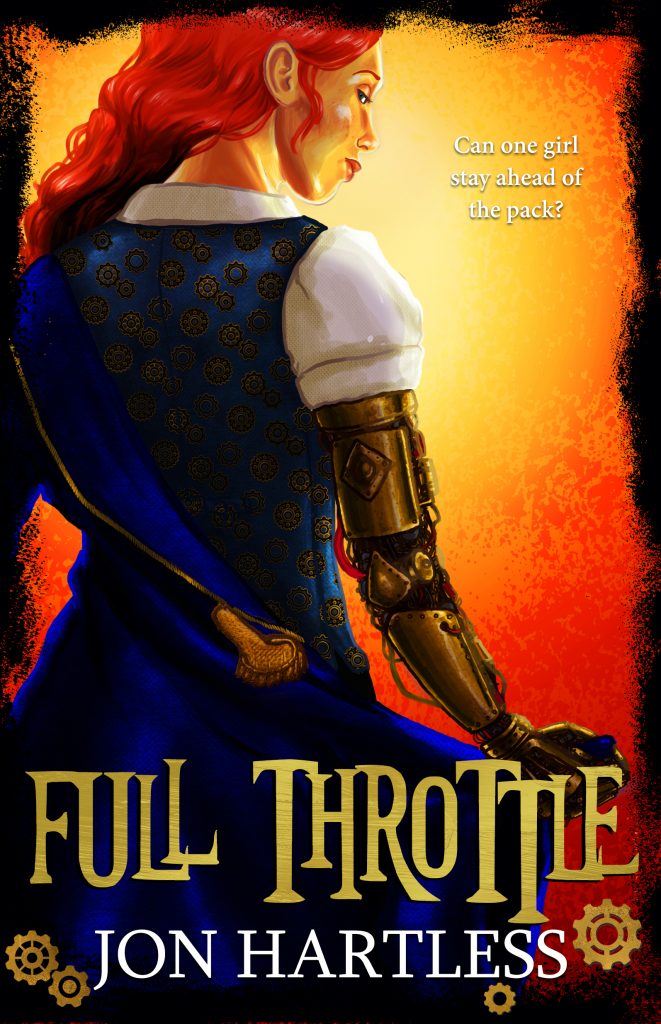
Today I’m delighted to welcome author Jon Hartless, hot on the heels of the publication of his latest book, Full Throttle.

Over to you Jon…

About four or five years ago, I had an idea. That idea was “Let’s write a steampunk motor racing story inspired by the era of the Bentley Boys.”

For those who don’t know, Steampunk is usually set in an alternative nineteenth century timeline in which technology had advanced to a greater degree than in reality, but the idea is flexible so please don’t feel that this definition is the only one. The Bentley Boys were very famous racing car drivers of the 1920s, beloved by the media for their wealth, social status, and derring-do racing lifestyle. This was at a time when most people still couldn’t even afford a car, never mind race one, and as such I thought the world of motor racing would be a perfect symbol for the gulf between the rich and the poor.

As ideas go, this one had quite a lot encoded within it. To begin with, this was to be a dirty, grubby Steampunk world, not a bright, shining version. Despite the presence of cutting-edge technology, my story would only feature glimpses of it, for only the wealthy elite would be able to afford it. This was to be a world very like ours, in which opportunity only exists for the rich and well-connected while everyone else is presented with the illusion of opportunity, a practice very familiar to us today.

And within this world we would focus on a young girl condemned to a life of poverty – material and intellectual – because of her working class background, her gender, and also her disability – she only has one arm, owing to a birth defect, and a weak knee from the same cause. But fortunately for her, her father has a small workshop and a secret project; a petrol engine designed specifically for motor racing. And there it was; an intelligent heroine named Poppy Orpington and a petrol-fuelled monster of a car called Thunderbus would rise up to challenge the racing elite and the social order, to smash conventions apart. Every piece slotted neatly into place.

And having thought of this, and having practically the whole thing in my mind, I then abandoned it to rewrite the core concept.  For no reason at all. Other than I was a complete prawn. For some reason I just lost faith in it and thought I’ll never get it accepted. Instead, I reimagined it as a book for young children, with large pictures on every page, where Poppy is a girl of about 8, whose eccentric father makes a car and they go off racing, towing a caravan behind them.

I then binned that idea and thought of making it a bit more “pulp”; in this version, Poppy – now a grown woman without any birth defect – is heading home from work one evening and is accosted by a sinister man who offers her 50 quid for something called Thunderbus. She has no idea what he’s talking about, and walks on. Then another man pops up and offers her 100 quid. Then two more agents appear and offer 250, and when again she refuses they attack her and try to take her prisoner. Poppy promptly goes Mrs Peel on their arses (old TV reference) and escapes. Back home she finds a letter from a solicitor saying very sorry, your father has died, and you have inherited everything; a small workshop, several debts, and something called Thunderbus.

So, Poppy visits the solicitor who gives her the keys to the workshop and says he has no idea what Thunderbus is. Poppy visits, the workshop, (and is probably attacked again by yet more sinister men), and finds that Thunderbus is a sort of small armoured tank with advanced weapons of the sort that has never been seen before and which will change the face of warfare, hence the many ominous agents want to get their hands on it and have killed her father in the attempt…

And at that point I gave up on that version, though it did briefly rise vampire-like with a new take, in that I thought; what if Poppy’s father knows it will take him about 15 years to make Thunderbus because of the complexity of doing it all alone, plus he knows that super-strength will be required to pilot the tank, and he looks at his baby daughter, asleep in her crib, and lops her arm off, thereafter telling her it is a birth defect and bringing her up to obey him in everything? The action would then jump forward to Poppy as a teen girl, worshiping her father as she has been brainwashed by him, and using her mechanical arm to use Thunderbus as her father commands, blowing up a bank here or a military installation there. The story would have then been of her ‘awakening’ as she realises the Mephistophelian nature of her father and rebels against him. But that idea died a death also. Thankfully.

And so, after all that, I finally thought, “hang on, what was wrong with the racing idea that practically wrote itself?” I went back to that, and the rest was plain sailing. Except for about thirty thousand rewrites and almost one hundred rejections. But these are a writer’s usual problems, or at least they are my usually problems, and finally the book was accepted and published, and here it is. If there is any point to this blog, I suppose it is have faith in a good idea. Or don’t be afraid to change it, if need be. Or something.

I hope you enjoy the book. A lot of torment went into creating it, never mind writing it…

https://www.amazon.co.uk/Full-Throttle-Jon-Hartless/dp/1786154579/ref=sr_1_1?s=books&ie=UTF8&qid=1504447643&sr=1-1&keywords=jon+hartless

https://www.facebook.com/jonhartlessauthor/

Full Throttle Extract:

PREFACE

By James Birkin, Editor.

Today, Poppy Orpington is hardly remembered at all. Some do know that she was a famous racing driver, though only a minority of these are aware that her first car was called Thunderbus, not Thunderbolt, a mistake arising from her later company of that name. Others wrongly dismiss her as the first of the modern celebrities, working the media for fame and money, while a few will gleefully recall libellous newspaper reports of harlotry in a Parisian bawdy house whenever her name is mentioned.

Most, however, are familiar only with her stained reputation from the Great War – a reputation, I maintain, that is thoroughly undeserved. However, I must not get ahead of myself. I shall explore everything in the right order and put Poppy in the context of her era. Her exoneration, should you wish to grant it, must be given at the right time and with a full understanding of Poppy’s character.

This, then, is the beginning of the testimony, taken from diaries, letters and personal contemporaneous interviews. Some may complain that my shaping of this material into a narrative rather than an academic account will diminish the authenticity of the work; I contest that Poppy’s biography is so dramatic in tone, and so rich in style, that it pulled itself naturally into this shape.

Nonetheless, a few disclaimers should be noted. Memory is fragile, and it is unsurprising to see the manner in which events can be transposed, altered and generally misunderstood. Please be assured that I have researched all areas as closely as possible and that everything in this book actually took place, though not necessarily in the order given.

Also, the spoken language at that time was rather more formal than today, especially amongst the upper classes and the well-educated, and this has driven me to lightly edit certain conversations between Poppy, Simeon, Helena and their contemporaries. Please be assured that I have endeavoured to keep the pith of each exchange, sacrificing the semi-archaic speech patterns only for the sake of lucidity.

The reader may ask just why I have devoted so much time to the Orpington archive of diaries, letters and more. Does it really matter what happened to an almost forgotten woman over a century ago? In my opinion, and simply put; yes. Poppy’s life has many parallels today, while her eventual fate in the early years of the twentieth century could – tragically – easily happen again. I will accordingly interpose a series of editor’s notes on those aspects of Poppy’s life that I feel are relevant to us. I shall endeavour to keep these interjections to a minimum, however, as they serve to illuminate rather than to distract.

Join me, then, as we travel back to when motor sport was still open to amateurs – albeit only wealthy amateurs – who could race their own cars side-by-side with the professionals of the day. Back when the sport still boasted heroic individuality rather than corporate wrangling over fuel consumption and weight limits. Back when cars were designed by hand and built by imagination, and were as much for the public road as the racetrack, unlike today’s machine-designed racing vehicles that have no function outside the sport and no individuality within it.

So, let us return to an age which is now regarded as a lost era of romance and rugged individualism, but which was also characterised by gross inequality, a rigid social order, casual violence toward women and unthinking submission toward authority. And let us never forget that the past is golden only when viewed from afar.

***

Bio

Jon Hartless was born in the seventies, which is rather long time ago. Full Throttle is his first novel with a traditional publisher.

Jon Hartless

Many thanks Jon, sounds great.

Happy reading everyone,

Jenny. xx

Blowing the Dust Off: Jane Jackson’s Eye of the Wind

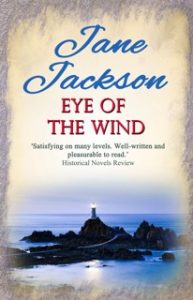
It’s Day 6 of my ‘Blowing the Dust Off’ series of blogs. Today the lovely Jane Jackson is reminding us about her excellent novel, Eye of the Wind.

Grab a cuppa and enjoy…

Thanks so much for inviting me onto your blog, Jenny.  Your brief was that guests should choose one of their books published at least two years ago.  I have chosen ‘Eye of the Wind.’ I’m passionate about the characters, story and background in every book I’ve written, but this one is a special favourite.  Why?  Because Melissa and Gabriel have no choice but to keep secrets, from their families and each other.  As the attraction between them grows, this creates enormous tension which is tough for them, but makes a gripping story.

As a professional writer for over four decades with thirty-two books published, I’ve learned a lot about my craft. A strong plot is important. But for me character comes first.  The characters drive the story and if they don’t grab and hold your interest, you’re not likely to read on. There are so many new books published every week all begging for your attention.

One thing I learned to do (and passed on to my students when I was teaching the craft of novel writing) was give main character/s something to hide, something to protect, and something to overcome.  This gave them greater depth, made them more real, while adding tension and conflict to the story.  Something else I learned as a people-watcher –not nosiness but vital research – is that the reason someone gives for choosing a particular course of action might seem reasonable and logical. But that’s never the full story. Look deeper and you’ll see that there’s more behind it, a pay-off that gives them something they want and feel they don’t have.

e.g.  Jo buys a lottery ticket every week and tells her family all the things she would do for them if she won. Taken at face value Jo’s reason for doing the lottery is so she can be generous. But her underlying motive is to control her family by making them grateful to her.  And this is because she feels unappreciated, taken for granted.  I’m not suggesting that every time you meet someone you should second-guess their actions and behaviour, but occasionally looking a bit deeper can give you some terrific ideas for aspects of character.

Writers are often asked where they get their ideas from, what inspires them.  Mine come from where I live – a creek-side village close to the third largest natural harbour in the world.  Cornwall is an island within an island and has a long and varied history. When copper mining was at its height, tiny Gwennap parish was the wealthiest area in the world.  The Packet Service based in Falmouth carried mail all over the globe and brought back bullion from British-owned sugar, coffee and tobacco plantations.  News of victory against the French at Trafalgar, and the death of Admiral Lord Nelson, was carried ashore at Fish Strand Quay in Falmouth by Lt Lapenotiere, who hired a post chaise to take him to London.  The first trials of nitro-glycerine, invented by Alfred Nobel, took place at Falmouth docks.  William Bickford, a leather currier living in Truro, invented the first safety fuse for use in Cornish mines and quarries.  These backgrounds, and more, have featured in my books.

I hope you enjoy this excerpt from ‘Eye of the Wind.’

Her gaze was clear and candid, and a tiny frown puckered her forehead. ‘You sound different.’

He smiled briefly. ‘Not used to talking.’

‘No, I don’t mean your voice: I mean your mode of speech.’

He bent his head, clenching his teeth as tension cramped his gut. In France, speaking only Breton, his disguise a matter of life and death, it had been easy to remain in character. But here in his home county and with her… Looking up he shrugged. ‘You’re right, miss. I used to work closely with the master and I wanted to better myself. Picked up his way of talking. No offence intended.’

‘No, no, I didn’t mean – it was not a criticism, Gabriel, merely an observation. But one I should not have made.’  Embarrassment had smothered her suspicion.

Torn between relief at avoiding potential danger and anger at his carelessness, he deliberately steered the conversation away from the past.  ‘May I wish you well for tomorrow?’

She drew a deep breath then blurted, ‘I’ll be glad when it’s over.’

‘No need to be nervous. You know what you’re doing.’

‘I hope so.’ It was heartfelt, anxious. After a moment she admitted, ‘My uncles don’t share your confidence.’

‘You know why, don’t you?’  He saw concern cloud her face. ‘You are attempting something men believe can – should – only be done by another man.’ One corner of his mouth lifted in brief irony. ‘This is a severe threat to their dignity.’

She was silent then tossed her head. ‘If their dignity is so fragile it must rest on very shaky foundations.’

‘It does,’ he confided. ‘And that is a secret all men would prefer to remain hidden.’

‘Her eyes widened. ‘Really?  No, you are not serious.’

‘Indeed I am.’

Seeing his rueful smile, she gasped and blushed, covering her mouth with her fingertips. ‘You should not say such things.’

‘Perhaps. But there will be occasions when you find that knowledge helpful.’

Watching her visible struggle as she recollected herself and withdrew from his unexpected and startling candour he realized that, despite being out in society, she had not acquired the usual veneer of arch sophistication he would have expected in a young woman of her background. And found himself fiercely glad.

She cleared her throat. ‘About – about the wood…’

It was a deliberate if reluctant retreat from an intimacy he should have resisted. Gabriel knew he must let her go. He turned away and set the basket on the ground.  ‘Why don’t you take a day or two to think about it, miss?’

‘But what you said – about the other trees being more valuable. Would they really raise a lot of money quickly?’

Watching her blush deepen and her lashes flutter down as she realized how much her question revealed, Gabriel wondered just how desperate a financial crisis her father had left her to deal with.  Picking up the last stone he began tying it onto a corner of the canvas, careful not to look at her.

‘They would, miss. And with proper management these woods will still be generating income a hundred years from now.’

‘Truly?’ She sounded stunned. ‘Thank you, Gabriel. Thank you very much.’

His hands grew still as he watched her walk quickly away up the path, her long stride peculiarly graceful, self-consciousness forgotten now she had so many more important matters to occupy her.

That evening after washing himself and his filthy shirt, he shaved carefully. With no mirror he had to work by touch alone. It took a long time, and he did not dare go too close to the wound on his throat. But the honey had done its work and healing had begun. Smearing a fresh cloth with the sweet-smelling salve he bound up his throat once more. Passing a hand over his almost-smooth jaw when he had finished, he smiled. No doubt Berryman would shudder at his efforts. But not only did he feel cleaner than he had for months, he also felt ridiculously proud.

When the men assembled at midday, the overnight rain was just a memory. The sun shone from a sky the colour of cornflowers dotted with thistledown clouds. Word that Francis Tregonning was dead and his wife ill had spread like flames in a gale. All were anxious about the yard and their jobs.

Melissa rode into the yard on Samson. Wearing her black habit and a small beaver hat with narrow rolled brim over her upswept hair, she was very pale but appeared calm as she dismounted. Standing near the back, his arms folded, Gabriel watched her fasten the rein to an iron ring, her fingers trembling. Remaining here was sheer madness. If he cared now in just this short time…Was he not in enough peril?

‘Eye of the Wind’   by Jane Jackson. Accent Press 2013. £1.99.

Kindle link:  http://amzn.to/2qiGcOw

Paperback available from third party sellers.

Reviews:  ‘A first-class historical novel … coupled with a gripping story-line.’    Western Morning News.

‘Satisfying on many levels, well-written and pleasurable to read.’   Historical Novels Review.

Author bio:  Jane Jackson’s first book was published in 1976. She wrote fourteen romances for Harlequin, ten romantic historical novels, and will soon complete the eighth of her Polvellan Cornish Mysteries writing as Rachel Ennis. She has been shortlisted for five major awards.

She taught the craft of novel writing for twenty years and was delighted and privileged to see eleven former students become professional novelists.  Happily married to a Cornishman, with children and grandchildren, she has lived in Cornwall all her life finding inspiration for her books in the county’s scenery, history and people.  Her hobbies are reading, coastal walks, baking, vintage vehicle rallies – and reading.

www.janejackson.net

www.facebook.com/PolvellanCornishMysteries

Twitter: @JJacksonAuthor

***

Thanks every so much Jane. Great blog!

Come back tomorrow to discover which book Alison Rose is blowing the dust off.

Happy reading,

Jenny xxx


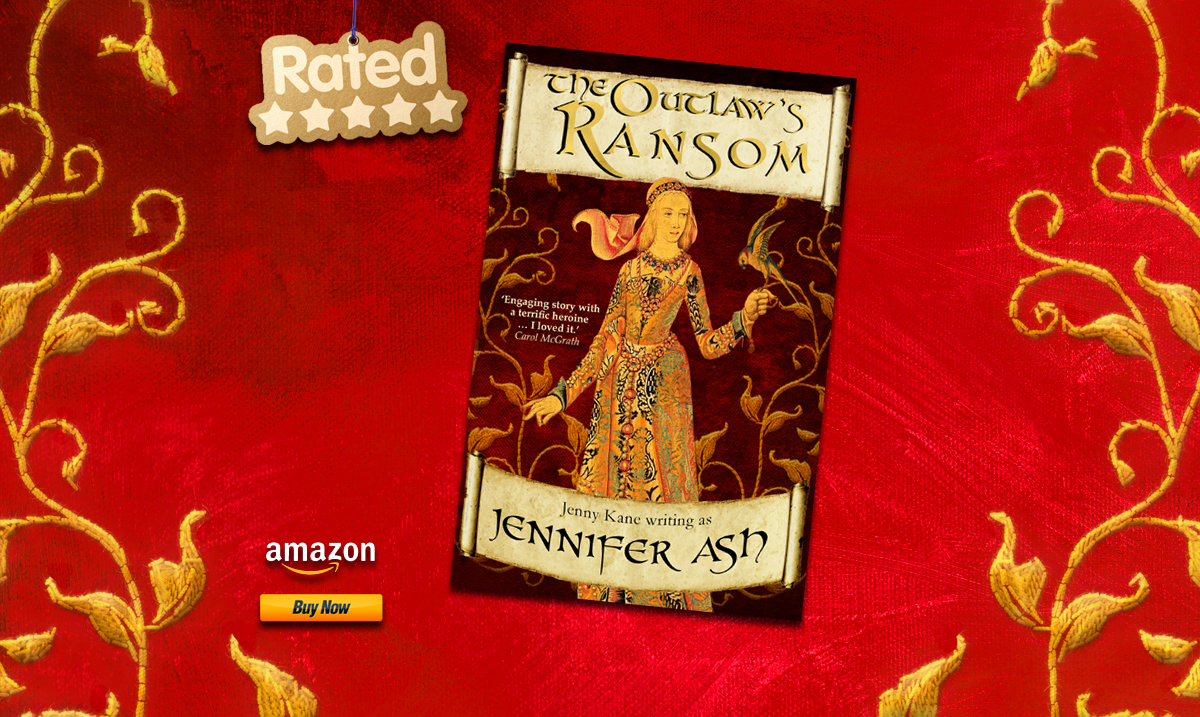
The Outlaw’s Ransom: Extract

outlaws-ransom-5-star

This winter sees the release of the follow up novel to The Outlaw’s Ransom,;The Winter Outlaw– in the meantime, here’s a reminder of what happens in The Outlaw’s Ransom…

Blurb

The first in an exciting new series by acclaimed author Jenny Kane writing as Jennifer Ash.

When craftsman’s daughter Mathilda is kidnapped by the notorious Folville brothers, as punishment for her father’s debts, she fears for her life.  Although of noble birth, the Folvilles are infamous throughout the county for disregarding the law – and for using any means necessary to deliver their brand of ‘justice’.

Mathilda must prove her worth to the Folvilles in order to win her freedom. To do so she must go against her instincts and, disguised as the paramour of the enigmatic Robert de Folville, undertake a mission that will take her far from home and put her life in the hands of a dangerous brigand – and that’s just the start of things…

A thrilling tale of medieval mystery and romance – and with a nod to the tales of Robin Hood – The Outlaw’s Ransom is perfect for fans of C.J. Sansom and Jean Plaidy.

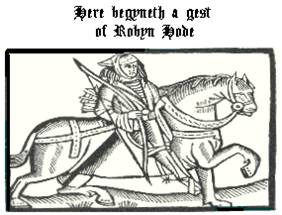
The Outlaw's RansomThe Outlaw’s Ransom (which originally saw life as part of my contemporary fiction/medieval mystery timeslip novel, Romancing Robin Hood), is a book that’s very close to my heart.  Anyone who follows this blog will know that it is my love of all things Robin Hood which led to me researching the real life criminal gang, the Folville brothers, and considering how they might have been influenced by the outlaw ballads that would have been circulating at the time.

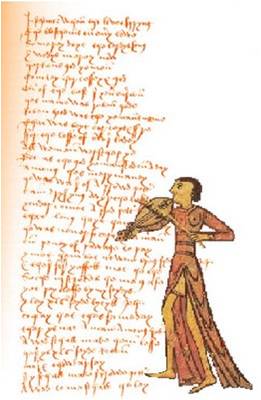
It was interesting to be able to give, what I imagine, the Folville family’s perspective on the Robin Hood stories might be.

rh-and-the-monk

Extract

…Eustace de Folville continued, ‘You know something of us, Mathilda, from living in these parts. And, I have no doubt, my dear brother has explained to you our beliefs on maintaining our lands and beyond, keeping a weather eye on the dealings of all men in this hundred.’

Mathilda bit her tongue in an effort to remain demurely mute, trying to concentrate on what Eustace was saying and not on the unknown fate of her younger brother.

‘He has also, I believe, told you of his fascination with stories,’ Eustace gave Robert a blunt stare; leaving Mathilda to wonder whether it was his brother’s passion for the minstrels’ tales, or the fact he’d shared that belief and interest with a mere chattel, that Eustace disapproved of.

‘The balladeers have become obsessed of late with the injustices of this land. Often rightly so. Naturally the fabled Robyn Hode has become a hero. An ordinary man who breaks the law, and yet somehow remains good and faithful in the eyes of the Church, is bound to be favoured. In years past such a character’s popularity would have been unthinkable, but these days, well …’

Eustace began to pace in front of the fire, reminding Mathilda of how his brother had moved earlier, ‘Now we are empowered by the young King, the Earl of Huntingdon, and Sheriff Ingram, to keep these lands safe and well run, and by God and Our Lady we’ll do it, even if we have to sweep some capricious damned souls to an earlier hell than they were expecting along the way.’

Eustace was shouting now, but not at her. His voice had adopted a hectoring passion, and Mathilda resolved that she would never willingly disappoint this man; it would be too dangerous.

‘Many of the complaints of crimes and infringements that reach my family’s ears are not accurate. Far more felonies are alleged out of spite or personal grievance than are ever actually committed. We require more eyes and ears, girl. Accurate, unbiased eyes and ears.

‘The sheriff of this county is not a bad man. No worse than the rest anyway; but Ingram is sorely stretched. He has not only this shire, but Nottinghamshire and Derbyshire within his writ. The man cannot be everywhere at once. No man can.

‘We are believed to have a band of criminals under our control, Mathilda. This is not true. I’m no Hode, although I am lucky to have the respect of the immediate population, and although I know that respect is because they go in fear of me, I’d rather have that than no respect at all. Hode’s principles I embrace, as I do other outlaw heroes’ who have flouted a law more corrupt than they are. Those such as Gamelyn can give a man a good example to follow. What was it he declared, Robert, to the Justice at his false trial?’

Moving into the light of the table, Robert thought for a second before reeling off a verse he’d probably known by heart since childhood, ‘Come from the seat of justice: all too oft Hast thou polluted law’s clear stream with wrong; Too oft hast taken reward against the poor; Too oft hast lent thine aid to villainy, And given judgment ’gainst the innocent. Come down and meet thine own meed at the bar, While I, in thy place, give more rightful doom And see that justice dwells in law for once.’

Eustace nodded to his brother, who’d already shrunk back into the shadows of the nearest wall, ‘I do not have such a band at my beck and call, Mathilda. When I need help I have to pay for it.’

***

The values that – in my mind at least- the Folville brothers see in the stories of Robin Hood form an important undying theme to this tale- and to Mathilda of Twyford they will make the difference between life and death…

lytell-geste

If you’d like to read my first medieval mystery, then The Outlaw’s Ransom is available for your Kindle here –

https://www.amazon.co.uk/Outlaws-Ransom-Jennifer-Ash-ebook/dp/B01LZDKPQM/ref=sr_1_1?s=digital-text&ie=UTF8&qid=1475660907&sr=1-1&keywords=The+Outlaw%27s+Ransom+Jennifer+Ash

https://www.amazon.com/Outlaws-Ransom-Jennifer-Ash-ebook/dp/B01LZDKPQM/ref=sr_1_1?ie=UTF8&qid=1475660990&sr=8-1&keywords=The+Outlaw%27s+Ransom+Jennifer+Ash

Happy reading everyone,

Jennifer (aka Jenny!!) xx


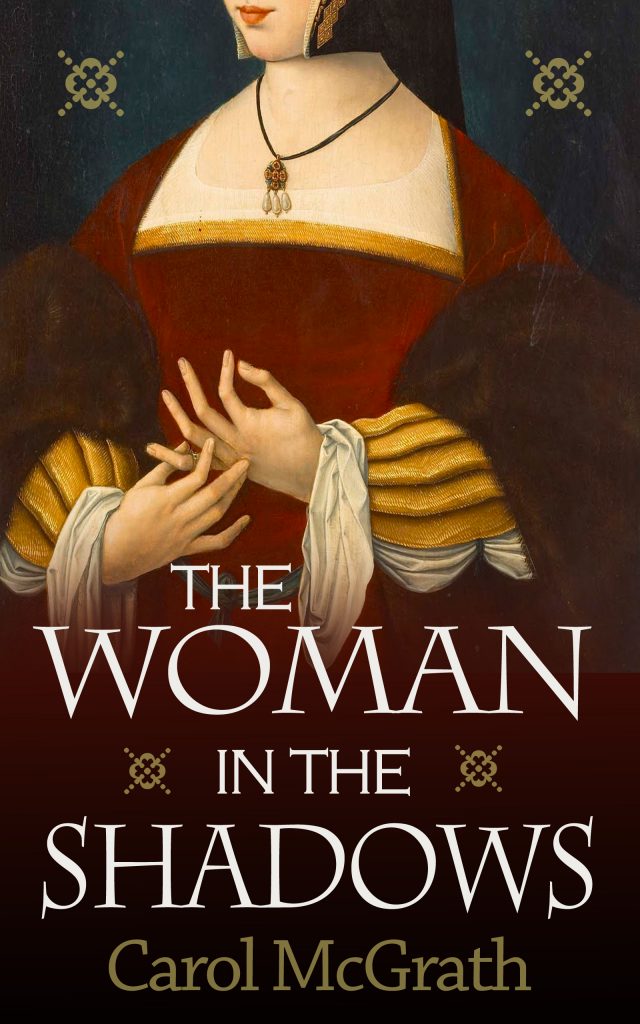
Carol Mcgrath’s Blog Tour: Historical Fact into Fiction and ‘The Woman in the Shadows’.

I’m delighted to welcome Carol McGrath today as part of her blog tour for her brand new release, The Woman in the Shadows.

Over to you Carol…

Historical Fact into Fiction and ‘The Woman in the Shadows’.

Thank you, Jenny, for hosting the second hop on The Woman in the Shadows Blog Tour.

There has always been an expectation for writers of Historical Fiction to provide the reading public with Historical Fact. In fact, the best we generally can do is provide convincing glimpses of the personalities we write, their conflicts and their world. In other words the reader often wants to accept everything written by historical novelists as ‘truth.’

I came to History very young, encouraged by television serials and novels by writers such as Jean Plaidy. I lived it and believed it all, though these writers never claimed to be Historians. We do not write the ‘truth’, nor do Historians much of the time either, but we do attempt, if we are any good, to recreate a believable historical world for the reader. We research, but we incorporate the research into the fabric of the historical lives we recreate. Our aim is to tell a good story and put flesh on the bones of history. We resurrect dead people and give them renewed life. We do not tell the ‘truth’ about these personalities, certainly not consistently, but we try to speculate in an informed way so that we come up with stories and characters that are plausible.

Writing about Elizabeth Cromwell was a huge challenge, my greatest to date. Much is known about her infamous husband, Henry VIII’s minister during the 1530s who found a solution to The King’s Great Matter, engineered Henry’s divorce from Catherine of Aragon and his remarriage to Anne Boleyn. Thomas Cromwell closed monasteries and lined the King’s pockets with rich pickings, and then he brought Anne Boleyn down along with a group of her devoted courtiers, including her brother. What was Elizabeth Cromwell’s marriage really like? What was marriage to such a man? Who was Elizabeth Cromwell?

The events of the 1530s occur outside the remit of The Woman in the Shadows. Elizabeth Cromwell sadly died in 1529. All that is known about her is that she had been married before, had no living children from that marriage and came from a family involved in the cloth trade. We know a little about her mother, father, brother and sister. We know that she was well-off and was raised in Putney, as had been Thomas. The Cromwells owned a fulling mill, a brewery, land on which Walter Cromwell grazed sheep, a smithy and a brewery and pub. Walter Cromwell, the father, was not poor though he may well have been a drunk. Both Thomas and Elizabeth hailed from a trading middling class.

To bring Elizabeth to the page, I took these scant facts and padded them out. I used my knowledge of Thomas Cromwell’s early life, researching in primary and secondary source material. He had returned to England by 1513 after a period in France, Italy and Flanders. He married Elizabeth circa 1514. They had three children by 1520. Thomas was a cloth-man and a self-taught lawyer who worked for The Merchant Adventurers. By 1518 he was involved in land transactions for Cardinal Wolsey, possibly introduced by a relative to Wolsey. He was also, by 1522, drawing closer to court.

I had to look at this world from Elizabeth’s perspective, not that of a twenty-first century woman. I had to know and understand this world with all its warts and delights, misogamy, cruelty, bad smells and wonderful fragrances, its cut-throat poverty and rich merchants, colourful pageants and Saints’ Days. I had to consider the New Learning, Humanism,  that interested the Cromwells and their close friends.

Researching the Cloth Trade was fascinating too. Could Elizabeth have inherited her first husband’s business interests? Could she have been a cloth merchant? Widows could marry as they wished, so could she have married Thomas for love? He never remarried after her death, but could he have had an affair? I did find possible evidence of one, in that he referred to a possible daughter in a will he wrote in the early 1530s, a girl, Jane, who dwelled near Chester and was born around 1520. Did Elizabeth possess emotions as we have them today and if so did they play out differently to the way we react to betrayal in marriage nowadays?  These are a few of the questions I consider in the novel.

I hope I have succeeded in bringing Elizabeth out of the shadows and given her a renewed life, at least in fiction. I hope I have made us think about Thomas Cromwell as he may have been during the years of their marriage and before he climbed the greasy pole of ambition within the Tudor Court. Most of all, if you read it, I hope that you enjoy reading The Woman in the Shadows. Without you there would not be a book.

***

Buy Link

http://tinyurl.com/y85r2zkf 

Social Links

https://www.facebook.com/daughtersofhastings

http://scribbling-inthemargins.blogspot.gr/

http://www.goodreads.com/author/dashboard

http://pinterest.com/carol0275/

www.carolcmcgrath.co.uk

Follow me on Twitter @carolmcgrath


Bio

Carol McGrath has an MA in Creative Writing from The Seamus Heaney Centre, Queens University Belfast, followed by an MPhil in Creative Writing from University of London. The Handfasted Wife, first in a trilogy about the royal women of 1066 was shortlisted for the RoNAs in 2014. The Swan-Daughter and The Betrothed Sister complete this best-selling trilogy. The Woman in the Shadows, a novel that considers Henry VIII’s statesman, Thomas Cromwell, through the eyes of Elizabeth his wife, will be published on August 4th, 2017. Carol is working on a new medieval Trilogy, The Rose Trilogy, set in the High Middle Ages.  It subject matter is three linked medieval queens, sometimes considered ‘She Wolves’. She speaks at events and conferences on the subject of medieval women, writing Historical Fiction, The Bayeux Tapestry, and Fabrics, Tapestry and Embroidery as incorporated into fiction. Carol was the co-ordinator of the Historical Novels Association Conference, Oxford in September 2016 and reviews for the HNS.  Find Carol on her website:

www.carolcmcgrath.co.uk.

***

Many thanks for visiting on your tour today Carol. Good luck with your new book. Happy touring!

Jenny xx


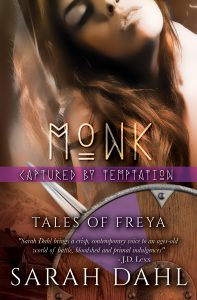
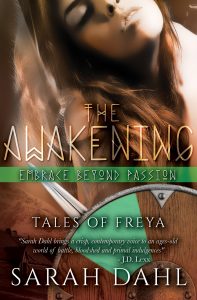
Sarah Dahl: The Awakening

Today I’m delighted to welcome Sarah Dahl to my blog to help celebrate the launch of her latest book, The Awakening.

OUT TODAY, The Awakening is a passionate romance inspired by our Viking past.

Over to you Sarah…

Inspiration for my book:

“The Awakening – Embrace beyond Passion” is a story I wrote some time ago and now had to considerably edit to make it more like my current ‘voice’ and in keeping with the other stories in my Tales of Freya collection. Therefore it was hard to recall the exact inspiration for this story – I get inspiration from many things and then let my mind play with it. For my characters, I’m often very visual and discover someone on Pinterest or TV. Then I imagine them as a person from the early medieval – what if I made them a ‘Viking’ character. I have an inspirational mood board on my wall right opposite my desk that I look at to let my mind wander. Most stories just start with the idea of an interesting character or an event, or both. From there I let it all flow and try different directions for a theme. In “The Awakening” the theme is “liberation begins in the mind” and “follow your passions”. As the Tales of Freya stories are short, I don’t have to plot much but can just write from the heart and then edit. Which brings me to:

Plot or flow:

I’m a pantser as they say, and find plotting a long story from beginning to end very hard to pull off. Naturally, I’d just write from scene to scene and develop as I go, often not knowing the ending myself. For the stories in the Tales of Freya collection it was easier, as for short stories the plot and character arcs can be more straightforward. I always just start with an idea, something I want to happen, and then write with the flow until I’m happy.

The research for “The Awakening”:

Of course, as a historical fiction writer I have to be firm and confident in the Viking environment and era. I read all the books and see as many sites as I can. My fave non-fiction is “Vikings at War” by Hjardar/Vike; it has brilliant detail and is the most extensive and visual book on the era I have seen. Also, every year I go to at least Haithabu/Hedeby here in Germany for a few days, to this once huge, Danish Viking trading town that is now a museum and open-air site by the Slien. The atmosphere of the reconstructed houses and pier just sparks creativity and a sense of the time. Soaking it all up, I just let my feet and mind wander, focussing on the big picture and then the details, imagining what stories could have happened in those narrow streets and houses. This year I became aware of the harsh winds, the never-ending gusts that penetrate the streets and houses, so much so that roofs don’t need smoke holes … the smoke from the fires just disappears through the walls and roof of the Viking town houses. So I tried to incorporate the harsh elements and their effects more in my story “The Awakening”, too.

I take great pride in being authentic and never use the era as mere stage props. I did several blog posts about authenticity: how every author should do their thorough homework and really know what they are writing about, especially if using a historical time period. Read it all until you don’t have to look stuff up anymore (ideally, but there’s always something …) Once my first draft is written and I checked details myself, I let my Viking reenactor-friends read it for authenticity and plausibility, and also discuss with beta-readers. “The Awakening” is set in a rural village by the fjord, so in smaller Viking houses, not the huge rural longhouses readers might first depict. More the kind you find in villages and towns like Hedeby. So naturally, when I went there this year, I focussed on the layouts of houses and daily tasks my characters would need to do in the story, because something secret and daring is hidden in Ingrid’s little farmhouse. Most things I don’t have to research anymore, but what about details such as how someone undresses? In which order would they do it and would the jewellery clang? How loudly? These are the things my reenactors then have to discuss with me, and go through step by step as I see it happening before my inner eye 😉

Preferred POV:

That’s a good question … I can do both; it all depends on the story and which character should tell the story, through whose eyes we should see and feel things. It doesn’t matter if it’s a man or woman, and I use both first person POV or deep third depending on what works best. In the Tales of Freya stories, I mostly use deep third. The view points can be that of men or/and women. For some reason I can work really well from a male POV. “The Current – A Battle of Seduction” is told from the warrior’s perspective on this seductive shield maiden, and I found it easy to slip into his skin. Whereas “The Awakening” is Ingrid’s story, and the next one, “Monk”, will even be told from three different POVs … I guess it’s all about gut feeling. With experience and craft comes a gut feeling for whose story I want to tell and how.

Most exciting about book for me:

For “The Awakening” the most exciting has to be that a story that I’ve worked on for so long finally gets to see the light – I get it ‘off my desk’ and out to people – and it starts its own life now, can be read by everyone, like a child that grows up and after tender care leaves the house. Which is frightening, of course, because one grows so attached to the story-baby over time. After the great success and many positive reviews of “The Current” I’m very excited and anxious to see what people will make of this very different story. “Awakening” really can’t be compared to the first one, “Current”, in the collection. The first spans several weeks whereas the latter covers only a few hours. The whole plotline and tone are different and the themes of course … so, yeah, we will see. Deep breath and fingers crossed 🙂

Blurb – “The Awakening – Embrace beyond Passion”

 The second in the collection of sensual short stories set in the Viking age, the Tales of Freya:

In a world of crackling fires and rough landscapes, long winters and bloody raids, the immediacy of life and death ignites undeniable passions. Warriors and monks, healers and housewives – all follow the call of their hearts and bodies to indulge in pleasures that may forever change their lives …

Ingrid leads a quiet, joyless life with a husband who is oblivious to her needs. Every time the dragon boats carry him away, she resigns herself to the solitude of her modest hilltop farm by the fjord. But her uneventful world is shaken to the core when the shadows of her house reveal a secret that sets her passions afire.

***

Release date: July 21, 2017, by Pronoun

Buy links:

https://books.pronoun.com/the-awakening3/

http://amzn.to/2tyak9p

Author homepage: sarah-dahl.com

Mailing list for Book Alert: https://mailing.sarah-dahl.com/?p=subscribe&id=2

Facebook: https://www.facebook.com/sarahdahl13/

Twitter: @sarahdahl13

***

Bio

Sarah Dahl lives on the edge of the rural German Eifel and writes historical fiction primarily set in the Viking age. She also works as an editor, translates, and coaches new writers in German and English. She is interested in everyday life in bygone centuries and the human stories that may have occurred behind the hard, historical facts. Her author page is: sarah-dahl.com

***

Many thanks Sarah – and congratulations on your brand new book!

Happy reading,

Jenny xx

Interview with Steven. A. McKay: Robin Hood and Beyond

Today I am delighted to welcome Steven A McKay to my site for a natter. A fellow lover of myths, legends, and things historical; Steven is one of the most successful self-published authors in the UK. He also likes Robin of Sherwood…Enough said!!

So why not go and grab a drink and join us for a quick chat?

When did you first become interested in the Robin Hood legends?

Honestly, it was only when I decided to write a book about him. I have always been interested in King Arthur and I wanted to write something with a similar character and similar setting. You know: the green fields and woods of Britain with hard men drinking and fighting and loving! Bernard Cornwell had already done King Arthur so I had to look elsewhere and Robin Hood was the obvious choice. When I started researching the character I realised he, and the whole legend around him, was much richer and more interesting than I’d ever thought. It really made Wolf’s Head, and the following books, a joy to write.

What type of research did you have to do for your book?

First and foremost I had to learn about the legend. The elements that everyone knows, such as the characters and the golden arrow Robin wins in the Sheriff of Nottingham’s archery tournament. Then I had to really find out about my period (14th century in this case) because to write about a certain time you need to know the tiniest details.

Most of my research was done from books or the internet but I bought the entire Robin of Sherwood TV series on DVD and had a blast watching them. The friendship displayed by those characters, and even the actors portraying them, was a big influence on my novels.

I was very lucky to have Phil Rose, who played Friar Tuck in that show, write a foreword for one of my novellas and even read it out for the Audible version in that wonderful voice of his!


Do you prefer to plot your story or just go with the flow?

Well, as I mentioned, most people already know many of the elements of the Robin Hood legend so for those books I had certain things that had to happen. But I was able to put my own spin on the whole thing and, in general, although I have an idea for how to start and end a book, I don’t plan very far ahead. Normally I just write a few scenes and see where it takes me.
I think some people might work best by planning everything out in advance but, to me, letting a book develop organically leads to a much more dynamic, interesting read. I mean, if even the writer doesn’t know what’s coming next how can it be predictable?

Of course, that doesn’t stop people leaving reviews on Amazon saying they always knew what was coming next which is really weird since I didn’t even know myself when I was writing the books…!

You are one of the most successful self published writers I’ve come across. What would be your top three tips for a self published writer?

I think, first and foremost, you need a decent product that can stand up against the big guns in the publishing world. That means having a decent text that isn’t littered with errors, an exciting blurb, and a good cover image with – and this is hugely important for me – decent fonts. So many times I see good cover art on self-published books but the fonts are the standard ones that come free with Paint or whatever and it just looks amateurish. Hire a cover designer and an editor if you can afford it.

Second, even before you publish a book, try and find people to read it. Send them advance copies and ask them to post reviews on Amazon so as soon as it hits the virtual shelves potential buyers can find out what others thought of it.

Finally, if you’re going to run promotions such as the KDP Countdown deals, you need to tell people! There’s no point in making your book 99p for a week then complaining no one bought it – you need to tell them it’s on sale and that means using paid ads. Places like Bookbub, Freebooksy, Kindle Nation Daily etc are all worth using. I occasionally post tips about self-publishing on my website so do take a look if you’re interested.

Tell us about your latest book. What excites you the most about it?

Well, I’ve finished my Robin Hood books now – the final novella (The Abbey of Death) has actually found a publisher which is really exciting for me but it means I’ve been able to start work on an entirely new series.

This one is about a warrior-druid in post-Roman Britain and I am loving writing it. It was nice having readymade characters like Friar Tuck and Little John who I simply needed to flesh out and bring to life but this time around I’m coming up with my own creations and its strangely liberating!

The setting is really interesting to research since not much is known about 5th century Britain, especially Scotland, but most exciting for me is my main character. A six foot six, handsome, muscular druid who fights like a hero from legend, on a quest that will take him all around this great island meeting all sorts of weird and wonderful folk along the way…Honestly, it’s just huge fun to write, I’m so lucky to have a job like this.

If you were stranded on a desert island with three other people, fictional or real, who would they be and why?

Obviously my family but for the sake of making this a little more interesting I’ll come up with a different answer. Besides, now I think about it, why would I want to strand my wife and kids on an island just to make my own loin-cloth clad, bearded, pitiful existence more bearable?!

So…we’d need some laughter out there in the middle of nowhere and I reckon Sir Terry Pratchett would have been the ideal companion. I loved his Discworld books and it would have been great to spend time with him talking about writing and just general silliness.


Next we’d want some music to keep our spirits up so I’d probably pick fellow Glaswegian Angus Young of AC/DC. I’m assuming he’d have rescued a battered old acoustic guitar from the shipwreck so he’d be able to keep us entertained with folk renditions of “Thunderstruck” and “Hell or High Water”. Maybe I’d get a chance to play the guitar myself although if it came to a fight about it he’d win, even if he is just five inches tall.


Finally, I’d choose my own new character, the warrior-druid Bellicus. Not only would he protect the rest of us from wild animals with his martial prowess, but he’s a trained musician and spent many years learning the skills of a druid. He’d heal our wounds, talk for hours about the gods and their foibles, show me and Angus a new chord or two on the shared guitar, and give us the last rites if one of us died in a freak gardening accident.

Actually it sounds like a pretty fun place – where do I sign up?

*** 

Buy Links

viewAuthor.at/SA-McKay

Social Links

Twitter – @SA_McKay

Facebook – www.Facebook.com/RobinHoodNovel

Website with link to my mailing list and a FREE, exclusive Forest Lord story, only available to subscribers! https://stevenamckay.com/mailing-list/


Bio

Steven A. McKay was born in Scotland in 1977. His first book, “Wolf’s Head”, came out in 2013 and was an Amazon UK top 20 bestseller. “Blood of the Wolf” is the fourth and final book in the Forest Lord series which has over 95,000 sales so far. Steven is currently working on a brand new tale set in post-Roman Britain.

***

Many thanks for taking the time out to join us today Steven. I’m very much looking forward to reading your Robin Hood stories (my Kindle is loaded and ready to go), and indeed your post Roman stories in the near future.

Happy reading everyone,

Jenny (Well, I’m Jennifer really, as I have my medieval hat on today!) x 

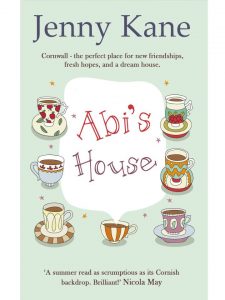
Read in the Sunshine: Abi’s House is ONLY 99p

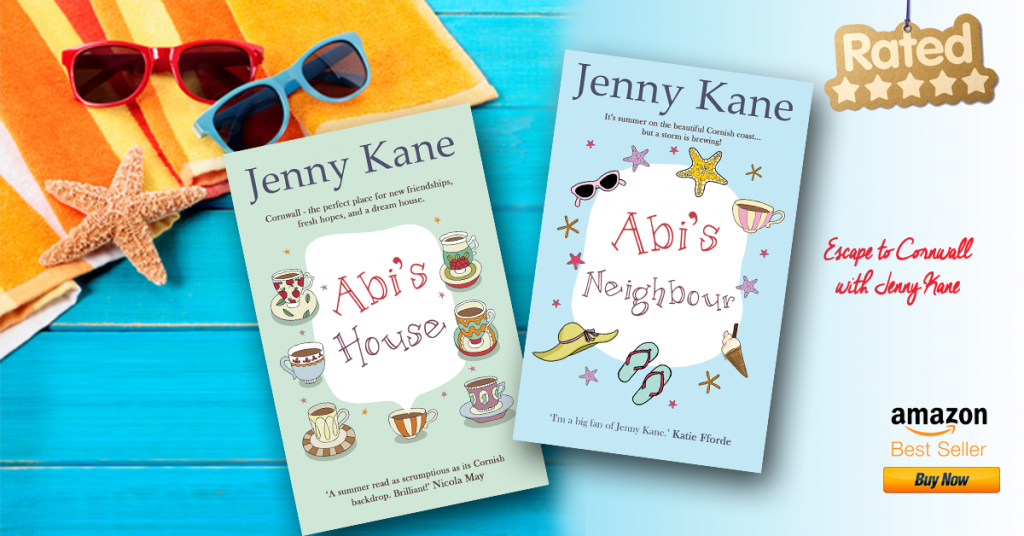
To make the most of this unexpected summer heat, Accent have popped Abi’s House on SALE, so you enjoy both of my Abi Carter Cornish romance novels for less than £3!!

Blurb- 

A summer read as scrumptious as its Cornish backdrop. Brilliant!’ Nicola May

Cornwall – the perfect place for new friendships, fresh hopes, and a dream house.

Newly widowed and barely thirty, Abi Carter is desperate to escape the Stepford Wives lifestyle that Luke, her late husband, had been so eager for her to live.

Abi decides to fulfill a lifelong dream. As a child on holiday in Cornwall she fell in love with a cottage – the prophetically named Abbey’s House.
Now she is going to see if she can find the place again, relive the happy memories and maybe even buy a place of her own nearby?

On impulse Abi sets off to Cornwall, where a chance meeting in a village pub brings new friends Beth and Max into her life. Beth, like Abi, has a life-changing decision to make. Max, Beth’s best mate, is new to the village. He soon helps Abi track down the house of her dreams … but things aren’t quite that simple. There’s the complicated life Abi left behind, including her late husband’s brother, Simon – a man with more than friendship on his mind…

Will Abi’s house remain a dream, or will the bricks and mortar become a reality?

***

I love this trailer for my Cornish romance novel, Abi’s House, so I thought I’d share it with you again. YouTube link https://youtu.be/VAumWAqsp58

You can buy Abi’s House in all good bookshops and on line retailers. It is currently only 99p on Amazon Kindle

Kindle
http://www.amazon.co.uk/Abis-House-Jenny-Kane-ebook/dp/B00UVPPWO8/ref=sr_1_1?s=digital-text&ie=UTF8&qid=1426711175&sr=1-1&keywords=Abi%27s+House+Jenny+Kane

http://www.amazon.com/Abis-House-Jenny-Kane-ebook/dp/B00UVPPWO8/ref=sr_1_2?s=books&ie=UTF8&qid=1426711253&sr=1-2&keywords=Abi%27s+House+Jenny+Kane

Paperback

http://www.amazon.com/Abis-House-Jenny-Kane/dp/1783753285/ref=sr_1_1?s=books&ie=UTF8&qid=1426711253&sr=1-1&keywords=Abi%27s+House+Jenny+Kane

http://www.amazon.co.uk/Abis-House-Jenny-Kane/dp/1783753285/ref=sr_1_1?s=books&ie=UTF8&qid=1426711343&sr=1-1&keywords=Abi%27s+House+Jenny+Kane


***

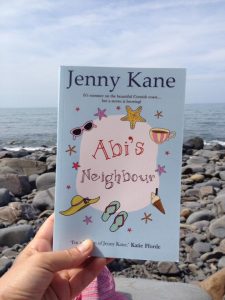
And don’t forget, Abi’s Neighbour is available as well!

Photo taken by reader on holiday

Happy reading everyone,

Jenny xx


Interview with Grace Lowrie

I’m delighted to welcome Grace Lowrie over for a cuppa and a slice of cake today- not to mention a chat about her latest book. Why not go and fetch a drink and join us..

Thank you so much for having me on your fabulous blog, Jenny!

What inspired you to write your book?

For several years I worked in a garden centre and as a garden designer; transforming other people’s outdoor spaces. It was a wonderful experience and made me aware of how the simple act of gardening can help to ground and restore people. I wanted to write a love story using the healing power of green places to bring two characters together – thus Safe With Me was born.


What type of research did you have to do for your book?

I wish I could say that I scrupulously researched every aspect of my story before writing it, I admire those authors who do, but the truth is I don’t have that much patience. I consciously spent time sitting writing in a greasy spoon, to get a feel for my character’s working life, but for the most part I relied on past experiences – such as working in a garden centre – and my vivid imagination. Thankfully writing fiction allows for a certain degree of artistic licence.

Which Point of View do you prefer to write in and why?

The three novels in The Wildham Series were all written in first person. They are classed as Women’s Fiction because of the darker issues covered, but I conceived the stories as romances and writing in the first person feels comfortable in that genre. My chapters alternate in POV between the two lead characters, which was both fun and challenging and will hopefully help readers to put themselves into the story.  Conversely the very first novel I started writing (and still haven’t finished) is primarily not a romance and is written in third person to give a slightly removed, overview feel. But even for my first attempt I didn’t make life easy for myself – the POV is inner limited (where the narrator can see inside just one character’s head) but the chapters alternate between four different character POVs. Perhaps it’s not surprising I still haven’t finished that book! In short; I write in whichever POV feels natural for the story I’m writing.

 Do you prefer to plot your story or just go with the flow?

I’m definitely a plotter. Organised and tidy by nature, though not obsessively so, I find a certain amount of control helps keep anxiety at bay. I’m in awe of pantster authors who can just start writing without any clear idea of where they’re going or how they’ll get there – it must be like having a superpower! Before I start writing I need a firm feel for my characters and a beginning, middle and end planned out – especially the ending because I love a good twist.

What excites you the most about your book?

The powerful, almost magical, quality of a close bond forged in childhood. Safe With Me is the story of two souls finding their way back to each other against all odds.

Blurb-

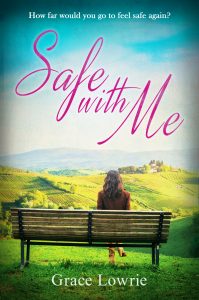
How far would you go to feel safe again? 
Abandoned as children, Kat and Jamie were inseparable growing up in foster care. But their bond couldn’t protect them forever. 

From a troubled upbringing to working in a London greasy spoon, Kat’s life has never been easy. On the surface Jamie’s living the high-life, but appearances can be deceiving. 

When they unexpectedly reunite, their feelings become too intense to ignore. But as secrets come back to haunt them, are they destined to be separated once more?

***

Buy Links:

Safe With Me will be published on 22nd June 2017 and is available to pre-order:

https://www.amazon.co.uk/dp/B071F2QZB7  

https://www.amazon.com/dp/B071F2QZB7  

Author Bio and links:

Grace Lowrie has worked as a sculptor, prop maker and garden designer. She published her debut romance Kindred Hearts in 2015.

A lover of rock music, art nouveau design, blue cheese and grumpy ginger tomcats, Grace is also an avid reader of fiction – preferring coffee and a sinister undercurrent, over tea and chick lit. When not making prop costumes or hanging out with her favourite nephews, she continues to write stories from her Hertfordshire home.

 http://www.gracelowrie.com/blog

http://www.facebook.com/GraceLowrieWriter

http://www.twitter.com/gracelowrie1

http://www.pinterest.com/grace_lowrie

https://www.instagram.com/grace_lowrie/

https://www.goodreads.com/Grace_Lowrie

https://www.amazon.co.uk/Grace-Lowrie/e/B00UNCPYCY

***

Many thanks for stopping by today Grace.

Happy reading everyone

Jenny x

Blog Tour: Exclusive extract from Skin Deep

I’m delighted to welcome talented author, and my lovely friend, Laura Wilkinson, to my site today as part of her blog tour.

Laura is here today with an exclusive extract from her brand new novel, Skin Deep.

Skin Deep Blurb:

It’s what’s inside that counts…

Art student and former model Diana has always been admired for her beauty but what use are good looks when you want to shine for your talent? Insecure and desperate for inspiration, Diana needs a muse.

Facially disfigured four-year-old Cal lives a life largely hidden from the world. But he was born to be looked at and he needs love too. A chance encounter changes everything; Cal becomes Diana’s muse. But as Diana’s reputation develops and Cal grows up, their relationship implodes.

Both struggle to be accepted for what lies within. Is it possible to find acceptance in a society where what’s on the outside counts for so much?

Taken from Part One of Skin Deep, set in Manchester in the mid-1980s

We walked about the Hulme estate and Alan took photo after photo.

‘Funny that estate also means a stately home, isn’t it? You couldn’t get much further from ornamental gardens, gilded mirrors and roaming stags. Though this place has its own kind of beauty,’ I said.

‘You think so?’ He shook his head. ‘Think I’m more traditional than you on that front.’

He took pictures of the syringes and Kit Kat foils on the stairwells – the detritus of the addict’s life – the boarded up shops, the dogs tied to bollards with string outside The Spinners pub, the old PSV club, the girls in the line for the cash point with their turned-out toes and gently curved arms, dancers-in-waiting from The Northern Ballet School, trying to be regal and graceful in the middle of all this gorgeous, vital ugliness. We stretched towards the edges of the community, noting the distinct change in character once normal society was within reach. The blocks of flats were lower, the disaffection and alienation less marked; this was a better class of slum, and the inhabitants considered themselves lucky to be outside the crescents. The sun was setting as we crossed the bridge spanning the motorway and made our way back into the bowels of the estate. In the distance, the warehouses lining the river Medlock were backlit by the dying sun.

Alan stopped and lifted the camera, then dropped it down again. ‘The whole area was built on swampland, below the water level. They never bothered to drain it when the first lot of slums went up. In Victorian Manchester, Irish immigrants would regularly wake up to a dwelling ankle-deep in polluted river water. And when they tore those slums down they still didn’t bother to drain. Built right on top again. It’s as if the rich and powerful hope that the earth itself will swallow up the human waste dumped here.’

‘Rotten foundations?’

‘The foundations for anything need to be right, don’t they?’

I nodded. I’d not heard Alan so serious. He was angry and sad, and he moved me.

The child; human waste.

‘I found something at that party.’

He turned away from the view to look at me.

I continued. ‘I was somewhere I wasn’t meant to be.’ I told him everything I knew, or guessed, or imagined.

He shrugged. ‘It’s no secret they have a boy.’

How does Alan know this? Off-kilter Alan, who doesn’t have any friends other than me and Linda, and doesn’t seem to work, or sign on, or be connected to anyone worth knowing, let alone Mr and Mrs Super Cool of Hulme.

As it transpired Alan was not the loser I’d assumed he was. People talked to Alan; he gained their trust. When Cardie Girl had deserted him, he’d got into a conversation with the scarlet-lipped punk who’d spilt all sorts about Pru and Michael. They were junkies, rich kids from Chelsea who’d stayed on after they dropped out of university in the late seventies, later ‘working’ as artists and rebelling against the Thatcherite regime. Purportedly, they ran a small printing press and published a Marxist magazine that was distributed on campus – I’d never seen it – organised parties and marches and generally made a nuisance of themselves. I wondered how a couple of junkies managed to squeeze all this in between fixes.

‘So everyone knows they’ve got a kid. Do they know they lock him up?’

‘Not everyone. And they might not always lock him up. It might have been a one-off, you know, ’cos of the party.’

I saw the boy’s hand in my mind’s eye, dredged up the hazy image of his body. He’d been rounded, fleshy, not starved. They fed him. ‘Anyone seen him?’

‘Not many people have.’

‘No bloody wonder if they keep him locked up. It’s not right.’

‘He’s a spastic. People make fun. They keep him out of the way for protection.’

‘That does not make it right.’ I was shouting. ‘It’s wrong to trap a kid. Force them to do things they don’t want to.’ My voice cracked and I heard how strange and overblown I sounded.

‘Force them to do things they don’t want to? We don’t know that Pru and Michael do that. Diana? You OK?’

I was crying. Alan couldn’t have understood where my tears came from, but he pulled me to his chest, and I didn’t object to the stink of his armpits or smelly old jacket. At least not at the time; I complained bitterly later. Bunny made me do things I didn’t want to. She’d locked me in a wardrobe and told me she’d let me out only when I was ready to be beautiful. Having inherited my mother’s stubborn gene I’d stayed there for hours, belly griping with hunger, bladder aching. In the end I’d pissed on her shoes and I got a beating for that too.

Alan pulled a tissue from his pocket and I noticed the ring on the little finger of his left hand. It was made of white gold, I was sure, and had an expensive, handcrafted look about it. I shook my head, refusing the tissue, wondering where and how Alan had acquired such a lovely piece of jewellery. I dug a tissue from my own pocket and sniffled into it. ‘Don’t tell Linda. They’re Jim’s friends.’

‘I won’t. Look, if they lock him up, then it is definitely not right, but it might have been a one-off and even if it wasn’t I’m not sure what we can do about it,’ he said. ‘They’re the parents, we don’t even know them. It’s none of our business. You’ve got to try and forget about it.’

‘I’m not sure I can.’ I wiped my eyes and smiled weakly at him, and he pointed the camera at me.

‘You look lovely when you’re upset. Different, vulnerable. Let me take your picture.’

‘I HATE my picture being taken!’ I grimaced and turned my back on him.

‘But you were a model, a beauty queen…’ I started walking towards the crescents, his footsteps echoing on the paving slabs as he lurched after me. ‘That’s why I hate it,’ I said. ‘I spent my childhood smiling so hard my cheeks ached, my eyes watering from the glare of the flashbulbs. I’m surprised I didn’t develop epilepsy or something.’

‘I’d have thought most girls would have loved it, the attention. Linda made it sound like it was amazing.’

‘The attention wears thin after a while, and it couldn’t make up for the hours spent getting my hair and nails done when all I wanted to do was hang out with my friends, play with my Barbie dolls and other normal stuff.’ I couldn’t look at him.

‘You didn’t tell your mum you weren’t happy?’

It was so rude to keep my back to him, he deserved better. I turned. ‘I tried to, but she never listened. And the winning the competitions and getting jobs was nice, when I did, which wasn’t always…’

He raised his eyebrows and opened his eyes so wide I could see white all around his irises. He said, ‘You didn’t always win? No way!’

It took me a while to realise he was teasing. I smiled at my arrogance and wondered if I was losing my appeal. First Jim, now Alan. ‘Hey, we need to keep moving if we want to keep hold of your camera. It’s getting dark,’ I said, linking my arm in his, ‘muggers’ll be out soon.’

‘Today’s been great. Thanks for coming with me.’

‘My pleasure. Sorry about the outburst.’

We strode along, our long legs and broad steps carrying us home faster than most. Alan talked about using his bathroom as a dark room, and asked if I’d like to watch him develop the shots he’d taken. As we marched along the curve of the crescent I saw a figure outside number fifty: Jim. Linda would be pleased. And a lightbulb came on in my head.

Jim! He’s the way into Pru and Michael’s world, the way to the boy. Today has indeed been good.

 *** 

Buy links

Amazon: https://www.amazon.co.uk/gp/product/B06XWKT5HM/ref=s9_acsd_simh_hd_bw_b17GB_c_x_1_w?pf_rd_m=A3P5ROKL5A1OLE&pf_rd_s=merchandised-search-4&pf_rd_r=D9ENXMEBEPB0150BR1BM&pf_rd_t=101&pf_rd_p=fd347e45-37c2-5ef7-938e-e2348b8d0a86&pf_rd_i=266239

Waterstones:

https://www.waterstones.com/book/skin-deep/laura-wilkinson/9781783758678

WHSmith: https://www.whsmith.co.uk/search/go?af=cat1%3Abooks&w=Skin+Deep+by+Laura+Wilkinson

About Laura:

Liverpool born, Laura is a taff at heart. She has published six novels for adults (two under a pseudonym) and numerous short stories, some of which have made the short lists of international competitions. Public Battles, Private Wars, was a Welsh Books Council Book of the month; Redemption Song was a Kindle top twenty. The Family Line is a family drama set in the near future, looking at identity and parenting. Her latest is Skin Deep. Alongside writing, Laura works as an editor & mentor for literary consultancies and runs workshops on aspects of craft. She’s spoken at festivals and events nationwide, including the Frome Festival, Gladfest, University of Kingston, The Women’s Library and Museum in Docklands. She lives in Brighton with her husband and sons.

www.laura-wilkinson.co.uk   Twitter @ScorpioScribble Facebook: Laura Wilkinson Author Instagram: laura_wilkinsonwriter Pinterest: laura1765 Goodreads: Laura_ Wilkinson

***

Thank you for sharing such a fantastic extract Laura. Good luck with the rest of your tour,- and with the gorgeous Skin Deep!

Happy reading everyone,

Jenny x

Happy First Birthday: Another Glass of Champagne

I can’t quite believe that a year has gone by since Another Glass of Champagne– the last part of my Another Cup of…series – was published! Since then I’ve had my first Jennifer Ash novella published (The Outlaw’s Ransom), and my second Cornish novel, Abi’s Neighbour released, and I’ve written the novel, The Winter Outlaw, for Jennifer Ash. (Out in the winter)

AGOC

The original novel, Another Cup of Coffee novel was intended to be a one. Based in and around the Pickwick’s Coffee Shop, it revolved around the adventures of waitress Amy and erotica writer Kit. To my amazement, three Christmas novellas followed. The first two mini-novels (Another Cup of Christmas and Christmas in the Cotswolds) told former art student, Megan’s story, while the final seasonal outing took Kit up to a literary festival in Aberdeenshire. (Christmas in the Castle)

While Another Cup of Coffee very much involved the figure of bad-boy Jack alongside Kit and Amy, he had never had a novel that focused on him more than the other characters – until  Another Glass of Champagne.

The novel opens with, after an absence of a few years from his friend’s lives, Jack is heading back to London, with new opportunities, a new skill set, a determination to avoid romance at all costs, and fresh adventures well within his grasp- all of which could be celebrated with a glass of champagne.

The trouble is, knowing Jack, he might well mess it all up…

Blurb

A warm-hearted, contemporary tale about a group of friends living in a small corner of busy London, by bestselling author Jenny Kane.

Fortysomething Amy is shocked and delighted to discover she s expecting a baby not to mention terrified! Amy wants best friend Jack to be godfather, but he hasn’t been heard from in months. When Jack finally reappears, he s full of good intentions but his new business plan could spell disaster for the beloved Pickwicks Coffee Shop, and ruin a number of old friendships…

Meanwhile his love life is as complicated as ever and yet when he swears off men for good, Jack meets someone who makes him rethink his priorities…but is it too late for a fresh start?

 Author Kit has problems of her own: just when her career has started to take off, she finds herself unable to write and there s a deadline looming, plus two headstrong kids to see through their difficult teenage years…will she be able to cope?


Jack washes away another disaster!

Jack washes away another disaster!

Extract

Staring out of the train window, Jack exhaled a long, slow breath. Was this how Amy had felt when she had first come to Richmond after her years of self-imposed exile in Scotland? Sort of excited, but absolutely terrified at the same time? 

Jack wondered if, once he’d worked up the courage to go and see her, Amy would notice the parallels between their situations. A smile crossed his face. However she reacted, she would forgive him for not being in touch over the past few years. Amy always forgave him. For everything.

In his mind, he’d left Richmond for a good reason. Although he knew Amy accepted he’d needed to leave, he was less sure she understood why – which was why he’d decided to break off even phone and email contact with her. It was also why he hadn’t told any of his friends where he was; just to see if that helped.

It wasn’t that Jack wasn’t happy for Amy and Paul to be living the fairytale, but the fact that they were together, while he was still alone, was sometimes hard to take – especially when he knew Amy’s love could have been his if only he’d been prepared to risk it all those years ago. This nagging thought – one he accepted was utterly ridiculous, as he knew that he’d never have been able to ignore his sexuality, even for Amy – made him a rather less kind human being than he would have liked. He knew that until he could get past feeling he was missing out on something that all his friends took for granted, they were better off without him and the chip on his shoulder. Amy would understand, he was sure. Kit, on the other hand, might not be as understanding…

Jack’s smile disappeared. Years ago, back when they were dating, Kit would have forgiven him anything – but since Amy had come back into his life, and both women had become good friends in their own right, Kit had become much stronger. Jack had learnt that Kit had always hated how he could make her doubt her strength and resilience. These days she was so much more equipped to deal with him and his bullshit – and he knew it.

Perhaps he shouldn’t be coming back. After all, he knew he was as emotionally messed-up as ever – but he had to go somewhere, and anyway, whether he wanted to admit it or not, he’d been getting homesick.  Plus he’d had to get away from Kent…

Opening his eyes, Jack sighed as the train’s sudden slowing announced that they were arriving at St Pancras. Here he was again. Back in London, fleeing from yet another cock-up in his love life, and with nowhere to call home. He wished he hadn’t so rashly sold his place in Mortlake – he’d got far less than it was worth, too, in his haste to make a clean break.  

There were several Tube connections to Richmond Jack could have chosen to see his old friends straight away, but as he stood in the bustling station, he found himself unable to move a step further.  It wasn’t like him to be assailed by doubt, but this time it was different. Whatever he did, he always managed to upset people. He never meant to; usually he never even saw his offences coming.

On this occasion however, he knew that if he was going to go ahead with his latest plan and really make it work, he was going to cause trouble for some of his friends…

***

If you’d like to find out if Jack finally finds the man of his dreams, and how his latest escapade impacts on the lives of the Pickwicks crew, then you can buy Another Glass of Champagne from all good bookshops and from online retailers including-

http://www.amazon.co.uk/s/ref=nb_sb_noss?url=search-alias%3Daps&field-keywords=Another+Glass+of+Champagne+Jenny+Kane

http://www.amazon.com/s/ref=nb_sb_noss/188-7813436-7626710?url=search-alias%3Daps&field-keywords=Another+Glass+of+Champagne+Jenny+Kane 

***

I never dreamed that I’d end up writing five stories about the comings and goings of the folk who frequented the Pickwicks Coffee Shop in Richmond, London. I’m so glad I did though. I loved every second of writing that series. The characters became my friends- I still miss them!

So, from my own café corner in distant Devon, I’m raising a cuppa to Another Glass of Champagne! Happy birthday happy book!

Happy reading,

Jenny x

Page 11 of 15

Powered by WordPress & Theme by Anders Norén