Jenny Kane: Coffee, cupcakes, chocolate and contemporary fiction / Jennifer Ash: Medieval crime with hints of Ellis Peters and Robin Hood

Tag: blog Page 28 of 35

Blowing the Dust Off: Jenny Harper’s People we Love

It’s Day 8 of my ‘Blowing the Dust Off’ series. Today we are joined by the lovely Jenny Harper. She is introducing us to one of her Heartlands novels’, People we Love.

Go grab a cuppa, sit down, and enjoy…


Finding inspiration in the dark

A couple of years ago, I was sitting in a gig at the Edinburgh Festival. It was African music and dance (traditional and contemporary), and there was lots of bounce and rhythm and colour. I was enjoying myself immensely – but at the back of my mind, something was niggling me. I couldn’t get the right title for my forthcoming novel.

These things can be instant and easy … or they can drive you to insanity because nothing seems to work. I was at the latter end of the spectrum. I closed my eyes and tried to block out my worries and concentrate on the music. After all, it was terrific.

Then it happened.

‘The people we love,’ said the diminutive lead singer of the group, introducing the next song, ‘don’t always love us back.’

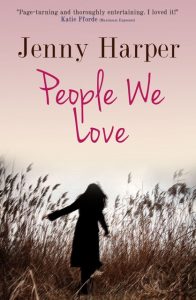
Bang! There it was. People We Love. Perfect. The fourth novel in my Heartlands series (set in East Lothian, near Edinburgh), is about a family grieving for a brother, or a son, who was killed in a road accident a year ago in mysterious circumstances. The heroine, Alexa Gordon, is an artist who put her career on hold to support her parents. Tom Gordon (her father) is staunch and buttoned-up, determined to keep his grief in check so that he can go on supporting his family (and inevitably suffering in the process), while her mother, Martha, has completely fallen apart. It’s only after an elderly lady with dementia climbs in through her kitchen window that Alexa begins the long journey back from the dark. There are other characters too – her ex lover Cameron Forrester, who appears back on the scene after an unexplained absence, and Patrick Mulgrew, a suave art dealer who lives near Alexa in the fictional town of Hailesbank, but who works in Edinburgh. Oh, and her best friend Molly Keir, who has ghosts and secrets in her own past.

I loved writing that book. If I say it’s about shoes, it’s not a lie, but don’t get the wrong idea! ‘Shoes tell stories,’ reads the invitation to the exhibition Alexa finally puts together, ‘stories of much-loved babies who can’t even walk, of the tottering steps of little children towards adulthood, of special events in our lives; of dances, and marriages, and mountain climbs and escapes.’

What am I talking about? Sorry – you’ll have to find out for yourself!

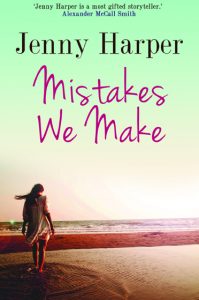
Anyway, the inspiration I had that night during the gig had natural consequences – when I decided to write about Molly’s story in my next novel, I used the title Mistakes We Make. It’s the first book in the Heartlands series that actually links to a previous one, other than through the setting. Alexa (Lexie) reappears, and her life has moved on considerably in the months since the end of People We Love, while Molly is still stuck in her hideaway, her problems unsolved. Inevitably, she has to face quite a few ups and downs and challenges, and deal with the mistakes she has made in the past, before she can set things to rights.

I adored the covers Accent Press designed for these two books. They have just the right feel of dreamy mysteriousness. I’m not sure if it was the titles that inspired them or my blurbs, but anyway, sometimes things come together in a very pleasing way – even when finding the path might be difficult in the first instance!

Buy them here

smarturl.it/People_We_Love

smarturl.it/Mistakes_We_Make

Bio

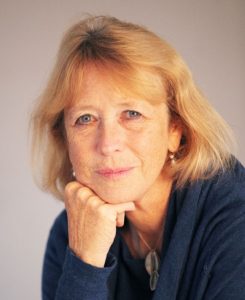
Jenny Harper lives in Edinburgh, Scotland, though she was born in India and grew up in England. She has been a non-fiction editor, a journalist and a businesswoman and has written a children’s novel and several books about Scotland, as well as five novels and a novella in The Heartlands series (set in Hailesbank), a novel set in Edinburgh, and a number of short stories.

Jenny writes contemporary women’s fiction with bite – complex characters facing serious issues. Face the Wind and Fly, about a woman wind farm engineer with a marriage in trouble and a controversial project to handle. Loving Susie, about a female politician with a complicated family history and at odds with the world. Maximum Exposure, in which a newspaper photographer with job to save has some growing up to do. People We Love is about an artist whose life is on hold following the tragic death of her brother and Mistakes We Make follows a high-flying events manager as she works out what is really important in her life. In a sixth title, Between Friends, three women have to work together to take revenge on a man from their past whose reappearance threatens to ruin them all.

Find Me Here

Website          http://jennyharperauthor.co.uk/

Blog                http://jennyharperauthor.co.uk/category/myblog/

Twitter            https://twitter.com/harper_jenny

Facebook       https://www.facebook.com/authorjennyharper

Google +        https://plus.google.com/+JennyHarperauthor/posts

Goodreads     https://www.goodreads.com/user/show/15692421-jenny-harper

Amazon Author Page      http://www.amazon.co.uk/-/e/B00HXIE2Q0

Pinterest        https://uk.pinterest.com/jennyharperhome/boards/

***

Many thanks Jenny. Great blog.

Come back tomorrow to read all about Richard Gould’s work.

Happy reading,

Jenny xx


Blowing the Dust Off: Jane Jackson’s Eye of the Wind

It’s Day 6 of my ‘Blowing the Dust Off’ series of blogs. Today the lovely Jane Jackson is reminding us about her excellent novel, Eye of the Wind.

Grab a cuppa and enjoy…

Thanks so much for inviting me onto your blog, Jenny.  Your brief was that guests should choose one of their books published at least two years ago.  I have chosen ‘Eye of the Wind.’ I’m passionate about the characters, story and background in every book I’ve written, but this one is a special favourite.  Why?  Because Melissa and Gabriel have no choice but to keep secrets, from their families and each other.  As the attraction between them grows, this creates enormous tension which is tough for them, but makes a gripping story.

As a professional writer for over four decades with thirty-two books published, I’ve learned a lot about my craft. A strong plot is important. But for me character comes first.  The characters drive the story and if they don’t grab and hold your interest, you’re not likely to read on. There are so many new books published every week all begging for your attention.

One thing I learned to do (and passed on to my students when I was teaching the craft of novel writing) was give main character/s something to hide, something to protect, and something to overcome.  This gave them greater depth, made them more real, while adding tension and conflict to the story.  Something else I learned as a people-watcher –not nosiness but vital research – is that the reason someone gives for choosing a particular course of action might seem reasonable and logical. But that’s never the full story. Look deeper and you’ll see that there’s more behind it, a pay-off that gives them something they want and feel they don’t have.

e.g.  Jo buys a lottery ticket every week and tells her family all the things she would do for them if she won. Taken at face value Jo’s reason for doing the lottery is so she can be generous. But her underlying motive is to control her family by making them grateful to her.  And this is because she feels unappreciated, taken for granted.  I’m not suggesting that every time you meet someone you should second-guess their actions and behaviour, but occasionally looking a bit deeper can give you some terrific ideas for aspects of character.

Writers are often asked where they get their ideas from, what inspires them.  Mine come from where I live – a creek-side village close to the third largest natural harbour in the world.  Cornwall is an island within an island and has a long and varied history. When copper mining was at its height, tiny Gwennap parish was the wealthiest area in the world.  The Packet Service based in Falmouth carried mail all over the globe and brought back bullion from British-owned sugar, coffee and tobacco plantations.  News of victory against the French at Trafalgar, and the death of Admiral Lord Nelson, was carried ashore at Fish Strand Quay in Falmouth by Lt Lapenotiere, who hired a post chaise to take him to London.  The first trials of nitro-glycerine, invented by Alfred Nobel, took place at Falmouth docks.  William Bickford, a leather currier living in Truro, invented the first safety fuse for use in Cornish mines and quarries.  These backgrounds, and more, have featured in my books.

I hope you enjoy this excerpt from ‘Eye of the Wind.’

Her gaze was clear and candid, and a tiny frown puckered her forehead. ‘You sound different.’

He smiled briefly. ‘Not used to talking.’

‘No, I don’t mean your voice: I mean your mode of speech.’

He bent his head, clenching his teeth as tension cramped his gut. In France, speaking only Breton, his disguise a matter of life and death, it had been easy to remain in character. But here in his home county and with her… Looking up he shrugged. ‘You’re right, miss. I used to work closely with the master and I wanted to better myself. Picked up his way of talking. No offence intended.’

‘No, no, I didn’t mean – it was not a criticism, Gabriel, merely an observation. But one I should not have made.’  Embarrassment had smothered her suspicion.

Torn between relief at avoiding potential danger and anger at his carelessness, he deliberately steered the conversation away from the past.  ‘May I wish you well for tomorrow?’

She drew a deep breath then blurted, ‘I’ll be glad when it’s over.’

‘No need to be nervous. You know what you’re doing.’

‘I hope so.’ It was heartfelt, anxious. After a moment she admitted, ‘My uncles don’t share your confidence.’

‘You know why, don’t you?’  He saw concern cloud her face. ‘You are attempting something men believe can – should – only be done by another man.’ One corner of his mouth lifted in brief irony. ‘This is a severe threat to their dignity.’

She was silent then tossed her head. ‘If their dignity is so fragile it must rest on very shaky foundations.’

‘It does,’ he confided. ‘And that is a secret all men would prefer to remain hidden.’

‘Her eyes widened. ‘Really?  No, you are not serious.’

‘Indeed I am.’

Seeing his rueful smile, she gasped and blushed, covering her mouth with her fingertips. ‘You should not say such things.’

‘Perhaps. But there will be occasions when you find that knowledge helpful.’

Watching her visible struggle as she recollected herself and withdrew from his unexpected and startling candour he realized that, despite being out in society, she had not acquired the usual veneer of arch sophistication he would have expected in a young woman of her background. And found himself fiercely glad.

She cleared her throat. ‘About – about the wood…’

It was a deliberate if reluctant retreat from an intimacy he should have resisted. Gabriel knew he must let her go. He turned away and set the basket on the ground.  ‘Why don’t you take a day or two to think about it, miss?’

‘But what you said – about the other trees being more valuable. Would they really raise a lot of money quickly?’

Watching her blush deepen and her lashes flutter down as she realized how much her question revealed, Gabriel wondered just how desperate a financial crisis her father had left her to deal with.  Picking up the last stone he began tying it onto a corner of the canvas, careful not to look at her.

‘They would, miss. And with proper management these woods will still be generating income a hundred years from now.’

‘Truly?’ She sounded stunned. ‘Thank you, Gabriel. Thank you very much.’

His hands grew still as he watched her walk quickly away up the path, her long stride peculiarly graceful, self-consciousness forgotten now she had so many more important matters to occupy her.

That evening after washing himself and his filthy shirt, he shaved carefully. With no mirror he had to work by touch alone. It took a long time, and he did not dare go too close to the wound on his throat. But the honey had done its work and healing had begun. Smearing a fresh cloth with the sweet-smelling salve he bound up his throat once more. Passing a hand over his almost-smooth jaw when he had finished, he smiled. No doubt Berryman would shudder at his efforts. But not only did he feel cleaner than he had for months, he also felt ridiculously proud.

When the men assembled at midday, the overnight rain was just a memory. The sun shone from a sky the colour of cornflowers dotted with thistledown clouds. Word that Francis Tregonning was dead and his wife ill had spread like flames in a gale. All were anxious about the yard and their jobs.

Melissa rode into the yard on Samson. Wearing her black habit and a small beaver hat with narrow rolled brim over her upswept hair, she was very pale but appeared calm as she dismounted. Standing near the back, his arms folded, Gabriel watched her fasten the rein to an iron ring, her fingers trembling. Remaining here was sheer madness. If he cared now in just this short time…Was he not in enough peril?

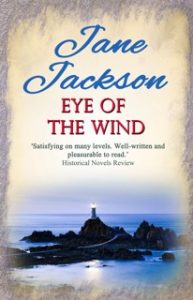
‘Eye of the Wind’   by Jane Jackson. Accent Press 2013. £1.99.

Kindle link:  http://amzn.to/2qiGcOw

Paperback available from third party sellers.

Reviews:  ‘A first-class historical novel … coupled with a gripping story-line.’    Western Morning News.

‘Satisfying on many levels, well-written and pleasurable to read.’   Historical Novels Review.

Author bio:  Jane Jackson’s first book was published in 1976. She wrote fourteen romances for Harlequin, ten romantic historical novels, and will soon complete the eighth of her Polvellan Cornish Mysteries writing as Rachel Ennis. She has been shortlisted for five major awards.

She taught the craft of novel writing for twenty years and was delighted and privileged to see eleven former students become professional novelists.  Happily married to a Cornishman, with children and grandchildren, she has lived in Cornwall all her life finding inspiration for her books in the county’s scenery, history and people.  Her hobbies are reading, coastal walks, baking, vintage vehicle rallies – and reading.

www.janejackson.net

www.facebook.com/PolvellanCornishMysteries

Twitter: @JJacksonAuthor

***

Thanks every so much Jane. Great blog!

Come back tomorrow to discover which book Alison Rose is blowing the dust off.

Happy reading,

Jenny xxx


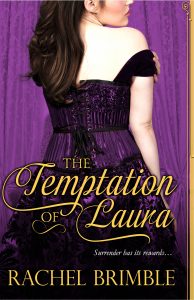
Blowing the Dust Off: Rachel Brimble’s The Temptation of Laura

It’s Day 5 of my Blowing the Dust Off series. Today we are in the company of the fabulous Rachel Brimble. She is taking a peck at her Victorian romance, The Temptation of Laura.

Go grab a cuppa, sit down, and enjoy…


The Temptation of Laura…

Despite the title of my second Victorian romance, The Temptation of Laura is not so much about the temptation of Laura herself, but the temptations life throws at her, the hero and many of the secondary characters. Temptation is all around us and more often than not, that temptation could be perceived as opportunity. It’s fear that holds us back from surrendering or resisting.

The book is set against the backdrop of Bath’s theatre world during the late 19th century. There were many changes happening, socially, economically and sexually during this time. The first whispers of the women’s revolution had begun to circulate…not that many men noticed until around 1903 when The Women’s Social and Political Union was founded.

The leaders and supporters of the group began to cause a stir––marching and petitioning for their right to vote. This is marked as a hugely significant and rightly respected time for women at the time. Men had no choice but to sit up and take notice when so many women banded together and refused to be ignored.

This leads me to the question of temptation…I love exploring this theme and all the imaginings it conjures. Each of us is faced with temptations (or decisions) every day and I, for one, am hugely guilty of making the easy, expected, even socially acceptable decision. My books tend to be about the women who do the exact opposite. What better way to earn a living than to create a woman you admire and want to see succeed in her chosen vocation, romance or spiritually satisfying path?

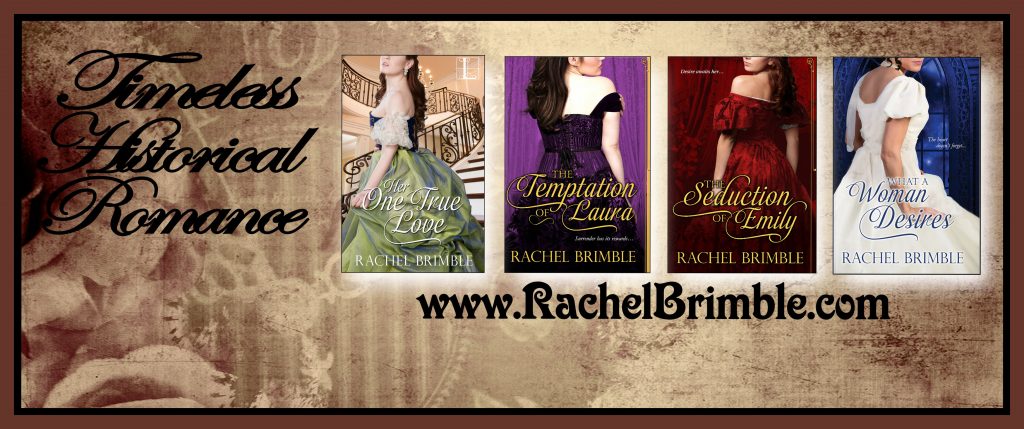
Laura’s story began in book one of my Victorian series with eKensington when she appeared as a secondary character in The Seduction of Emily. It wasn’t long before I knew she deserved a richer, more in-depth story of her own. As a prostitute struggling for a better life…a dreamer who longs to be onstage, I sensed Laura would be a joy to write and spend some time with over the course of 85,000 words. She didn’t let me down J

Hope I’ve ‘tempted’ you to read the book!


Here’s the blurb & buy links:

Laura Robinson has always been dazzled by the glamour of the stage. But perhaps acting and selling one’s favors are not so different—for Laura must feign pleasure with the men she beds to survive. Now, with her only friend at death’s door and a ruthless pimp at her heels, escaping her occupation seems impossible. Hoping to attract a gentleman, she attends the theater. Yet the man Laura captivates is no customer, but a rising star and playwright…

Adam Lacey has been driven to distraction since the moment he saw Laura. She is his ideal leading lady come to irresistible life—and so much more. Certain they can make the perfect team on and off stage, he is determined to win her heart—and discover her story. But that is precisely what Laura fears. And she has no idea that Adam harbors shameful secrets of his own. Will the truth free them to love—or destroy all their dreams…?

 Amazon US

 Amazon UK

 Barnes & Noble


Bio:

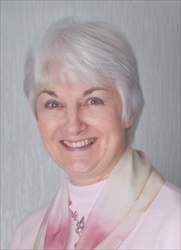
Rachel lives with her husband and two teenage daughters in a small town near Bath in the UK. After having several novels published by small US presses, she secured agent representation in 2011. Since 2013, she has had seven books published by Harlequin Superromance (Templeton Cove Stories) and an eight coming in Feb 2018. She also has four Victorian romances with eKensington/Lyrical Press.

Rachel is a member of the Romantic Novelists Association and Romance Writers of America, and was selected to mentor the Superromance finalist of So You Think You Can Write 2014 contest. When she isn’t writing, you’ll find Rachel with her head in a book or walking the beautiful English countryside with her family. Her dream place to live is Bourton-on-the-Water in South West England.

She likes nothing more than connecting and chatting with her readers and fellow romance writers. Rachel would love to hear from you!

Links:

 Website

Blog

Twitter

Facebook

Facebook Street Team – Rachel’s Readers

Amazon Author Page:

https://www.amazon.com/Rachel-Brimble/e/B007829ZRM/ref=sr_ntt_srch_lnk_1?qid=1490948101&sr=8-1

Goodreads:

https://www.goodreads.com/author/show/1806411.Rachel_Brimble

 Many thanks Rachel, fabulous stuff.

Don’t forget to come back tomorrow to see what Jane Jackson is tempting us with.

Happy reading,

Jenny xx


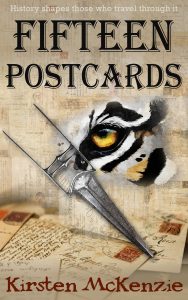
Blowing the Dust Off: Kirsten McKenzie’s Fifteen Postcards

It’s Day 4 of my ‘Blowing the Dust Off’ series of blogs. Today Kirsten McKenzie is taking time out from preparing for an archaeological adventure to tell us all about the fabulous novel, Fifteen Postcards.

Grab a cuppa and enjoy…


Travel Back in Time

Today I make the long journey from Auckland to Newcastle upon Tyne. Three different plane changes and one train trip will see me to my hotel in the centre of the city, where I suspect I shall then sleep for several hours. Why the long journey? I’m heading back to volunteer at an archaeological dig at Vindolanda, all in the name of research.

When I sat down to write my first novel, I didn’t plot or plan. I had no glorious ending in sight, I had merely made a sweeping statement to my family that I would write a novel when my youngest daughter started school, and so I did. I started with this paragraph:

“In a cramped little street, in a dusty corner of London, stands a set of two-storey brick facade shops. An architectural relic from last century, miraculously untouched by the bulldozers of modern developers. A greengrocer, a boutique, a gentlemen’s tailor, the ubiquitous Chinese dumpling shop, and The Old Curiosity Shop, an antique shop named after the Charles Dickens classic of the same name. The sort of shop passers-by would wonder if anyone ever went in or, indeed, whether they actually ever sold anything.”

That paragraph turned in ‘Fifteen Postcards’, a historical time slip novel traversing three continents and two centuries. It took me eighteen months to write, and even then it ended on a cliffhanger as the story grew too large for just one book.

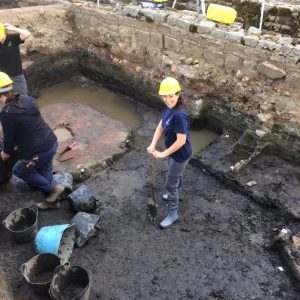
A couple of months after ‘Fifteen Postcards’ was published by Accent Press, I turned up at Vindolanda for my first experience of volunteering on an archaeological site. And I fell in love. Every shovel full of dirt felt like a treasure hunt, but the sort of hunt where you all celebrate finding shards of pottery or slivers of glass. The most exciting article I found was a chair leg, beautifully preserved in the unique environment at Vindolanda.

It was that experience which dictated the direction the sequel to ‘Fifteen Postcards’ would then take. ‘The Last Letter’ was written in twelve months, and may include some references to digging up Roman statues….I’m not going to spoil the plot here!

Accent Press published ‘The Last Letter’ which again had an ending which nicely morphs into another sequel. So now my first novel ‘Fifteen Postcards’ has turned into a trilogy. It did that without me even realising, but time slip fiction does that to you. There are so many interesting threads of history you can weave into a storyline that you just don’t want to leave anything out.

My next book wasn’t the sequel to ‘The Last Letter’. Those characters needed to have a bit of time out, to sit around and stew in colonial New Zealand, or Victorian England, or underneath the rule of the Raj in India. While those characters were resting, I wrote ‘Painted’ a bloodless horror about an art appraiser and a houseful of malevolent portraits. Again, the antique dealer side of me couldn’t resist pulling in all the antique references.

Painted’ took eight months to write, so I’m getting faster which is a good thing! Now that’s out of my system I can revisit the wonderful characters from ‘Fifteen Postcards’ and ‘The Last Letter’ and maybe I’ll fling them into Roman Britain or modern day America? Who knows! But when I step onto the first plane today, I know that I will have my laptop with me, and two glorious weeks of free evenings to write in the most beautiful of locations, with very little responsibilities. And I’m imagining wonderful words will flow.


Kirsten excavating at Vindolanda

Author Bio
For many years Kirsten McKenzie worked in her family’s antique store, where she went from being allowed to sell the 50c postcards to selling $5,000 Worcester vases and seventeenth century silverware, providing a unique insight into the world of antiques which touches every aspect of her writing. Her time slip novels have been called Antiques Roadshow gone viral, and The Time Travellers Wife meets The Far Pavilions.

Her horror novel Painted was released in June 2017.

Now a full time author, she lives in New Zealand with her husband, daughters, and her SPCA rescue cat, and can be found procrastinating on Twitter.

Social Media Links

Facebook: www.facebook.com/kirstenmckenzieauthor

Twitter: www.twitter.com/kiwimrsmac

Instagram: www.instagram.com/kiwimrsmac

Pinterest: www.pinterest.com/kiwimrsmac

Book Links:

UK Amazon: www.amazon.co.uk/Fifteen-Postcards-Travel-Solve-Mystery-ebook/dp/B00XXZIO0C

US Amazon: www.amazon.com/Fifteen-Postcards-Travel-Mystery-Curiosity-ebook/dp/B00XXZIO0C 

Many thanks Kirsten. What a great blog. I hope your excavation time is fantastic- not at all jealous…honest…

Come back tomorrow to hear what the lovely Rachel Brimble has to share with us.

Happy reading,

Jenny xx

Blowing the Dust Off: Marie Laval’s A Spell in Provence

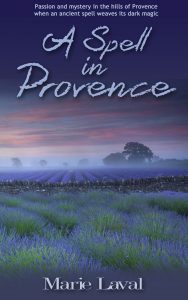
It’s Day 3 of my ‘Blowing the Dust Off’ series of blogs. Today I’m welcoming fellow Accent author, Marie Laval, to my place to talk about her French romance, A Spell in Provence.

Grab a cuppa and enjoy…


FINDING INSPIRATION IN PROVENCE 

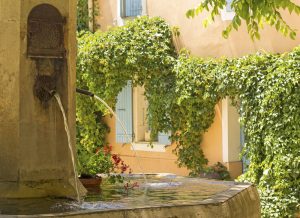
People often wonder how writers find ideas for their novels. Although I can find inspiration from many different places – a song, a painting, a poem, or even a road map! – I can pinpoint the exact moment when I got the idea for my contemporary romantic suspense A SPELL IN PROVENCE. A few years ago I visited the lovely town of Cassis during a family holiday in Provence. We had an impromptu picnic lunch of baguette, ham and cheese on a village square and sat next to an old stone fountain with an inscription in Latin…and that was it!   


Fountains have a special place in the novel, but they are, and always were, very important in Provence. According to an old Provençal saying ‘Eici, l’aigo es d’or’, which translates by ‘Here, water is gold’ – and no wonder when you think how hot it can get in the summer and how parched the earth can be. Anyone who read the wonderful ‘Jean de Florette’ and ‘Manon des Sources’ by Marcel Pagnol, or saw the films, can remember the struggles and hardship the characters faced and their anguish of the characters when the water supply ran dry.

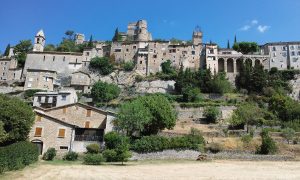
A SPELL IN PROVENCE is set near Bonnieux in the Lubéron region of Provence, one of the many hill-top villages dotting the countryside. My heroine leaves England and buys Bellefontaine, a ‘bastide’ (an old farmhouse) she renovates and plans to open as a guesthouse….until eerie things happen and jeopardise her dream. The hero of the story, Fabien Coste, is heir to an old aristocratic family and has turned his ancestral manor house into a luxury hotel. Once again, the manor house is based on a real place – the castle in Lourmarin – but I have of course changed a few details.

Another important setting in the story is the ancient village of ‘Bories’, which are stone huts dating back from the Iron Age, and which were still used as shelter by shepherds until a few years ago. You can also find isolated bories scattered in the landscape when you travel through Provence.

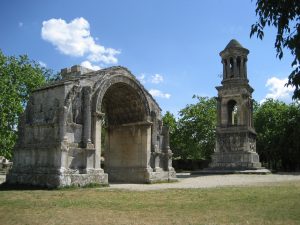
Provence is not only a beautiful place, it also has a fascinating history – in particular ancient history – which is pivotal to my novel’s story line. Before the Greeks, and later the Romans settled there, the Salyens were the largest Gallic tribe. By the 6th century BC, their main centre was Entremont, which is located on a plateau above what is now Aix-en-Provence.

There were other important centres, such as nearby Glanum. This settlement was dedicated to the Celtic god Glanis, and built around a spring known for its healing powers. The Salyens had the strange – some might say gruesome – custom of displaying the severed heads of enemies at the city gate. They left no writing but many statues of gods and warriors, some of them holding severed heads.


When researching and writing A SPELL IN PROVENCE, I loved surrounding myself with photos of hill-top villages, of old fountains and of lavender and sunflower fields. I grew up in Lyon and spent many holidays in the South of France as a child. Writing the novel brought back fond memories of playing in the sunshine, breathing in scents of herbs and flowers, and listening to the woody song of the cicadas.

A SPELL IN PROVENCE is published by Áccent Press and is available from http://www.amazon.co.uk/dp/B00RVQO8RM

 ***

Blurb:

With few roots in England and having just lost her job, Amy Carter decides to give up on home and start a new life in France, spending her redundancy package turning an overgrown Provençal farmhouse, Bellefontaine, into a successful hotel. Though she has big plans for her new home, none of them involves falling in love – least of all with Fabien Coste, the handsome but arrogant owner of a nearby château.  As romance blossoms, eerie and strange happenings in Bellefontaine hint at a dark mystery of the Provençal countryside which dates back many centuries and holds an entanglement between the ladies of Bellefontaine and the ducs de Coste at its centre. As Amy works to unravel the mystery, she begins to wonder if it may not just be her heart at risk, but her life too.

A SPELL IN PROVENCE is published by Áccent Press and is available from http://www.amazon.co.uk/dp/B00RVQO8RM


Excerpt

Shivering in the cold breeze despite her shawl, Amy joined the guests lining up to be greeted by Fabien, who in true lord of the manor style, stood tall and imposing at the top of the steps, with torches burning on either side of him.

          He might wear a black dining suit and a crisp white shirt instead of a suit of armour, but there was something untamed, fundamentally uncivilized and proprietary about the way he surveyed the crowd – as if he truly owned everything and everyone, like Frédéric had said, and Amy was seized by an irresistible, irrational and overwhelming urge to flee. She didn’t want to speak to Fabien Coste, didn’t want to put up with his arrogant ways. He could keep his fancy chateau, his contacts and glamorous guests, she didn’t need him. She would walk home. It wasn’t that far.

          She was about to step aside when he looked down and their gaze met. Shadows danced on his face. The torches hissed in the breeze, their flames shooting high in the air and reflecting in his green eyes, giving them a deep, dangerous glow. For the space of a heartbeat, the noise of conversations around her became distant and fuzzy, and all she could see was him.

          He walked down, took her hand and lifted it to his lips. Even though his mouth barely touched her skin, a flash of heat reverberated through her body.

          ‘Mademoiselle Carter – Amy, you’re here at last.’

          It was the first time he’d spoken her first name. He made it sound French, sensual and incredibly romantic. Aimée. Beloved.

          ‘Shall I escort you inside and introduce you to a few people?’

          Panic made her heart flutter and turned her brain to mush.

          ‘Well, it’s just that …’

          He arched a dark eyebrow, looked down, and smiled as if he knew exactly what she was feeling.

          ‘You’re here now. You might as well make the most of it.’


Author Bio:

Originally from Lyon in France, Marie studied History and Law at university there before moving to Lancashire in England where she worked in a variety of jobs, from PA in a busy university department to teacher of French in schools and colleges. Writing, however, was always her passion, and she spends what little free time she has dreaming and making up stories. She writes both contemporary and historical romance. ANGEL HEART, THE LION’S EMBRACE, the DANCING FOR THE DEVIL Trilogy are published by Áccent Press, as is her contemporary romantic suspense novel A SPELL IN PROVENCE. She also writes short stories for the World Romance Writers – Letterbox Love Stories and Escape to Africa – and has just signed a publishing contract with Choc Lit for another contemporary suspense novel to be published in 2018.

You can find Marie here http://marielaval.blogspot.co.uk/

and https://www.facebook.com/marielavalauthor?fref=ts

and https://www.goodreads.com/author/show/6538479.Marie_Laval

https://twitter.com/MarieLaval1


Many thanks Marie. I’ve always wanted to visit Provence- I am inspired to head that way sooner rather than later.

Don’t forget to come back tomorrow to read what Kirsten McKenzie has to offer us.

Happy reading,

Jenny x


Blowing the Dust Off: Nell Peter’s By Any Other Name

It’s Day 2 of my Blowing the Dust Off series. Today we are in the company of Nell Peters (she of the end of the month blogging epics). She is taking a peak at her first crime novel By Any Other Name.

Go grab a cuppa, sit down, and enjoy…

 

Hi Jenny – is it the end of the month already? Oh no, different gig – I’m here to waffle on about one of my backlist masterpieces! Silly me …

It was on (Friday) 25th April 2014, that I received an email from Greg Rees, then an editor at Accent, telling me he’d finished the complete MS of By Any Other Name and wanted to publish it – as he read through, he’d been flabbergasted not once, but twice apparently. Go me! The offer came as a huge surprise, since when he’d liked the original three chapter submission and asked for the rest, I’d rather dismissed the possibility of things going any further – I expected to receive yet another ‘not right for our list at this time’ or ‘I just don’t love it enough’ type rejection. I’ve had enough of those to metaphorically paper a medium-sized room, although funnily enough, none for that particular book, as I’d only just finished writing it. When I say ‘just finished writing’ I mean the final two thirds of a crime novel started so long ago I can’t actually put a date on it – except that it was just after Queen Victoria died.
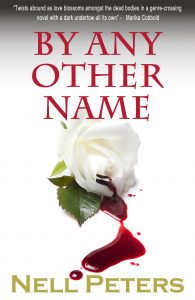
The first third of BAON had to be rewritten too from memory, after #3 son managed to crash my PC spectacularly and send all my files spiralling into cyber space, without hope of retrieval – and I had no back-up, nada! Rookie mistake … I dipped into the rewrite now and again over the years, in between writing other stuff, and eventually got to the bit where everything had disappeared in a puff of ether. Then I had to actually start thinking how the plot would evolve and finish the thing – it actually took on a whole different outline to my original mental blueprint.

However, that Friday the excitement and anticipation of publication had to take a back seat very quickly, because the following day was GD Isla-Rose’s first birthday – and she was having a big party, for which I’d promised to make a pink princess fairy castle cake, plus oodles of buffet food. I mentioned the cake making to Greg and he very helpfully sent a link to an M&S creation that would have been perfect, except for the seven day waiting period. Damn! So, into the kitchen toddled the least domesticated female since Lizzie Borden’s stepmother served up that putrefied mutton …
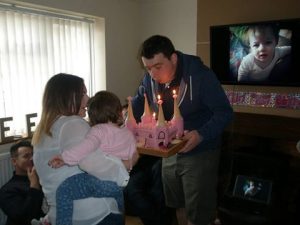
Isla is #4 son’s (now) older daughter and he rocked up to, erm, help with the cake. By the time we’d finished many hours later, all book publication thoughts had left the building and the kitchen had suffered a snow blizzard, covered in flour and icing sugar (as were we!) But we were reasonably pleased/relieved at the result. Happy to report that of the too many people packed into their tiny house, nobody died of food poisoning from the party fodder and a good time was had by all.

The next week, my contract arrived, but before I could sign it (against the advice of the Society of Authors, I might add) my father was taken ill in Twickenham and I had to speed off to his bedside, via long distance trains and a tube strike. Dad was fine, of course – he’s a life-long hypochondriac, but even they become genuinely ill sometimes, and at eighty-nine it was a bit risky to ignore his protestations. I eventually managed to extract myself from his sick bay and return to my lap top in Norfolk to begin the process of whipping the MS into pristine shape for November release.

When the big day arrived, it was something of an anti-climax. There had been no pre-order, ARCs, trumpet or whistle blowing prior to the launch and apart from me posting on social media, the day passed unheralded with me gawping at the lap top. I joined some FB groups to get myself ‘out there’ – from one day to the next I went from being a no-group bod to belonging to four, and rising.

Once your book finally hits the cyber shelves, even as a very unsatisfactory print on demand, reviews are eagerly awaited and after a couple of weeks or so, one landed on Amazon for BAON – a 1*! At that time Accent used to put new releases on a freebie offer for a limited time to encourage sales and ‘Patsy’ (her name is ingrained in my memory forever!), I noticed, made a habit of grabbing any freebie going and rubbishing it, after reading just a few pages. If you have a healthy clutch of reviews, you can weather a low rating, but when it’s the first it takes ages to up your average, which is frankly depressing.
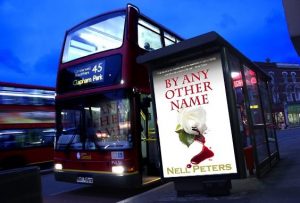
By Any Other Name is a genre-crossing crime novel and admittedly a bit Marmite. There are similarities to I Let You Go in that the plot stands on its head at about two thirds of the way through – it’s difficult to say much more, so why not read the blurb:

A summer job to die for – and people do.

Emily Kelly can’t believe her luck when she is employed as temporary companion to Sir Gerald Ffinche and falls in love with his son, Richard.

However, it’s obvious their happiness isn’t shared by all, when one tragedy is quickly followed by another; and as the body count mounts, subtle clues are left to incriminate Emily and destroy her relationship.

Police involved seem incapable of exposing the real culprit; perhaps a family member, one of the household staff, or someone else close to the Ffinches?

No one is above suspicion, and no one is safe until a psychopath is unmasked – or thereafter.

With a shoal of red herrings and a plot that turns quickly from almost-cosy to taut psychological thriller, this is an enthralling, chilling read that will appeal to those who relish the unpredictability of Clare Mackintosh.

    ‘Twists abound as love blossoms amongst the dead bodies in a genre-crossing novel with a dark undertow all its own.’

Marika Cobbold, best-selling author.
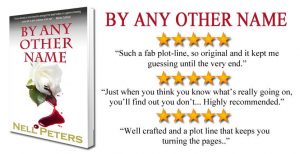
     Fancy reading an excerpt? Be my guest:

Chapter One

As Emily rushed around, scooping up all the stuff she needed to take to work, an advertisement in the local free paper caught her attention:

Footloose and Versatile Female, Aged under 35 years.

Must be free July and August. Telephone in complete confidence …’

Not much to go on, but what could possibly be worse than painting red crescent smiles on toy clowns’ faces day in, day out, until September, she asked herself. Exactly. She ripped out the bottom half of the page, folded it roughly and shoved it in her bag, before heading out the door at speed.

She’d recently finished the first year of a degree course in Psychology, passing all assignments with flying colours and notching up the requisite number of credits to enable her to continue – much to her tutors’ blatant amazement, her attendance record having won no awards. But without visible (or invisible) means of support, Emily had to take a holiday job in a local toy factory just to survive until the next loan cheque arrived on the doormat. Though the work was mind-numbingly awful, it was all she could get; she hadn’t been there long and for the third time in as many days, was about to miss the last bus that would deliver her to her paint pot on time.

She forgot all about the ad until lunchtime, when she was sitting eating crisps with Doreen and some of the other women who worked in the paint section.

‘What do you think about this, Dor?’ she asked, waving the scrap of paper under her nose.

Doreen adjusted her half-moon glasses and scrutinised the print. ‘Well, if I was ten years younger…’

‘And the rest!’ scoffed Peroxide Pam, who was reading over Doreen’s shoulder, gnashing her Wrigley’s for all to see and hear.

Doreen pursed her lips, ignoring Pam, ‘As I was saying, if I was ten years younger, Em, I’d apply for it meself – what have you got to lose?’

The arrival of Mr Spinks, their line supervisor, put an end to any further debate.

‘Come, come now ladies. Idle chatter won’t get the baby bathed – not in a month of Sundays.’ Spinks was a short, round man – a regular sleaze ball, who vastly overestimated his levels of charisma and importance. ‘The lunch break is finished – now back to your work stations, quick as you can.’ He clapped raw sausage fingers together, the effort of movement making his chins wobble.

She took a moment to suck the last traces of nicotine from her roll-up and stubbed it out on the handy ‘No Smoking’ sign provided – which meant the others left without her and she found herself alone in the locker room, with Spinks blocking the exit. Damn!

‘Well, if it isn’t Miss Smarty Pants…’ he was getting a little too close for comfort, ‘I don’t know why you think you are so much cleverer than the rest of us – just because you managed to cheat your way into university, that doesn’t make you any better than me…’ His damp breath was making her hair frizz and she wanted to get away from his horrible disrobing gaze.

Thank goodness, Doreen’s antennae were on top form. She reappeared at the end of the dingy corridor, ‘There you are, Em. I wondered where you’d got to – mustn’t waste company time, now must we?’ She smiled ingratiatingly at Spinks, who jumped back from Emily as though she had broken out in seeping plague boils.

He scowled, ‘Very good, Mrs Mason, that’s the Dunkirk spirit. Carry on, now.’

She started to follow Doreen, changed her mind and spun around to face him once more, ‘Actually, Mr Spinks, I’m working here during the vacs to earn money – that’s why everyone works here isn’t it, to earn money? I don’t think of myself as any better or any worse than anyone else – including you.’ She felt Doreen’s sharp tug at her elbow, ‘And the name is Kelly, Emily Kelly – not Smarty Pants. She left last week, I believe.’ Then she allowed herself to be dragged away.

Spinks stalked off in the opposite direction, gargantuan buttocks flubbing together and one arm held awkwardly behind his back, like Prince Charles. ‘Rome wasn’t built in a day, you know,’ he called over his shoulder.

‘Wazzock,’ hissed Doreen, not too loudly, ‘don’t you take no notice of him, Em, Mrs Spinks is probably keeping him on tight rations in the bedroom department.’ She inclined her head and winked a blue-shadowed crêpe eyelid.

‘I’m amazed there is a Mrs Spinks.’ Emily suffered a gruesome mind’s eye flash of him in the nude – even his spare tyres had spare tyres – which sent shivers up and down her neurological pathways.

‘Oh yeah, right under the thumb he is,’ Doreen was one of those people who seemed to know everything about everybody.

‘Does she have a Seeing Eye Dog and a white stick?’

Doreen shrugged, ‘Never met the woman in person, but I saw them out shopping on a Saturday once. She’s one of them scrawny, mean-looking women – probably a terrible nag. And Spinks never brings her along to the Christmas parties.’

‘Lucky escape for her, I imagine?’ Emily scoffed.

She looked genuinely shocked, ‘You must be joking! It’s the social event of the year round here.’ Emily made a mental note never to sink that low. ‘Okay, Miss Smarty Pants – time we was getting back to our work of national importance.’

Back at the production line, plastic clowns were standing all in a row, waiting for her to make them look happy and appealing and well worth their outrageous price tag. Doreen hitched up her weighty boobs with equally weighty forearms and waddled off to her seat, her lumpy backside straining to be free of the tight brown overall. As always, she was anxious to catch the beginning of The Archers – which was the highlight of her day.

Not being a fan of radio drama, Emily loaded her paintbrush with crimson gloop and settled down to switch off from life in the sweatshop and daydream her way through to clocking-off time. Johnny Depp featured regularly in her fantasy world and that afternoon, she was guest of honour at his sumptuous mansion, high in the Hollywood Hills. Dearest Johnny couldn’t do enough for her, waiting on her hand and foot as she soaked up the Californian sun at the side of his turquoise infinity pool, sipping vintage champagne through a sparkly straw.

Her imagination took a detour to that interesting advertisement and the possible scenarios it might throw up. Was it possible a terminally ill Adonis was searching for someone like her to sooth his fevered brow, during his final, tragic weeks? As a reward for her unstinting care, he would bequeath to her all his money, plus a controlling share portfolio in a selection of designer dress and shoe shops. Or could it be an eccentric zillionaire sought a beautiful, lithe young woman (such as Emily, obviously) to work an hour a day on his very own Caribbean Island? Naturally, her allotted tasks wouldn’t be too taxing – perhaps grooming the Guinea pig twice a week, arranging vases of exotic flowers to his satisfaction, pouring just the right amount of expensive, scented bath oil into his hot tub; that sort of thing.

If you’d like to read more, here’s the international link.

http://mybook.to/BAON

Toodles.

Nell Peters

***

Thanks Nell – fabulous blog as ever.

Don’t forget to come back tomorrow to see which book Marie Laval is going to share with us.

Happy reading,

Jenny x
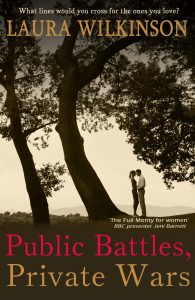
Blowing the Dust Off: Laura Wilkinson’s Public Battles, Private Wars.

It’s Day 1 of my ‘Blowing the Dust Off’ series of blogs. Over the next ten days, I’ll be hosting 10 different authors; each will tell us a little about one of their novels. Unlike my usual guests posts, they won’t be promoting a new work of fiction, but giving us a timely reminder of some of the treasures they have produced in the past.

Today the lovely Laura Wilkinson is kicking off the series for us by reminding us about her excellent novel, Public Battles, Private Wars.

Grab a cuppa and enjoy…


Thanks so much for inviting me to be the inaugural guest of your new series: Blowing the Dust Off, Jenny. What an honour and what a great idea for a series.

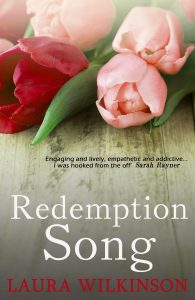
Today, I’m going to talk about Public Battles, Private Wars, my ‘miners’ strike’ novel. I use quotation marks because although there was a lot of focus on the strike around publication back in 2014 (it was the 30 year anniversary of the dispute), in truth the conflict forms the backdrop – it’s primarily a story about love and friendship – of both the toxic variety and the genuine, wonderful kind. It’s worth pointing out here that the novel is just 99p for Kindle at the moment – as is Redemption Song, for a limited time.

Like a lot of writers I’m neither a fully-paid-up member of the planner nor pantster clubs; I fall somewhere in between.

I begin any story with a clear(ish) vision of the story arc, with a beginning and a sense of where I’d like my characters to end up. Research is done on the hoof, as and when I feel the need. Lazy? Maybe. But it works for me and research can become a distraction, something which gets in the way of writing. A master of displacement activity, I had to remind myself of this constantly while working on Public Battles, Private Wars, for there is stacks of information on the subject.

The novel is set against the backdrop of the 1984/85 Miners’ Strike and there is a wealth of writing on the subject, though surprisingly little fiction (I found only three novels back in 2012 when I began writing) and genuine poverty when it comes to fictional representations of women’s role in the struggle.

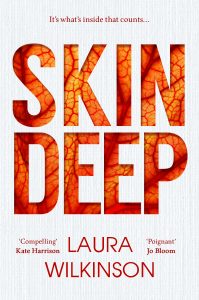
The origins of this novel lie in a photograph I came across on the internet while researching another story idea set in the 80s – a story that has since gone on to become my latest novel – Skin Deep. It was an image of a group of women marching down a suburban street; women who looked powerful, in control, purposeful; not hapless victims of a political struggle to smash the unions led by a woman in Westminster.

I am old enough to recall this landmark strike in modern history and as a former steel worker’s daughter I have some understanding of strife and hardship as a result of strike and redundancy (Thatcher crushed the steel industry before turning on coal), but I’m not from a mining community, I wasn’t a political animal as a girl, though my mother and sister were. If I was to do the story, and the real women of the conflict, justice, I needed to do some research.

Because I find images inspirational, I began by looking at photographs from the era and the women’s groups that sprang up to rally round the miners. Images of women, young and old, huddled over industrial sized cookers, preparing meals for pickets and hungry children. Women in town halls cheering on the likes of Tony Benn (RIP), Arthur Scargill and Bruce Kent. Women marching next to their men, shoulder to shoulder on the picket lines. Women shielding their faces from oncoming policemen on horseback. Shocking images.

Then I began to read, to gather the facts. I read lots of books, articles, diaries and accounts. I spoke to people – experts and those who lived through it – about the profound effects that long, hard year had on their lives. It was a terrible time, no mistaking. There was extreme hardship and, ultimately, defeat. But, out of those desperate times came some good. Quite a lot for many women, as it happens.

Alongside specific fact gathering about the strike, I imbued myself with a sense of the period – fashion, music, popular books, TV shows, the mores of the time. I looked at clips on YouTube and watched films like Billy Eliot and This is England. My central character likes to bake cakes. I am a domestic disaster, with a particular talent for spoiling even the most straightforward of dishes. I read up on baking and even tried some recipes – with laughable results.

There is another strand in Public Battles, Private Wars, that required research, and I have to be careful how much I say because of spoilers, but my leading man is a former soldier who served during the Falklands War. Ignorant in the extreme about military matters, I needed to look into this too if this particular plot strand was to feel authentic and my character be three dimensional. Again, I read articles and reports online, and I spoke with a number of particularly lovely officers at the MOD. Special mention has to go to a former soldier, John Marham, who now works for a military charity who gave up a morning to meet with me and talk about his experiences of army life. He was generous with his knowledge and personal stories, talking me through everything from training to the sound a magazine makes when loaded into the gun barrel.

Now, I can’t recall how much time I spent researching. Probably not as long as I’ve made it sound. I was greedy for the information – it was fascinating – and so I devoured it quickly. The novel took a year to write – the same timescale as the strike – and once I had all this information rammed into my brain, I had to forget most of it. For here’s the thing: in fiction, you must wear your research lightly. It must never feel didactic, it must never get in the way of the story or the characters, and this felt especially important to me given that there is a wealth of non-fiction. If people want facts there are gazillions of sources. If you want to live the life vicarious of a downtrodden young women who finds the best of herself during strange and difficult times then this novel might be for you.

Blurb:

Yorkshire 1983.

Miner’s wife Mandy is stuck in a rut. Her future looks set and she wants more. But Mandy can’t do anything other than bake and raise her four children. Husband Rob is a good looking drinker, content to spend his days in the small town where they live.

When a childhood friend – beautiful, clever Ruth – and her Falklands war hero husband, Dan, return to town, their homecoming is shrouded in mystery. Mandy looks to Ruth for inspiration, but Ruth isn’t all she appears.

Conflict with the Coal Board turns into war and the men come out on strike. The community and its way of life is threatened. Mandy abandons dreams of liberation from the kitchen sink and joins a support group. As the strike rumbles on, relationships are pushed to the brink, and Mandy finds out who her true friends are.

A story of love, betrayal, and cakes, Public Battles, Private Wars follows one woman’s journey of discovery and a community fighting for survival.

National Museum of Wales Book of the Month – June 2014

‘Vivid and engaging. A touching, well-written novel’ Welsh Books Council Reader Report

‘The Full Monty for women’ BBC presenter Jeni Barnett

‘I absolutely loved it’ Bookaholic Holly – in Top Ten books of 2014 for Bookaholic Confessions. Read the full review here.

‘A compelling story with some great characters. Public Battlers, Private Wars is a story that looks at friendships, community, love and jealousy.’ Random Things Through my Letterbox. Full review here.

‘A novel with a big heart’ Pen & Paper. Full review here.

Facebook Author Page

Twitter

Goodreads

Pinterest

Laura’s website

Promotional Film about the novel

Buy from Accent Press

Buy from Amazon

Buy from Waterstones online


About Laura

Liverpool born, Laura is a taff at heart. She’s published four novels and many short stories. Some have made the shortlists of major competitions. Her novel, Public Battles, Private Wars, was a National Museum of Wales book of the month; Redemption Song was a Kindle top twenty. The Family Line is a family drama set in the near future, looking at identity and parenting. ‘It will haunt your dreams.’ Books at Broadway. Her latest, is Skin Deep: ‘A superb read.’ Northern Soul magazine. Alongside writing, she works as an editor and runs workshops on the art of fiction. www.laura-wilkinson.co.uk   Twitter @ScorpioScribble Facebook: Laura Wilkinson Author Instagram: laura_wilkinsonwriter Pinterest: laura1765 Goodreads: Laura_ Wilkinson 

***

Many thanks for starting the series in such excellent style Laura.

Come back tomorrow to find out what crime writer Nell Peters is digging out of her archive.

Happy reading,

Jenny x
Another Cup of Coffee: Amy’s Adventure Begins

Starting tomorrow, my blog will be hosting a 10 day series of posts dedicated to promoting books written at least 2 years ago. This ‘Blowing the Dust Off’ series will help introduce you to some of the treasures your favourite authors have written in the past.

It seemed fitting, prior to ‘Blowing the Dust Off,’ to feature a blog about my own earliest novel.

Why not grab a cuppa and have a read….

Another Cup of Coffee - New cover 2015

Another Cup of Coffee is the story of Amy Crane’s quest to get her life back on track…and this is how her adventure begins…

Aberdeen airport

…It was only once she’d checked in at Aberdeen airport, her luggage safely stowed, that Amy finally stopped moving. Slumped on a bench, looking around at the people rushing by, she realised that this was the first time she’d been inactive for weeks.

Once her impulsive decision to go home to England had been made, she’d barely stopped for a break in the haste to work her notice period, sort out the ending of the lease on her rented flat, and arrange somewhere to stay in London. Now that stillness was about to be forced upon her, Amy had to face the reality of what she’d done by throwing in a good job and a nice flat for no job and a rented room in a shared house in London that she’d never even seen.

‘I need coffee,’ she muttered to herself. Hoisting her tatty fabric handbag higher onto her shoulder in a bracing gesture, she headed for the café located next to the departure checkpoint.

Having successfully managed to purvey her order to the Chinese-speaking assistant via a mixture of words and semaphore, Amy sat down on one of the fiendishly uncomfortable steel seats. Ignoring the unsightly build-up of used cups, half-eaten meals and spilt fizzy pop, Amy briefly allowed herself to contemplate her situation. Almost instantly her nerves regrouped in her gut, and Amy decided to put off any serious thoughts about the future until she was on the plane. That way, any possible temptations to chicken out and stay in Scotland after all would no longer be an option. Major life planning could wait. For now she would just indulge in her drink and watch the world go by. Then she’d have a wander around the meagre collection of shops, and perhaps buy a book or magazine for the flight, putting reality off for a bit longer.

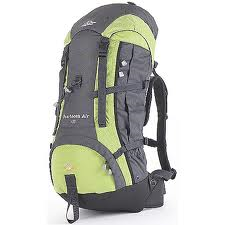
Unable to put off the moment, Amy picked up her backpack and headed over to the departure gate. As she passed the newsagents’ her eyes landed on a copy of one magazine in particular- it had the appropriate headline, New job, New home, New life.

Amy muttered the words over and over in her head like a mantra, as she purchased the magazine fate seemed to have left for her before joining the queue of people who were also turning their back on the Granite City, for to business commitments, holidays, or in her case, for ever.

During the seventy-minute flight, Amy had managed to concoct enough excuses to delay any plan of action as to what to do next for a little longer. She’d examined the flight safety card thoroughly, had uncharacteristically engaged her fellow passengers in mindless conversation, and flicked through her magazine. Amy had read the occasional relevant passage, but had been disappointed not to find an article entitled You’ve Ditched Your Life – So Now What?

Now, trudging down the gloomy concourse at Heathrow to retrieve her luggage and trying to ignore the patina of perspiration on her palms, Amy was suddenly aware that someone was talking to her.

‘You OK?’

The man striding next to her spoke with a soft Irish lilt, ‘You’ve been chatting to yourself ever since we landed.’

‘Oh, God, have I?’ Amy’s face flushed. ‘I’m sorry; I’m always talking to myself. You must think I’m nuts.’

‘No!’ His eyes twinkled at her as he spoke. ‘Well, maybe just a bit.’

Amy wondered how old he was. Roughly her age perhaps; she always found it difficult to tell with men in suits. Amy didn’t want to think about it, or she’d get onto thinking about how much time had passed since she’d last smiled at a man of her own age, let alone spoken to one, and that way lay madness. ‘You’re probably right. I’ve just chucked in my life, so perhaps I’m insane.’

‘A lot on your mind then,’ he nodded his bespectacled head.

Amy carried on rambling. ‘No job, a home I’ve only seen from a brochure, and I’m getting a serious case of cold feet.’

They reached the dimly-lit baggage collection area as the carousel sparked into life. The whole room spoke of transitory lives, and the dank atmosphere made Amy shiver inside.

The man had obviously noticed her growing unease. ‘Look, I know I’m a total stranger, and it’s none of my business; but if it helps, I think it sounds fantastic. Exciting and brave.’

rucksack

Spotting her luggage heading towards her, Amy grimaced. ‘I don’t feel very brave.’ She grabbed her heavy bag before it lumbered out of reach.

‘You have a blank page. A new canvas to start from. I’d swap what I’ve got for that, and so would most of this lot.’ He gestured to the anonymous crowds that surged around them. ‘Go with the flow, have fun, be yourself, and smile. You have a nice smile.’ Then he scooped up his navy executive wheeled case, extended the handle, and rapidly disappeared, his grey suit merging with hundreds of others in the crush.

Amy stood there, oblivious to the fact that she was in everybody’s way. A blank page. For the first time in days excitement overtook the fear, as she hurried off to hail a taxi to transport her into the unchartered wilds of Richmond…

***

Obviously I don’t want to ruin the story for you- so for the really meaty bits you’ll have to buy a copy!!

***

Buy links

Another Cup of Coffee is available as an e-Book and in paperback from all good bookshops/book retailers

Come back tomorrow to read the first in the official #Blowing the Dust Off’ series.
Happy Reading,
 
Jenny xx

Nell Peters: End of the Month Blog. Caretaking for Jenny in July

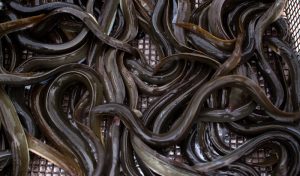
Hello! It’s just us this month as Jenny has been foolish enough to go on holiday and leave me in charge for a day – so come on in; the world is our bucket of jellied eels. Urgh. Talking about eels, I recently had a slightly bizarre conversation with someone who told me that eels really mess up fishing tackle if they are caught on a rod and line – their slime gloops all over the place as they struggle to get free and it royally gums up the works. With that unsavoury image lurking, let’s move on, shall we?

July is the seventh month of the year (Wiki very helpfully qualifies this as falling between June and August for the benefit of any Martians who happen to be swotting up on earth months) in both the Julian and Gregorian calendars, and the fourth month to have thirty-one days. The Roman Senate renamed Quintilis as July in honour of their general, Gaius Julius Caesar, it being his birth month. I wonder if that was before or after the unfortunate ‘Et tu, Brute?’ incident on the Ides of March, when JC should have worn his Kevlar toga? But all you really need to know is that the most important day in July falls on the thirteenth, when Jenny and I celebrate our birthdays. You forgot again, didn’t you? Tsk.

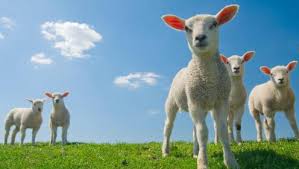
This is on average the warmest month in most of the northern hemisphere (coldest in the south), kicking off the second half of the year after the longest day in June. ‘Dog Days’, or the hottest, most uncomfortable part of summer, begin early on when the hot, sultry weather starts – in theory, at least. Spring lambs, born in late winter or early spring, are usually sold before July 1st.

July is also traditionally known as ‘fence month’ or the closed season for deer in England. Trinity Term (sitting of the English High Court of Justice), ends on the 31st, and the elections of the Japanese House of Councillors, replacing half its seats, are held every three years – the latest in 2016. In Ancient Rome the festival of Poplifugia was celebrated on July 5th, and Ludi Apollinares began on July 13th, lasting for several days, although these dates do not correspond to the modern Gregorian calendar. Don’t really know why I mentioned them then…

I mentioned the High Court a few lines back; last July – Friday 9th, I believe – #3 son and I went to the funeral of an old neighbour in Chiswick, a brilliant man called Dr John Anthony Roberts CBE QC DCL FCI.Arb, a High Court Judge, whose biography is quite fascinating.

We met one Sunday morning when I was teaching #3 son (it’s always him, isn’t it?) – aged about two – to ride his tricycle down the pavement of our quiet road, because the gardens were tiny and he kept riding into walls. I’m pleased to report his spatial awareness has improved with age and (to my knowledge) he’s never driven any of the flash cars he’s so fond of into a wall, or anything else.

Unfortunately, that day the little chap got a bit carried away with his peddling and crashed into the wheel of Dr Roberts’ parked Rolls Royce, which he was cleaning – trees lining the road bore huge purple berries which the birds gobbled greedily, and when nature took its course, all the cars got covered with toxic purple poo, which was the devil to get off without destroying the paint job. No damage was done to the Roller *breathes huge sigh of relief and cancels remortgage application* and there began an unusual friendship between the two of them that lasted more than a quarter of a century.

John’s great grandfather, Joseph Jenkins Roberts, was born in Norfolk, Virginia, and became the first President of Liberia. His grandfather, John Anthony Roberts (Snr.), born in Liberia, was a cable engineer who worked in Brazil, America and England, between 1891 and 1892. John was born in Sierra Leone in May 1928 to John Anthony Roberts (Jnr. – this is starting to get confusing)), a Brazilian – his mother (whose name I can’t find) was born in Sierra Leone, a descendant of liberated Africans who chose to return after the Slave Trade was abolished. That’s some heritage.

He came to the law relatively late – he was a civil servant in Sierra Leone before coming to the UK to join the RAF, where he qualified as an accountant before joining aircrew, and then returned to Sierra Leone to work in Air Traffic Control (at the invitation of the PM!) Back to the UK with a wife (Eulette, a midwife at Queen Charlotte’s Hospital, where #3 was born) and son (Anthony John Roberts, thank goodness!) in tow. It was while he was again working as a Civil Servant here between 1964 and 1969 that he studied law part-time and got his degree. But if you want to practice as a barrister you need to join Chambers as a pupil for a year as general dogsbody earning a pittance to earn your wig, so to speak. After an unsuccessful search for a place, he was told he stood no chance whatsoever, because he was a) black and b) almost twice as old as the average pupil – so what did he do when he hit one of #3’s brick walls? He set up his own Chambers and over the years took on barristers and pupils of all colours and creeds. Oh, and women, who at that time would have found it even harder to gain a place than an older black man.

#3 did his work experience at those Chambers as a mini-Pupil and rather liked the life – especially when two of the younger barristers took him to the West Country for a day trip in an E-type Jag to collect some court papers. Have they never heard of the post or couriers? In the end, he didn’t read law, even though he had a place waiting for him post degree in Chambers. His choice and he now leads a rather enviable life flying around the world.

Before I move on, let me list just a few of Dr John Anthony Roberts’ achievements:

  • The first known person of African ancestry to be the Head of his Chambers in England and Wales.
  • The first person of African ancestry to be made a QC in England and Wales.
  • The first person of African ancestry to be made a Recorder of the Crown Court in England and Wales.
  • The first person of African ancestry to be appointed by the British Government to dependent territories as a High Court Judge of the Supreme Courts of the British Virgin Islands, and Anguilla, British West Indies.
  • The first Head of Chambers to accept seven female barristers at one time in 1975. A record during that era.

Phew! Lovely man with a huge personality and a huge laugh.

This was as far as I got with Jenny’s July blog before my father died unexpectedly.

Normal service will be resumed in August. Allegedly.

Toodles.

NP

www.Author.to/nellpeters


Sarah Dahl: The Awakening

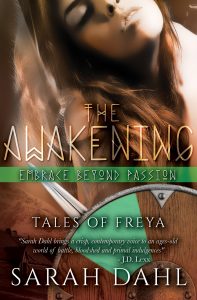
Today I’m delighted to welcome Sarah Dahl to my blog to help celebrate the launch of her latest book, The Awakening.

OUT TODAY, The Awakening is a passionate romance inspired by our Viking past.

Over to you Sarah…

Inspiration for my book:

“The Awakening – Embrace beyond Passion” is a story I wrote some time ago and now had to considerably edit to make it more like my current ‘voice’ and in keeping with the other stories in my Tales of Freya collection. Therefore it was hard to recall the exact inspiration for this story – I get inspiration from many things and then let my mind play with it. For my characters, I’m often very visual and discover someone on Pinterest or TV. Then I imagine them as a person from the early medieval – what if I made them a ‘Viking’ character. I have an inspirational mood board on my wall right opposite my desk that I look at to let my mind wander. Most stories just start with the idea of an interesting character or an event, or both. From there I let it all flow and try different directions for a theme. In “The Awakening” the theme is “liberation begins in the mind” and “follow your passions”. As the Tales of Freya stories are short, I don’t have to plot much but can just write from the heart and then edit. Which brings me to:

Plot or flow:

I’m a pantser as they say, and find plotting a long story from beginning to end very hard to pull off. Naturally, I’d just write from scene to scene and develop as I go, often not knowing the ending myself. For the stories in the Tales of Freya collection it was easier, as for short stories the plot and character arcs can be more straightforward. I always just start with an idea, something I want to happen, and then write with the flow until I’m happy.

The research for “The Awakening”:

Of course, as a historical fiction writer I have to be firm and confident in the Viking environment and era. I read all the books and see as many sites as I can. My fave non-fiction is “Vikings at War” by Hjardar/Vike; it has brilliant detail and is the most extensive and visual book on the era I have seen. Also, every year I go to at least Haithabu/Hedeby here in Germany for a few days, to this once huge, Danish Viking trading town that is now a museum and open-air site by the Slien. The atmosphere of the reconstructed houses and pier just sparks creativity and a sense of the time. Soaking it all up, I just let my feet and mind wander, focussing on the big picture and then the details, imagining what stories could have happened in those narrow streets and houses. This year I became aware of the harsh winds, the never-ending gusts that penetrate the streets and houses, so much so that roofs don’t need smoke holes … the smoke from the fires just disappears through the walls and roof of the Viking town houses. So I tried to incorporate the harsh elements and their effects more in my story “The Awakening”, too.

I take great pride in being authentic and never use the era as mere stage props. I did several blog posts about authenticity: how every author should do their thorough homework and really know what they are writing about, especially if using a historical time period. Read it all until you don’t have to look stuff up anymore (ideally, but there’s always something …) Once my first draft is written and I checked details myself, I let my Viking reenactor-friends read it for authenticity and plausibility, and also discuss with beta-readers. “The Awakening” is set in a rural village by the fjord, so in smaller Viking houses, not the huge rural longhouses readers might first depict. More the kind you find in villages and towns like Hedeby. So naturally, when I went there this year, I focussed on the layouts of houses and daily tasks my characters would need to do in the story, because something secret and daring is hidden in Ingrid’s little farmhouse. Most things I don’t have to research anymore, but what about details such as how someone undresses? In which order would they do it and would the jewellery clang? How loudly? These are the things my reenactors then have to discuss with me, and go through step by step as I see it happening before my inner eye 😉

Preferred POV:

That’s a good question … I can do both; it all depends on the story and which character should tell the story, through whose eyes we should see and feel things. It doesn’t matter if it’s a man or woman, and I use both first person POV or deep third depending on what works best. In the Tales of Freya stories, I mostly use deep third. The view points can be that of men or/and women. For some reason I can work really well from a male POV. “The Current – A Battle of Seduction” is told from the warrior’s perspective on this seductive shield maiden, and I found it easy to slip into his skin. Whereas “The Awakening” is Ingrid’s story, and the next one, “Monk”, will even be told from three different POVs … I guess it’s all about gut feeling. With experience and craft comes a gut feeling for whose story I want to tell and how.

Most exciting about book for me:

For “The Awakening” the most exciting has to be that a story that I’ve worked on for so long finally gets to see the light – I get it ‘off my desk’ and out to people – and it starts its own life now, can be read by everyone, like a child that grows up and after tender care leaves the house. Which is frightening, of course, because one grows so attached to the story-baby over time. After the great success and many positive reviews of “The Current” I’m very excited and anxious to see what people will make of this very different story. “Awakening” really can’t be compared to the first one, “Current”, in the collection. The first spans several weeks whereas the latter covers only a few hours. The whole plotline and tone are different and the themes of course … so, yeah, we will see. Deep breath and fingers crossed 🙂

Blurb – “The Awakening – Embrace beyond Passion”

 The second in the collection of sensual short stories set in the Viking age, the Tales of Freya:

In a world of crackling fires and rough landscapes, long winters and bloody raids, the immediacy of life and death ignites undeniable passions. Warriors and monks, healers and housewives – all follow the call of their hearts and bodies to indulge in pleasures that may forever change their lives …

Ingrid leads a quiet, joyless life with a husband who is oblivious to her needs. Every time the dragon boats carry him away, she resigns herself to the solitude of her modest hilltop farm by the fjord. But her uneventful world is shaken to the core when the shadows of her house reveal a secret that sets her passions afire.

***

Release date: July 21, 2017, by Pronoun

Buy links:

https://books.pronoun.com/the-awakening3/

http://amzn.to/2tyak9p

Author homepage: sarah-dahl.com

Mailing list for Book Alert: https://mailing.sarah-dahl.com/?p=subscribe&id=2

Facebook: https://www.facebook.com/sarahdahl13/

Twitter: @sarahdahl13

***

Bio

Sarah Dahl lives on the edge of the rural German Eifel and writes historical fiction primarily set in the Viking age. She also works as an editor, translates, and coaches new writers in German and English. She is interested in everyday life in bygone centuries and the human stories that may have occurred behind the hard, historical facts. Her author page is: sarah-dahl.com

***

Many thanks Sarah – and congratulations on your brand new book!

Happy reading,

Jenny xx

Page 28 of 35

Powered by WordPress & Theme by Anders Norén